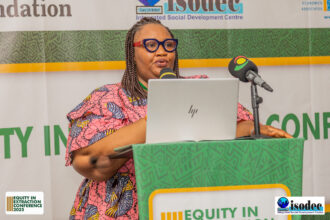



Government Elections to elect members to serve in the District Assemblies, next year, 2023. Without an Affirmative Action Law in place, this Election will yet again, reinforce the existing low representation of women in Ghana’s Local Governance system. Women’s representation in all policy-making spaces in Ghana stands below the United Nations (UN) threshold of 30%. Currently, women’s representation in the Legislature (Parliament), stands at 14.5%, while in the District Assembly System, below 5%. The situation is no different in the government’s ministerial, ambassadorial and board appointments. The persistent low representation of women in these key decision-making spaces makes it near impossible for women’s effective contribution to Ghana’s development. These extremely low figures are in spite of the fact that, Ghana has signed on to various international protocols and conventions, pledging to ensure 30 to 40% representation of women.
In addition, Ghana’s 1992 Constitution mandates the government to ensure inclusion and equal representation and participation of both women and men. The thrust of Ghana’s Local Governance system is founded on inclusivity, participation, democracy and sustainable development. However, these concepts have not been realized, as women, who constitute the majority of Ghana’s population, are exempted from the Local Governance System.
Over the years, Elections have proven to be unable to ensure equality in the representation of women and men. Due to Ghana’s historical patriarchal system, systemic marginalization of women in decision making, women’s burden of care and a host of challenges confronting women, it is impossible for women to attain the required numbers for effective participation and representation. It is therefore important that other strategies are employed to ensure this equal representation, democracy and sustainable development that we require as a nation. An Affirmative Action Law presents itself as the guaranteed strategy for achieving this most desired results. This is because, the Affirmative Action strategy has proved successful in other countries such as Uganda, Rwanda, Senegal and South Africa, to mention but a few.
More Read
Affirmative Action is a temporary mechanism aimed at removing discrimination, improving the rights of marginalised groups, who have been historically disadvantaged. Ghana’s Affirmative Action Law seeks to remove the historical low representation of women in all decision-making spaces while promoting democracy and development through the effective participation of all citizens. In addition, it seeks to promote women’s representation to a minimum of 40% in all policy-making spaces.
The drafting of Ghana’s Affirmative Action Law began as far back as the year 2011. However, to date, the Bill has still not been passed. The government has made several promises to get the Bill passed in 2017 and in 2020, yet, none of these promises have materialized. We appreciate the efforts made by the Ministry of Gender, Children and Social Protection (MoGCSP) and we call on the ministry to expedite processes to get the Bill to Parliament within the shortest possible time.
ABANTU for Development, with support from the African Women’s Development Fund (AWDF), is therefore calling on all stakeholders, including the Executive, the Ministry of Gender, Children and Social Protection, and Parliament to hasten all processes to get the Affirmative Action Bill passed into law before the end of the year 2022. Ghana must not undertake another Election without the passage and coming into force of the Affirmative Action Law. The benefits of the passage of the Affirmative Action Bill into Law will not only inure to women but to all Ghanaians. Thus, all citizens must be concerned and demand the immediate passage of this all-important legislation.
Source: ABANTU for Development