Public Agenda NewsPaperPublic Agenda NewsPaper
  • General News
  • Politics
  • Business
  • Health
  • Development Agenda
  • World News
  • Features & Opinions
  • Election watch
  • Editorial
Font ResizerAa
Public Agenda NewsPaperPublic Agenda NewsPaper
Font ResizerAa
  • General News
  • Politics
  • Business
  • Health
  • Development Agenda
  • World News
  • Features & Opinions
  • Election watch
  • Editorial
Search
  • General News
  • Politics
  • Business
  • Health
  • Development Agenda
  • World News
  • Features & Opinions
  • Election watch
  • Editorial
Follow US
Breaking NewsGeneral Newstop stories

Ghana’s tuna industry collapsing under high operating costs – NAFAG

Suleman
Last updated: October 1, 2026 1:54 pm
Suleman
Share
3 Min Read
SHARE

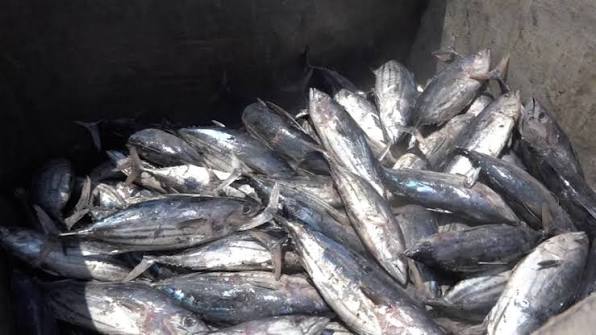
Ghana’s tuna industry is gradually collapsing under high operating costs, heavy taxes and inadequate government support, Vice Chairman of the National Fisheries Association of Ghana (NAFAG), Richster Amarh Amarfio, has warned.

According to him, the sustained challenges facing operators have already wiped out the country’s pole-line fishing sub-sector, with no pole-line vessel currently operating in Ghana.

“We were collapsing and the factors that are collapsing us have so much eaten into our industry such that one sub-sector, which is the pole-line sector, is completely gone. We don’t have a single pole-line vessel in Ghana today,” Mr Amarfio noted in an interview with Citi.

More Read
Cocaine seizures: Parliament reconvenes today for emergency sitting
MEHSOG demands update on alleged sexual assault of 14-year-old Bolga Girls student
Food prices in Ghana remain largely stable – AGRA report
Mahama convenes high-level meeting to strengthen border security and narcotics control
Minority demands action on unemployment among graduates with disabilities

He said the cost of fuel remains one of the biggest pressures on tuna operators, as vessels receive no fuel support and have to purchase fuel at prevailing market prices.

Mr Amarfio explained that a vessel can consume about 270,000 litres of fuel, making fuel expenditure a major burden on operators.

Beyond fuel costs, he said fishing companies face taxes on fish stocks, spare parts and equipment despite the sector being classified under agriculture.

He also cited high port charges, dry-docking costs and expenses associated with maritime security services required for operations in international waters.

“Basically, it looks like we’ve been left on our own. Nobody actually cares what is happening within our industry and we are collapsing gradually,” he said.

Mr Amarfio is therefore calling for deliberate government intervention to protect the sector and unlock its economic potential.

He said the tuna industry generates more than US$200 million in foreign exchange annually making its survival important to Ghana’s economy.

He proposed the establishment of a dedicated development authority for the fisheries sector, similar to the specialised support provided to other major economic sectors.

Mr Amarfio also wants greater investment in tuna research and value addition, noting that the sector’s potential extends beyond the sale of fish to products such as fish oil, fish meal and other applications.

Another major concern, he said, is the shortage of trained Ghanaian crew, with the industry relying heavily on ageing Korean workers.

He called for investment in training and certification of Ghanaian captains and engineers, noting that the Regional Maritime University currently lacks the infrastructure and training vessel needed to adequately prepare personnel for the fishing industry.

“We can train our crew and certify them,” he said, stressing the need for a deliberate effort to develop local skills and rebuild the industry.


Source CNR

Share This Article
Facebook Whatsapp Whatsapp Email Copy Link Print

Recent Posts

  • Ghana’s tuna industry collapsing under high operating costs – NAFAG
  • Cocaine seizures: Parliament reconvenes today for emergency sitting
  • MEHSOG demands update on alleged sexual assault of 14-year-old Bolga Girls student
  • Food prices in Ghana remain largely stable – AGRA report
  • Mahama convenes high-level meeting to strengthen border security and narcotics control
  • Minority demands action on unemployment among graduates with disabilities
  • Mental Health Organisations Seek Improved Social Protection for Vulnerable Women and Girls
  • GOLDBOD!
  • Mental Health Groups Demand Criminal Probe into Alleged Sexual Assault of 14-Year-Old at Bolga Girls SHS
  • Mental Health Authority to shut Kumasi spiritual centre housing 2,000 mentally ill persons
  • Karpowership Ghana trains fisherfolk on fire safety, hygiene and financial management
  • Unforced Error! Contradictions of the Government’s PCI Decision
  • 14 clandestine miners killed in disused South Africa mine
  • NAIMOS launches major operation to clear illegal mining along Birim River
  • IMF urges Ghana to sustain quarterly electricity tariff adjustments‎
  • Oil prices fall on hopes Strait of Hormuz could reopen
  • Bekwai residents give Chinese quarry firm one-week ultimatum over blasting, environmental concerns
  • Veteran Nigerian Environmental Journalist Tunde Akingbade Dies at 67

You Might Also Like

Breaking NewsHealthtop stories

Mental Health Organisations Seek Improved Social Protection for Vulnerable Women and Girls

September 2, 2026
Breaking NewsFeatures & Opinionstop stories

GOLDBOD!

August 27, 2026
Breaking NewsHealthtop storiesUncategorized

Mental Health Groups Demand Criminal Probe into Alleged Sexual Assault of 14-Year-Old at Bolga Girls SHS

August 24, 2026
Breaking NewsHealthtop stories

Mental Health Authority to shut Kumasi spiritual centre housing 2,000 mentally ill persons

August 20, 2026

About Us

Public Agenda is fou­nded and owned by Pu­blic Agenda Communic­ations.

Public Agenda was founded as a public interest Me­dia entity. Its Visi­on is to contribute to building a well-i­nformed society where accurate informati­on dissemination is the cornerstone of a democratic, just and equitable society.

Its mission is to inform, guide and bui­ld responsible citiz­enship and accountab­le decision making and strive for excell­ence in the media in­dustry. Public Agenda Communications is managed by a Board of Directors.

  • Contact us
  • Advertise with us
Welcome Back!

Sign in to your account

Username or Email Address
Password

Lost your password?