

The Mental Health Society of Ghana (MEHSOG) and BasicNeeds Ghana (BNGh) have called for stronger collaboration between local authorities and vulnerable women and girls to improve access to social protection services.
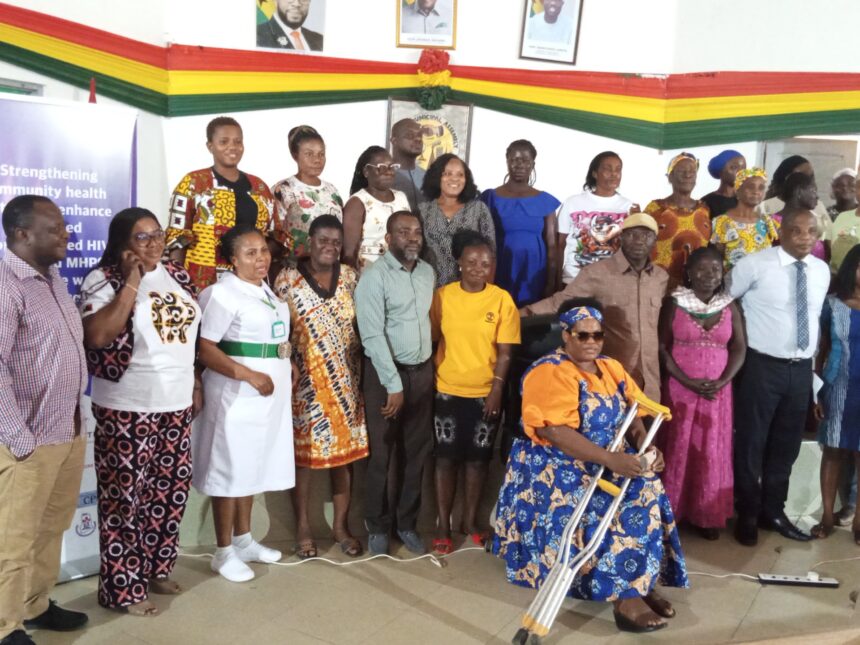
The call was made at an interface meeting between members of the Social Services Sub-Committee of the Ga West Municipal Assembly and representatives of pregnant and postpartum women, adolescent girls with mental health needs, persons living with or at risk of HIV/TB, and survivors of Sexual and Gender-Based Violence (SGBV) and Intimate Partner Violence (IPV).
The meeting, held on Wednesday, August 26, 2026, at the Ga West Municipal Assembly Hall, sought to strengthen engagement between duty bearers and vulnerable groups while identifying barriers that prevent them from accessing essential social protection services.
More Read

The initiative forms part of a project led by BasicNeeds Ghana with funding from the ‘L’ Initiative of Expertise France.
The engagement provided an opportunity for participants to discuss practical measures to promote inclusive and stigma-free access to social protection interventions for vulnerable populations.
In particular, the meeting discussed issues surrounding access to social intervention programmes, including the National Health Insurance Scheme (NHIS), the Livelihood Empowerment Against Poverty (LEAP) Programme, and the Disability Fund as well as the 0.5 percent of the HIV allocation within the DACF.
In his welcome address, the Municipal Chief Executive (MCE) of the Ga West Municipal Assembly, Hon. John Desmond Sowah Nai, emphasized the need for sustained advocacy and stronger collaboration to address the persistent challenges faced by persons with disabilities, particularly those living with mental health conditions.
According to the Hon, Sowah Nai, persons with disabilities continue to experience stigma, discrimination, and significant barriers in accessing education, healthcare, employment, and public services.
He noted that these challenges are not caused by disability itself, but by negative societal attitudes, weak systems, and environments that fail to accommodate diversity.
He admonished the participants to actively and keenly participate in the workshop and contribute meaningfully to the discussions and activities. He urged them to take the opportunity to broaden their knowledge, share their experiences, and learn from one another. He further encouraged them to apply the knowledge and skills acquired during the workshop in their respective areas of work and to work collectively towards ensuring the successful achievement of the workshop’s objectives.
Mr Abdul-Fatawu Issahaku, Administrator at the Mental Health Society of Ghana (MEHSOG), noted that the meeting was aimed at building consensus and strengthening collaborative efforts to improve access to social protection services for vulnerable women and adolescent girls living with, or at risk of, HIV and tuberculosis (TB), as well as survivors of sexual and gender-based violence (SGBV).
He explained that the meeting provided an important platform for stakeholders to deliberate on the challenges confronting vulnerable groups and identify practical measures to enhance their access to essential social protection services. He stressed the need for stronger coordination among relevant institutions and stakeholders to ensure that women and girls in vulnerable situations received the support and protection they needed.
Mr Issahaku, however, expressed concern that mental health and psychosocial support services remained inadequate within the HIV and tuberculosis response, as well as in programmes addressing child health, protection and welfare.
According to him, the limited availability of mental health and psychosocial support services could further expose vulnerable individuals to emotional and psychological distress, thereby affecting their overall well-being and ability to access and benefit from other essential services.
He urged stakeholders to strengthen referral systems and improve collaboration to ensure that vulnerable women, adolescent girls and other at-risk groups received comprehensive and timely support.
The event was ably facilitated by Mr. Abubakar Abdallah, who guided the discussions and ensured that participants had the opportunity to share their views, concerns, and experiences. His facilitation contributed to a constructive and engaging dialogue, enabling participants to deliberate on key issues and explore practical strategies for improving access to social protection services for vulnerable groups.
The discussions also examined how social interventions could better respond to the needs of pregnant women, newly delivered mothers and adolescent girls with mental health needs, as well as people living with or at risk of HIV/TB and survivors of SGBV.
By:Mohammed Suleman/Publicagenda.news