

Currently in Accra, a sophisticated multi-million-dollar desalination plant sits idle, while just a few kilometers away, residents of Teshie and Nungua are forced to buy water from costly private tankers.
This is the irony of Ghana’s water sector: a nation grappling with a daily production shortfall of 110 million gallons, yet losing more than half of its current output to theft and systemic inefficiency.
The Missing Water Problem
Ghana Water Limited (GWL) faces a national demand of 350 million gallons per day (MGD) but produces only 240 MGD. In Accra, the situation is more severe: the city requires 210 MGD but produces only 137 MGD. However, the real crisis lies in what Managing Director Adam Mutawakilu calls “non-revenue water.”
More Read

According to him, roughly 52% of the water produced nationwide cannot be accounted for. In Accra, this means that out of the 137 MGD produced, only 68.5 MGD reaches customers legally.
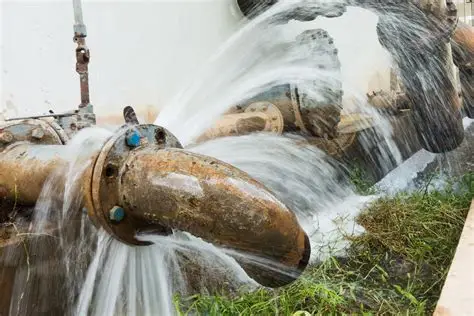
Surprisingly, technical leaks account for just 22% of these losses, while a staggering 78% is due to commercial theft, including illegal connections to sachet water plants and bypasses in gated communities.
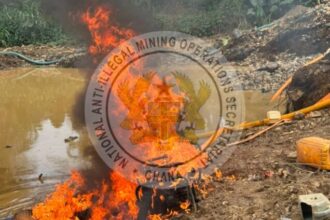
Contrary to assumptions that leaky pipes are the main culprit, Mutawakilu recently highlighted the scale of the missing water crisis, revealing task forces uncovered entire sachet water plants operating illegally. In one instance, a 1,000-liter poly-tank was found buried underground, siphoning GWL water to resell to the public.
Mutawakilu admits that the problem often originates within the utility itself. “Most of the illegal connections trace back to our people because it’s not easy for an ordinary person to just come and do it,” he said.
The Desalination Debt Trap
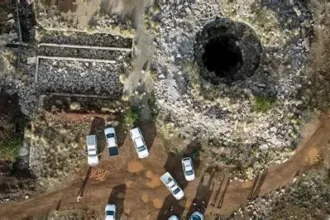
The Teshie-Nungua Desalination Plant embodies perhaps the sector’s most controversial financial paradox. Established in 2015 as a public-private partnership, the facility was designed to treat 13 million gallons of seawater daily. However, its economic model has proven unsustainable.
GWL is contractually obligated to purchase water from the plant at GHS 6.75 per cubic meter, but the Public Utilities Regulatory Commission (PURC) requires it to sell to consumers at just GHS 1.47 per cubic meter.
This leaves GWL with a loss of GHS 5.28 per cubic meter, creating a massive debt that led to the plant’s shutdown in October 2025. While the government provided $13 million in 2024 to keep operations running, a lack of financial support in 2025 left the facility idle.
A New Strategy of Disciplined Reform
Adam Mutawakilu, a former MP with an accounting background, has responded with a purge of managerial ranks. In 2026, he reassigned 41 out of 103 district managers for failing to meet revenue and theft-reduction targets.
He also suspended 181 newly recruited staff after an internal audit revealed the board had approved only 130 positions, and that salary costs were consuming 40% of revenue instead of the targeted 25%.
Despite these challenges, Mutawakilu maintains a long-term strategic vision. “My vision is to transform Ghana Water Limited into a disciplined, technically sound, financially viable, and performance-driven national utility company capable of delivering reliable water services while safeguarding public resources,” he said.
To bridge the supply gap, GWL is seeking $300 million in concessionary funding to expand the Kpong plant, improve operations, and ensure a reliable water supply across the country.
However, until the systemic issues of theft and unviable pricing are addressed, even the most modern infrastructure may struggle to keep the taps flowing.
Credit:CNR