
Public Agenda NewsPaperPublic Agenda NewsPaper
  • General News
  • Politics
  • Business
  • Health
  • Development Agenda
  • World News
  • Features & Opinions
  • Election watch
  • Editorial
Font ResizerAa
Public Agenda NewsPaperPublic Agenda NewsPaper
Font ResizerAa
  • General News
  • Politics
  • Business
  • Health
  • Development Agenda
  • World News
  • Features & Opinions
  • Election watch
  • Editorial
Search
  • General News
  • Politics
  • Business
  • Health
  • Development Agenda
  • World News
  • Features & Opinions
  • Election watch
  • Editorial
Follow US
Breaking NewsBusiness

High Duties Killing Our Business – GUTA

Latifa Carlos
Last updated: June 23, 2018 2:47 pm
Latifa Carlos
Share
3 Min Read
Ken Ofori-Atta
Ken Ofori-Atta
SHARE

Dr James K. Obeng, the President of the Ghana Union of Traders Association (GUTA), said the introduction of the Common External Tariffs (CET) was affecting their business operations and they were likely to go out of business.

Dr Obeng said import and export duties had doubled due to the CET, making importation difficult.

The President of the Union stated that even though their outfit was battling with 19 levies, their major concern was the CET, in that, the importation business helps the economy to grow and leads into more productive areas.

More Read

NDC renames National Headquarters after J. J Rawlings
GTMO Condemns Attack on Forestry Commission Checkpoint in Bono East Region
World leaders converge in Accra for high-level reparatory justice conference
Mining, water supply and transport emerge biggest drivers of Producer Price Inflation
“Men’s Mental Health: Breaking the Silence, Saving lives

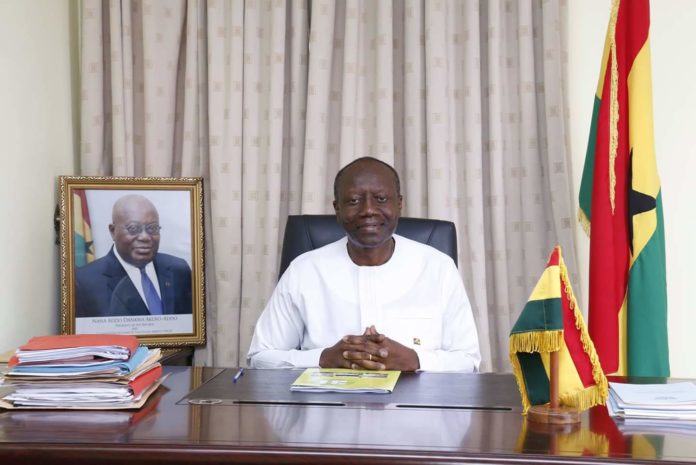
He said this in Accra at an engagement with a team from the Ministry of Finance led by Mr Kenneth Ofori-Atta, the Sector Minister on their challenges and the way forward.

The Minister was accompanied by his two Deputies, Mr Kwaku Kwarteng and Abena Osei Asare, and Mr Patrick Nomo, the Chief Director at the Ministry.

Dr Obeng said the levies and taxes on duties amounted to about 52 per cent, which sometimes exceeded their capital, the major reason products were very expensive.

The Union mentioned delays in clearing their goods at the Ports, high interest rate, cedi depreciation, bureaucracy and duplication of roles as the main reasons affecting importers in the country.

He urged government to put in mechanism to stabilise the cedi from further depreciation as against the dollar.

According to him, the recent depreciation of the cedi against the dollar had affected their profits, since imports were made before the depreciation was recorded.

He blamed the situation on multinational companies, which were allowed to repatriate millions of dollars out of the country annually.

Dr Obeng urged the Finance Minister to reduce the duties on imported cables and other essential commodities in the mid-year budget review scheduled for next month.

Mr Ofori-Atta assured that the Finance Ministry would consider the proposals made for the reduction in the import duties by looking at some tax items that could be adjusted.

He said government had put in measures to stabilise the cedi depreciation, assuring the Union that they would consider the concerns raised and find amicable solutions to them.


Source: GNA

Share This Article
Facebook Whatsapp Whatsapp Email Copy Link Print

Recent Posts

  • NDC renames National Headquarters after J. J Rawlings
  • GTMO Condemns Attack on Forestry Commission Checkpoint in Bono East Region
  • World leaders converge in Accra for high-level reparatory justice conference
  • Mining, water supply and transport emerge biggest drivers of Producer Price Inflation
  • “Men’s Mental Health: Breaking the Silence, Saving lives
  • NADeF Micro-Credit beneficiaries seek increased funding amid business growth
  • Gbetsile: Six-year-old girl drowns in septic tank while searching for water
  • Recurring Floods Continue to Threaten Lives and Property in Oyibi Community
  • Africa poised to lead global digital finance evolution — MTN CEO
  • Ghana risks outsourcing economic sovereignty under IMF PCI deal — ISODEC
  • Accountability Labs Engage Birim North Assembly on Development Needs
  • How Africa can escape the debt trap
  • US lists travel, visa requirements for World Cup fans
  • Mahama to lead decisive Cabinet meeting over Constitution Review today
  • Ghana’s economy expands by 7.7% in February 2026 – GSS
  • President Mahama urges African leaders to unite in tackling healthcare challenges
  • Chinese mining firm targets Ewoyaa lithium takeover in $210m deal
  • Ghana now 8th biggest economy in Africa

You Might Also Like

Breaking NewsBusinesstop stories

NADeF Micro-Credit beneficiaries seek increased funding amid business growth

May 31, 2026
Breaking NewsGeneral Newstop stories

Gbetsile: Six-year-old girl drowns in septic tank while searching for water

May 25, 2026
MTN Group CEO & President, Ralph Mupita
Breaking NewsBusinesstop stories

Africa poised to lead global digital finance evolution — MTN CEO

May 20, 2026
Breaking NewsBusinesstop stories

Ghana risks outsourcing economic sovereignty under IMF PCI deal — ISODEC

May 20, 2026

About Us

Public Agenda is fou­nded and owned by Pu­blic Agenda Communic­ations.

Public Agenda was founded as a public interest Me­dia entity. Its Visi­on is to contribute to building a well-i­nformed society where accurate informati­on dissemination is the cornerstone of a democratic, just and equitable society.

Its mission is to inform, guide and bui­ld responsible citiz­enship and accountab­le decision making and strive for excell­ence in the media in­dustry. Public Agenda Communications is managed by a Board of Directors.

  • Contact us
  • Advertise with us
Welcome Back!

Sign in to your account

Username or Email Address
Password

Lost your password?