


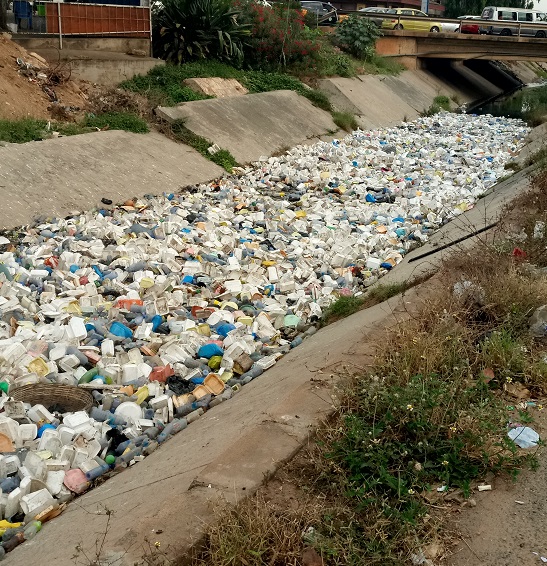
Manufacturers of plastic products must be responsible for the management of plastic waste across the country, the President of the Ghana Institution of Engineering (GhIE), Mr Steve Amoaning-Yankson, has stated.
The plastic waste problem, he said, had become a huge global issue with dire consequences particularly on fish and human lives and, therefore, called on policy makers, particularly legislators, to refocus their attention to tackling the plastic waste problem in the country from the end of the manufacturers.
Mr Amoaning-Yankson said these when he delivered the 49th presidential address of the GhIE at the Engineers centre in Accra on Monday, November 19, 2018.
More Read

Presidential address
The presidential address, which was on the theme: “Engineering effective delivery in sanitation”, is a landmark event on the calendar of the GhIE every year, during which the president of the GhIE addresses members on a specific subject matter and offers possible solutions to the problems associated with the sector.
Mr Amoaning-Yankson noted that the real culprit of the plastic menace had been let off the hook while the blame had been shifted onto individuals who had little control over the problem.
Useful links Ghana Politics | Ghana Celebrity News | News in Ghana
“If the plastic manufacturers are not ready to accept their responsibilities, then we have no option but to call on the government to ban the manufacture of plastics,” he stressed.
Sanitation
The GhIE president described as unacceptable the present state of sanitation after 60 years of independence and observed that sanitation in Ghana had been relegated to the Metropolitan, Municipal and District Assemblies (MMDAs) who were already faced with lots of difficulties in terms of manpower and other resources.
To compound the problem, he said, all the sewage treatment plants in the country had broken down and the state of deterioration required huge sums of money for their rehabilitation.
Citing Tema and Accra as areas whose sewage treatment plants required urgent attention, Mr Amoaning-Yankson said the sanitation problem in Accra would have been better had the sewage system development which was started in the early 1970s under a World Bank support and abandoned, been pursued.
Solid waste management
Touching on solid waste management, the GhIE president proposed the adoption of recycling to manage waste to reduce the amount of waste to landfills.
By that process, he said, useful components of the waste stream which could serve as materials in the industry could be captured, citing for example that the Tema sanitary landfill site did not allow operatives to undertake those critical activities.
“A recent study under the Water and Sanitation Programme of the World Bank has established that Ghana loses $290 million annually on account of inadequate practices in the management of liquid waste,” he added.
Tackle problems
The Senior Minister, Mr Yaw Osafo Maafo, who attended the lecture noted that professional bodies such as the GhIE must look at prevailing problems in the country, tackle such problems from the professional perspective and create the necessary contacts with the specific institutions responsible.
He expressed concern that many of the MMDAs had failed to explore the full benefit from property rates collected within their respective jurisdictions and called on the assemblies to be up and doing.
An agriculturist, Dr Foster Abu Sakara, who chaired the function said: “If indeed cleanliness is next to Godliness then by looking at some of the drains in the country, we are farther away from God as a people.”
Source: Graphic.com.gh