


A Call has been made on African Governments to take steps to address the increasing reliance on plastic packaged (sachet) water on the continent.
The trend, according to Africa Water Justice Network is spiraling up as a result of perceived low quality of distributed water and lack of access to most peri-urban dwellers.
The group said, though African Governments have historically perceived the phenomenon of sachet water as a passing trend, it is fast becoming a primary drinking water source for the majority of households in many urban areas and continue to spread throughout the region.
More Read

“With the growing dependence on sachet water as a reliable primary water source, if systemic steps are not taken by Governments to address this problem, the packaged water industry’s contribution to plastic production and consumption will keep increasing adding to the existing plastic menace on the continent.”
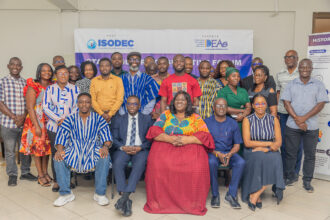
These were contained in a Press Statement issued in Accra and signed by Leonard Shang- Quartey, Interim Coordinator of Africa Water Justice Network. The statement was issued to mark this year’s World Environment Day, June 5.
The Network finds the above trend as unfortunate and very alarming due to the implications for the environment and safety. It added “Plastic pollution impacts on human health, leads to loss of livelihoods, contributes to greenhouse gas emissions, loss of biodiversity and compromises the ecosystem functioning on African lands and water resources.
Studies note how households depend on water from a variety of sources in Africa yet the number of households relying on sachet water as a primary drinking source, rather than a supplemental source is rising at a frightening rate with dire consequences for the environment.
For example, the 2014 Ghana Demographic and Health Survey found sachet water to be the primary drinking water source for 29% of households, with a split of 43.1% for urban households and 11.8% for rural households. The rate shot up from the 2012–2013 Ghana Living Standards Survey which found sachets to be the primary water source for nearly 20% of surveyed households and from the 2010 survey which found sachet water to be the primary drinking water source in 9% of households nationally.
Similarly, the 2013 Nigeria DHS found sachet water consumption to be the primary water source of 5.8% of households, with a respective split of 12.0%and 1.1% for urban and rural households. Despite these high figures, the popularity of sachets across Africa is much higher than the surveys reveal as people who have access to other water supply sources still commonly drink from sachets at home or outside homes.
The Statement continued, “It is possible to reverse this trend by addressing the two major factors that continue to contribute to the popularity of plastic-packaged water in urban as well as in some rural areas. African Governments need to address urgently, the issues of water quality and availability.
“These are the two factors fueling the attraction of sachet water in most communities of Africa. Years of underinvestment have taken a toll on most water infrastructure of the continent to the extent that the mere sight of distributed water sends a clear signal about questionable quality even without a laboratory test. For most peri-urban population also, sachet water has become the default source of drinking water because most are yet to be connected to the water supply systems.”
It emphasized that “Increased investment in the water sector to ensure improved water quality and availability is not only important to ensuring the security of human lives but also guarantees the safety of our environment and the world.”
The Africa Water Justice Network was launched by water justice CSOs and activists in Dakar, Senegal in March 2022 during the Alternative World Water Forum. The Network is undertaking a broad-based campaign to ensure all Africans and people of the world have unfettered access to adequate potable water by the year 2030 by working at ensuring that the right to water is explicitly guaranteed by the constitutions of African countries and implemented in practice.
Source:Publicagendagh.com