Public Agenda NewsPaperPublic Agenda NewsPaper
  • General News
  • Politics
  • Business
  • Health
  • Development Agenda
  • World News
  • Features & Opinions
  • Election watch
  • Editorial
Font ResizerAa
Public Agenda NewsPaperPublic Agenda NewsPaper
Font ResizerAa
  • General News
  • Politics
  • Business
  • Health
  • Development Agenda
  • World News
  • Features & Opinions
  • Election watch
  • Editorial
Search
  • General News
  • Politics
  • Business
  • Health
  • Development Agenda
  • World News
  • Features & Opinions
  • Election watch
  • Editorial
Follow US
Breaking NewsHealth

WHO recommends two new drugs to treat patients with COVID-19  

Suleman
Last updated: January 14, 2022 11:08 am
Suleman
Share
3 Min Read
SHARE

The World Health Organization (WHO) recommended on Thursday two new drugs to treat patients with COVID-19, one for patients with the critical disease and one for non-severe cases.

Contents
Non-severe casesRecommendations

The first drug, baricitinib, is a Janus kinase (JAK) inhibitor- a class of drugs used to treat autoimmune conditions, blood and bone marrow cancers, and rheumatoid arthritis.

According to the WHO Guideline Development Group, it is “strongly recommended” for patients with severe or critical disease in combination with corticosteroids.

More Read

Drug networks infiltrating schools – NACOC warns
NDC renames National Headquarters after J. J Rawlings
GTMO Condemns Attack on Forestry Commission Checkpoint in Bono East Region
World leaders converge in Accra for high-level reparatory justice conference
Mining, water supply and transport emerge biggest drivers of Producer Price Inflation

The group of international experts based their recommendation on “moderate certainty evidence” that it improves survival and reduces the need for ventilation.

There was no observed increase in adverse effects.

The experts note that it has a similar effectas other arthritis drugs called interleukin-6 (IL-6) inhibitors. Because of that, when both drugs are available, they suggest choosing the best option based on cost, availability, and clinician experience.

It is not recommended to use both drugs at the same time.

The experts also advise against the use of two other JAK inhibitors (ruxolitinib and tofacitinib) for patients with severe or critical cases of COVID-19 infection.

According to them, trials undergone using these drugs failed to show any benefits arising using either drug and suggested a possible increase in serious side effects with tofacitinib.

Non-severe cases

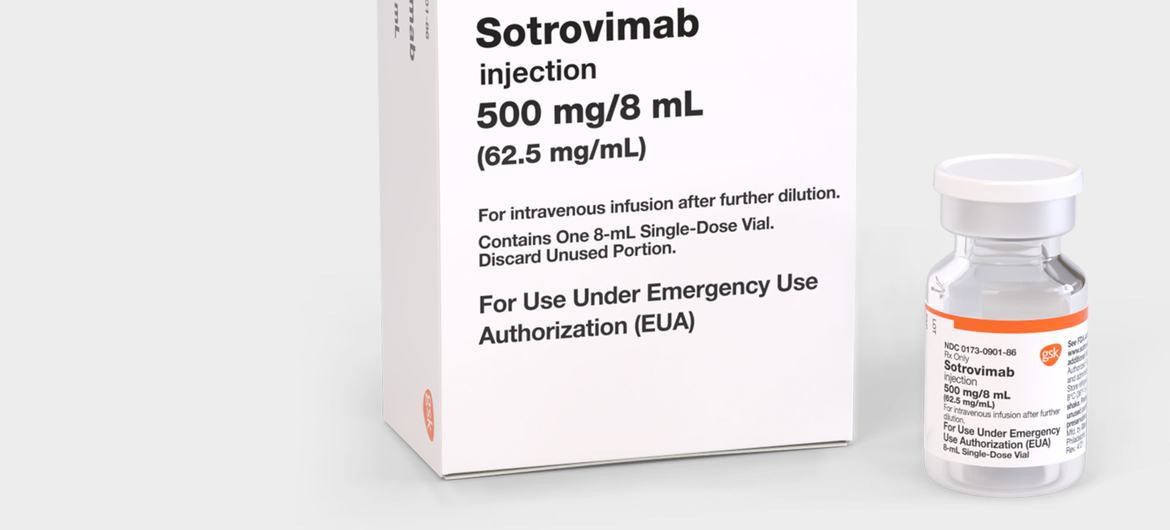
In the same update, WHO makes a conditional recommendation for the use of a monoclonal antibody known as sotrovimab in patients with non-severe cases.

According to them, the drug should only be administered to patients at the highest risk of hospitalisation. In those at lower risk, it onlyshowed “trivial benefits”. 

A similar recommendation has been madepreviously, for another monoclonal antibody drug, casirivimab-imdevimab, and the experts say there is insufficient data to recommend one over the other.

For both, the effectiveness against new variants, like Omicron, is still uncertain. 

The group will update their guidelines for monoclonal antibodies when more data becomes available.

Recommendations

These recommendations are based on new evidence from seven trials involving over 4,000 patients with non-severe, severe, and critical infections.

Developed by WHO with the methodological support of MAGIC Evidence Ecosystem Foundation, the guidelines provide trustworthy guidance and help doctors make better decisions with their patients.

According to the agency, the guidelines are useful in fast-moving research areas, because they allow researchers to update evidence summaries as new information becomes available.

The latest guidance also updates recommendations for the use of interleukin-6 receptor blockers and systemic corticosteroids for patients with severe or critical COVID-19; conditional recommendations for the use of casirivimab-imdevimab (another monoclonal antibody treatment) in selected patients; and against the use of convalescent plasma, ivermectin and hydroxychloroquine, regardless of disease severity.

Source: UN Newscentre

Share This Article
Facebook Whatsapp Whatsapp Email Copy Link Print

Recent Posts

  • Drug networks infiltrating schools – NACOC warns
  • NDC renames National Headquarters after J. J Rawlings
  • GTMO Condemns Attack on Forestry Commission Checkpoint in Bono East Region
  • World leaders converge in Accra for high-level reparatory justice conference
  • Mining, water supply and transport emerge biggest drivers of Producer Price Inflation
  • “Men’s Mental Health: Breaking the Silence, Saving lives
  • NADeF Micro-Credit beneficiaries seek increased funding amid business growth
  • Gbetsile: Six-year-old girl drowns in septic tank while searching for water
  • Recurring Floods Continue to Threaten Lives and Property in Oyibi Community
  • Africa poised to lead global digital finance evolution — MTN CEO
  • Ghana risks outsourcing economic sovereignty under IMF PCI deal — ISODEC
  • Accountability Labs Engage Birim North Assembly on Development Needs
  • How Africa can escape the debt trap
  • US lists travel, visa requirements for World Cup fans
  • Mahama to lead decisive Cabinet meeting over Constitution Review today
  • Ghana’s economy expands by 7.7% in February 2026 – GSS
  • President Mahama urges African leaders to unite in tackling healthcare challenges
  • Chinese mining firm targets Ewoyaa lithium takeover in $210m deal

You Might Also Like

Breaking NewsHealth

“Men’s Mental Health: Breaking the Silence, Saving lives

June 15, 2026
Breaking NewsBusinesstop stories

NADeF Micro-Credit beneficiaries seek increased funding amid business growth

May 31, 2026
Breaking NewsGeneral Newstop stories

Gbetsile: Six-year-old girl drowns in septic tank while searching for water

May 25, 2026
MTN Group CEO & President, Ralph Mupita
Breaking NewsBusinesstop stories

Africa poised to lead global digital finance evolution — MTN CEO

May 20, 2026

About Us

Public Agenda is fou­nded and owned by Pu­blic Agenda Communic­ations.

Public Agenda was founded as a public interest Me­dia entity. Its Visi­on is to contribute to building a well-i­nformed society where accurate informati­on dissemination is the cornerstone of a democratic, just and equitable society.

Its mission is to inform, guide and bui­ld responsible citiz­enship and accountab­le decision making and strive for excell­ence in the media in­dustry. Public Agenda Communications is managed by a Board of Directors.

  • Contact us
  • Advertise with us
Welcome Back!

Sign in to your account

Username or Email Address
Password

Lost your password?