Public Agenda NewsPaperPublic Agenda NewsPaper
  • General News
  • Politics
  • Business
  • Health
  • Development Agenda
  • World News
  • Features & Opinions
  • Election watch
  • Editorial
Font ResizerAa
Public Agenda NewsPaperPublic Agenda NewsPaper
Font ResizerAa
  • General News
  • Politics
  • Business
  • Health
  • Development Agenda
  • World News
  • Features & Opinions
  • Election watch
  • Editorial
Search
  • General News
  • Politics
  • Business
  • Health
  • Development Agenda
  • World News
  • Features & Opinions
  • Election watch
  • Editorial
Follow US
Breaking NewsDevelopment Agenda

SDGs will address ‘three planetary crises’ harming life on Earth

Suleman
Last updated: April 28, 2021 1:08 pm
Suleman
Share
4 Min Read
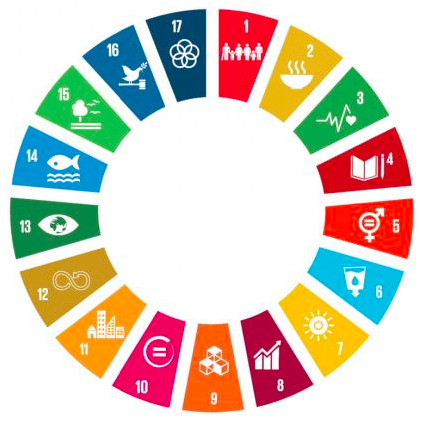
SDG Wheel
SHARE

The “three planetary crises” of climate change, biodiversity loss and pollution are reinforcing each other and driving further damage to the environment and to our health, the UN Environment Programme (UNEP) said on Tuesday. 

Contents
Making peace with nature Planetary emergency A role for everyone  

Executive Director Inger Andersen told an online discussion that the “significant and pathbreaking” information contained in the UN agency’s synthesis report Making Peace With Nature, not only breaks down the science, but also shines a light on “the kind of gearshifts” needed for a steady trajectory forward. 

This includes reaching for the Sustainable Development Goals (SDGs), particularly SDG 12, on sustainable production and consumption, as well as making societies “much more aware of our footprint” on Earth. 

More Read
Mahama declares July 10–11 National General Cleaning Days in flood-affected regions
Study Recommends Royalty Share for Landowners in Mining Communities
Fuel prices drop for second consecutive time
From Trauma to Recovery: Strenthening Support for Victims of Torture
Drug networks infiltrating schools – NACOC warns

“It speaks to the urgency of now”, she said. 

Notwithstanding the need to lift people out of poverty, turn the wheels of economy and end world hunger, the report looks at what the earth can provide, and how it must be treated, to remain sustainable.   

Unless improvements are made, the planet is set to lose about a million species, out of an estimated eight million, Ms. Andersen warned. 

Making peace with nature 

During the discussion, report writers Ivar Andreas Baste and Robert Watson, along with scientific advisor Joyeeta Gupta explained how the key findings rested upon a range of assessments, including from UN agencies, intergovernmental environmental bodies and multilateral environmental agreements. 

“Overall about 50 leading experts helped us prepare and guide this synthesis”, Mr. Watson said, adding that the “options for action” within the report are consistent with each other.  

They also outlined that the interconnectivity of the three challenges putting the world’s well-being at risk can be tackled jointly within the SDG framework.  

Planetary emergency 

Since the Stockholm Conference on the environment over 50 years ago, Mr. Watson pointed out that both the number of environmental issues and their severity have grown, “we clearly know we have a planetary emergency”, he said. 

“Humanity is waging war on nature. This is senseless and suicidal”, Secretary-General António Guterres said in the foreword. “The consequences of our recklessness are already apparent in human suffering, towering economic losses and the accelerating erosion of life on Earth”. 

A role for everyone  

The report maintains the need for “ambitious and coordinated action” by governments, businesses and people around the world to prevent and reverse the worst impacts of environmental decline by rapidly transforming energy, water and food systems to support sustainability.  

And while the COVID-19 emergency rightly preoccupies government budgets and political action, the response to this pandemic must ultimately accelerate the economic and social transformations needed to address the planetary emergency.  

“These are not just environmental issues, they are economic, development, security, social, moral and ethical issues”, said Robert Watson. 

Transforming social and economic systems means improving our relationship with nature – understanding its value and putting that value at the heart of decision making, according to the report. 

“By transforming how we view nature, we can recognize its true value. By reflecting this value in policies, plans and economic systems, we can channel investments into activities that restore nature and are rewarded for it”, said the UN chief. 

Source:UN News Centre
Share This Article
Facebook Whatsapp Whatsapp Email Copy Link Print

Recent Posts

  • Mahama declares July 10–11 National General Cleaning Days in flood-affected regions
  • Study Recommends Royalty Share for Landowners in Mining Communities
  • Fuel prices drop for second consecutive time
  • From Trauma to Recovery: Strenthening Support for Victims of Torture
  • Drug networks infiltrating schools – NACOC warns
  • NDC renames National Headquarters after J. J Rawlings
  • GTMO Condemns Attack on Forestry Commission Checkpoint in Bono East Region
  • World leaders converge in Accra for high-level reparatory justice conference
  • Mining, water supply and transport emerge biggest drivers of Producer Price Inflation
  • “Men’s Mental Health: Breaking the Silence, Saving lives
  • NADeF Micro-Credit beneficiaries seek increased funding amid business growth
  • Gbetsile: Six-year-old girl drowns in septic tank while searching for water
  • Recurring Floods Continue to Threaten Lives and Property in Oyibi Community
  • Africa poised to lead global digital finance evolution — MTN CEO
  • Ghana risks outsourcing economic sovereignty under IMF PCI deal — ISODEC
  • Accountability Labs Engage Birim North Assembly on Development Needs
  • How Africa can escape the debt trap
  • US lists travel, visa requirements for World Cup fans

You Might Also Like

Breaking NewsPoliticstop stories

NDC renames National Headquarters after J. J Rawlings

June 22, 2026
Breaking NewsGeneral Newstop stories

GTMO Condemns Attack on Forestry Commission Checkpoint in Bono East Region

June 19, 2026
Breaking Newstop stories

World leaders converge in Accra for high-level reparatory justice conference

June 18, 2026
Breaking NewsBusiness

Mining, water supply and transport emerge biggest drivers of Producer Price Inflation

June 18, 2026

About Us

Public Agenda is fou­nded and owned by Pu­blic Agenda Communic­ations.

Public Agenda was founded as a public interest Me­dia entity. Its Visi­on is to contribute to building a well-i­nformed society where accurate informati­on dissemination is the cornerstone of a democratic, just and equitable society.

Its mission is to inform, guide and bui­ld responsible citiz­enship and accountab­le decision making and strive for excell­ence in the media in­dustry. Public Agenda Communications is managed by a Board of Directors.

  • Contact us
  • Advertise with us
Welcome Back!

Sign in to your account

Username or Email Address
Password

Lost your password?