
Public Agenda NewsPaperPublic Agenda NewsPaper
  • General News
  • Politics
  • Business
  • Health
  • Development Agenda
  • World News
  • Features & Opinions
  • Election watch
  • Editorial
Font ResizerAa
Public Agenda NewsPaperPublic Agenda NewsPaper
Font ResizerAa
  • General News
  • Politics
  • Business
  • Health
  • Development Agenda
  • World News
  • Features & Opinions
  • Election watch
  • Editorial
Search
  • General News
  • Politics
  • Business
  • Health
  • Development Agenda
  • World News
  • Features & Opinions
  • Election watch
  • Editorial
Follow US
Breaking NewsDevelopment Agenda

‘PLHIVs in poor households suffer food insecurity’

Latifa Carlos
Last updated: May 9, 2019 3:53 pm
Latifa Carlos
Share
4 Min Read
Mr Steve Kyeremeh Afuahene
SHARE

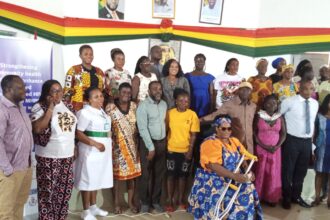
The Ghana AIDS Commission (GAC) is partnering the Ministry of Gender, Children and Social Protection to consider the inclusion of poor households living with persons infected and affected by HIV, in the Livelihood Empowerment Against Poverty (LEAP ) programme.

The move is to ensure that such households, whose members earn an average monthly income of GH¢300 and were finding it difficult to support their family members living with HIV/AIDS, were catered for under LEAP.

The acting Director-General of the GAC, Mr Steve Kyeremeh Atuahene, who announced this in Accra, said: “We are currently working out plans to develop a criteria to ensure the prevention of stigmatisation against persons living with HIV/AIDS.”

More Read
Chinese mining firm targets Ewoyaa lithium takeover in $210m deal
Ghana now 8th biggest economy in Africa
Mahama, appointees donate GH¢6.1m to Mahama Cares Fund
Mawuedem Solution Supports Communities in Volta Region with Relief Items
Callistus Mahama warns against early succession talks, urges discipline and focus on governance

He made the statement at the presentation of the 2018 Assessment of Food Security and Vulnerability Households report, released in Accra on Monday, May 6.

Study

The research, which engaged 1,666 adults aged 18 and above and living with persons affected and infected with HIV in the Northern, the former Brong Ahafo, Eastern and Western regions, assessed food insecurity and the vulnerability status of such household members.

The study was to inform GAC and the World Food Programme (WFP) about the food security situation of PLHIV in Ghana.

The 66-page report was conducted by a team of researchers from the School of Public Health, University of Ghana, from July to November 2018 and it was funded by the WFP and overseen by the GAC.

Mr Atuahene said unlike in the past when there was a food safety net for persons living with HIV/AIDS, a support made possible by development partners such as the WFP and the USAID, the current level of food insecurity facing such persons was quite disturbing.

He, therefore, called for measures to make the government’s Planting for Food and Jobs and the Planting for Export and Rural Development (PERP) programmes beneficial to more vulnerable persons, including PLHIVs, across the country.

He also urged the Ghana Network of Persons Living with HIV/AIDS (NAP+ Ghana) to pursue various empowerment activities to support its members to undertake income-generating ventures to support themselves.

Study findings

Presenting the highlights of the report, the lead researcher, Dr Amos Laar, said about 349 out of the 1,666 households that had people living with persons infected or affected by HIV in the four regions where the study was conducted, were facing food insecurity.

He said the Northern Region recorded the highest prevalence of food insecurity – at 24 per cent – while the Brong Ahafo Region recorded 16.4 per cent to be the region with the lowest rate of food insecurity.

According to him, of the 36,586 persons living with HIV who were currently receiving anti-retro viral treatment (ART) in the Northern, Brong Ahafo, Western and Eastern regions, 7,778 persons faced food insecurity and might require immediate support to improve their food and nutrition needs.


Source: Graphic.com.gh

Share This Article
Facebook Whatsapp Whatsapp Email Copy Link Print

Latest News

Ghana rises to 39th in Press Freedom Index amid structural challenges
May 6, 2026
Water Justice Network Pushes for Affordable, Inclusive Water Systems
May 4, 2026
Overall cost pressures in construction are easing – Government Statistician
April 30, 2026
Ghana can’t industrialise without power, water – Nii Moi Thompson
April 30, 2026
Ghana walks away from US health agreement over sensitive data concerns
April 28, 2026
Mali at risk of splintering after jihadi and separatist attacks
April 28, 2026
Create ‘water markets’ to fix Ghana’s supply challenges — Former GWL MD
April 28, 2026

You Might Also Like

Breaking NewsDevelopment Agendatop stories

National Water Justice Campaign Launched to Tackle Inequality in Access

April 21, 2026
Breaking NewsGeneral Newstop stories

ISODEC Urges Collective Action to Secure Safe Water for All Ghanaians

April 21, 2026
Breaking Newstop storiesWorld News

Man kills seven of his children, and an eighth child, in Louisiana mass shooting

April 20, 2026
Breaking NewsPan Africa Politicstop stories

A decade of African politics: democratic gains and new pressures

April 20, 2026

About Us

Public Agenda is fou­nded and owned by Pu­blic Agenda Communic­ations.

Public Agenda was founded as a public interest Me­dia entity. Its Visi­on is to contribute to building a well-i­nformed society where accurate informati­on dissemination is the cornerstone of a democratic, just and equitable society.

Its mission is to inform, guide and bui­ld responsible citiz­enship and accountab­le decision making and strive for excell­ence in the media in­dustry. Public Agenda Communications is managed by a Board of Directors.

Welcome Back!

Sign in to your account

Username or Email Address
Password

Lost your password?