Public Agenda NewsPaperPublic Agenda NewsPaper
  • General News
  • Politics
  • Business
  • Health
  • Development Agenda
  • World News
  • Features & Opinions
  • Election watch
  • Editorial
Font ResizerAa
Public Agenda NewsPaperPublic Agenda NewsPaper
Font ResizerAa
  • General News
  • Politics
  • Business
  • Health
  • Development Agenda
  • World News
  • Features & Opinions
  • Election watch
  • Editorial
Search
  • General News
  • Politics
  • Business
  • Health
  • Development Agenda
  • World News
  • Features & Opinions
  • Election watch
  • Editorial
Follow US
Breaking NewsDevelopment Agendatop stories

Ghana can’t industrialise without power, water – Nii Moi Thompson

Suleman
Last updated: April 30, 2026 8:09 am
Suleman
Share
3 Min Read
SHARE

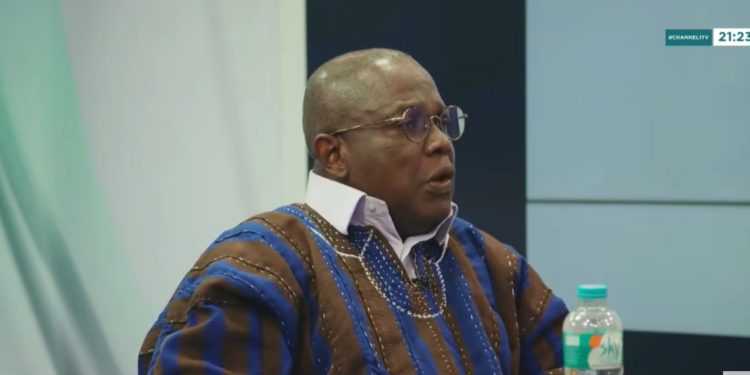
The Chairman of the National Development Planning Commission, Dr. Nii Moi Thompson, has raised concerns over what he describes as the critical link between infrastructure—particularly electricity and water—and Ghana’s economic growth, warning that lapses in key sectors could undermine industrialisation.

Speaking on The Point of View on Channel One TV with Bernard Avle on Wednesday, April 29, 2026, Dr Thompson said electricity remains central to economic expansion, noting that power consumption is often used as a measure of growth in modern economies.

“In some economic models, electricity consumption is used as a proxy for economic growth, especially in a modern economy. You can’t industrialize without power. Without electricity you don’t have a modern economy,” he said.

More Read
2027 Budget: Inside Mahama’s US$10bn New Economy programme
Gov’t won’t borrow to finance New Economy Programme – Ato Forson
ACA Participates in 15th VINACAS Golden Cashew Rendezvous in Vietnam
Farmers demand compensation over Newmont Ahafo North land acquisition
African Philanthropy Leaders Call for Collective Action to Drive Sustainable Development

He, also shifted focus to the water sector, which he argued receives less attention despite its equally critical role in supporting economic activity.

Dr Thompson criticised the performance of Ghana Water Limited, accusing it of inefficiency and deviation from its core mandate of supplying potable water for households, industry and businesses.

“The negligence and impunity by those who should be producing water and the fact that they’ve deviated from their core mandate and I’m talking about Ghana Water here,” he said.

Citing the company’s own performance targets, he noted that Ghana Water had committed to reducing water losses—commonly referred to as non-revenue water—from 45 per cent to 25 per cent between 2022 and 2025. Instead, he said, losses have increased.

“If you read their progress report for 2022-2025, they promised on their own to reduce water losses from 45% of water produced to 25%. Instead they went up to 52%, and nobody is being held responsible,” he stated.

Dr Thompson further criticised the company’s decision to venture into sachet and bottled water production, arguing that it diverts attention from its primary responsibility and places it in direct competition with private businesses.

“What they have done also is to deviate from their core mandate of producing potable water for industry, households and businesses to now producing sachet water in competition with private enterprise. I’m told they now want to move into bottled water. So now they have moved from sachet to bottle and competing with private businesses instead of focusing on their core mandate of supplying us with water for industry. And without water you cannot add value,” he said.

He stressed that both electricity and water are fundamental to value addition and industrial growth,warning that inefficiencies in these sectors could slow Ghana’s broader development agenda.

Share This Article
Facebook Whatsapp Whatsapp Email Copy Link Print

Recent Posts

  • 2027 Budget: Inside Mahama’s US$10bn New Economy programme
  • Gov’t won’t borrow to finance New Economy Programme – Ato Forson
  • ACA Participates in 15th VINACAS Golden Cashew Rendezvous in Vietnam
  • Farmers demand compensation over Newmont Ahafo North land acquisition
  • African Philanthropy Leaders Call for Collective Action to Drive Sustainable Development
  • Nkoranman Community Bank records 37% pre-tax profit growth
  • Ghana reaffirms commitment to women’s economic empowerment at Addis Ababa dialogue
  • Seven missing fishermen located in Togo’s waters – Western Regional Minister
  • Deploy more military, police to fight galamsey – Christian Council
  • Petrol, diesel prices set to fall from Oct. 16 as LPG faces 18.5% hike
  • IMF raises Ghana’s 2026 growth forecast to 5.7%, exceeding government’s target
  • CSOs, Fisheries Stakeholders Demand Revocation of Offshore Gold Licences
  • ActionAid ‘deeply alarmed’ by US government’s sanctions on the International Criminal Court
  • Mental Health Alliance Calls for 5% Employment Quota for Persons with Disabilities
  • A call for GoldBod-Type Financing Model for NAFCO
  • ISODEC Forum Calls for New Thinking on Ghana’s Economic Management
  • 24-hour economy markets’ renamed District Economy Markets – Ayariga
  • Ghana’s tuna industry collapsing under high operating costs – NAFAG

You Might Also Like

Breaking NewsBusinesstop stories

Nkoranman Community Bank records 37% pre-tax profit growth

October 29, 2026
Breaking NewsGeneral Newstop stories

Ghana reaffirms commitment to women’s economic empowerment at Addis Ababa dialogue

October 22, 2026
Breaking NewsGeneral Newstop stories

Seven missing fishermen located in Togo’s waters – Western Regional Minister

October 22, 2026
Breaking NewsGeneral Newstop stories

Deploy more military, police to fight galamsey – Christian Council

October 20, 2026

About Us

Public Agenda is fou­nded and owned by Pu­blic Agenda Communic­ations.

Public Agenda was founded as a public interest Me­dia entity. Its Visi­on is to contribute to building a well-i­nformed society where accurate informati­on dissemination is the cornerstone of a democratic, just and equitable society.

Its mission is to inform, guide and bui­ld responsible citiz­enship and accountab­le decision making and strive for excell­ence in the media in­dustry. Public Agenda Communications is managed by a Board of Directors.

  • Contact us
  • Advertise with us
Welcome Back!

Sign in to your account

Username or Email Address
Password

Lost your password?