
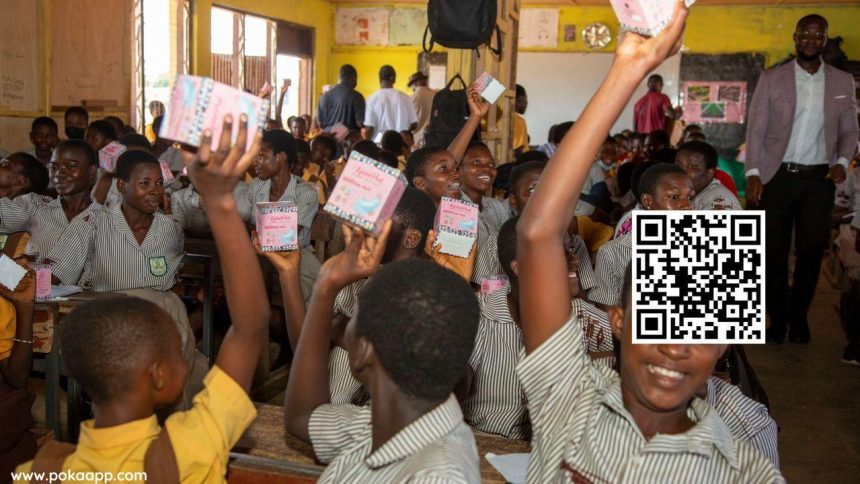
For many women and girls in Ghana, menstruation is still accompanied by discomfort, stigma, and uncertainty. Although access to disposable sanitary pads has improved in recent years, issues like skin irritation, leaks, and shame during menstruation remain common. But menstrual health isn’t just about managing bleeding—it affects women’s education, their personal dignity, reproductive and sexual wellbeing and even safety. This article by Poka Health App, sheds light on the challenges and realities of menstrual hygiene in Ghana today.
A Global and Regional Perspective
Recent studies from Asia, Europe, and the Americas reveal similar themes: disposable pads dominate the marketplace, and women who lack reliable menstrual products or safe disposal options face higher risks of infections, school absenteeism, and social stigma. In Europe and North America, concerns have emerged about chemical residues and rare but serious conditions like Toxic Shock Syndrome.
Within Africa, these challenges are especially pronounced. Landmark trials in Kenya show that girls provided with menstrual cups or sanitary pads experienced fewer infections and lower rates of sexually transmitted infections (STIs) over time. In Ethiopia and Nigeria, where three-quarters of women lack consistent access to clean pads and private facilities, girls regularly miss classes or resort to transactional sex to afford menstrual products. South Africa has taken steps—distributing free pads in some schools—but shortages and stigma persist, particularly in rural townships.
More Read

And here in Ghana? According to a 2024 multi-country analysis of Performance Monitoring for Action (PMA) data, 34.2% of Ghanaian women still report unmet menstrual hygiene needs—significantly lower than Burkina Faso (74.8%) or Ethiopia (69.9%), but still a sizable portion. Swathes of rural girls, especially outside Accra and Kumasi, lack the means or knowledge to manage their periods safely. A 2024 cross-sectional study of senior secondary girls in the Eastern Region found that nearly all respondents used disposable pads, yet 43% still practiced poor hygiene.
Poka Health App Survey: Listening to Ghanaian Women
In May and June 2025, Poka Health App, a period tracker and women’s health app designed for African women—surveyed several Ghanaian women, most aged 32–38, held tertiary degrees, and lived in Greater Accra or abroad. Here are the key takeaways:
- Disposable Pads Reign Supreme
- Almost all women still report disposable padsas their go-to product. Only a handful regularly use tampons or menstrual cups.
- Why Women Stick with Pads
- Comfort
- Affordability and Accessibility
- Health Concerns
- Health Effects from Overuse
- Many respondents reported at least one negative experience while using pads or tampons, mainly itching, skin irritation, and painful rashes.
- Seeking Medical Help—or Not
- Only a small minoritysought professional medical advice highlighting low menstrual health literacy, and lingering stigma around discussing period-related problems with doctors.
- Alternatives Such As Menstrual Cups Remain Untried
- Talking About Periods: A Mixed Picture
- Poka Health App’s data show most women feel comfortable discussing menstruation with other womenbut not with men.
- Others noted that social media and peer-led platforms like the Poka Health App Community Group – We are Pokadolls– have eased sharing menstrual experiences.
- Where Did We Learn About Menstrual Products?
- Most women first encountered formal menstrual education in junior highor senior high.
- Voices from the Ground: Women’s Suggestions
- Start Early, Include Boys
- Subsidize or Distribute Free Pads
- Use Local Languages and Visual Aids
- Leverage Faith and Community Groups
- Diversify Supply Chains
Connecting Literature to Local Realities
Poka Health App findings align closely with broader African research:
- Infection Risks & “Hidden Costs”: Kenyan randomized trials (2016, 2023) showed that girls provided with clean menstrual cups had lower rates of bacterial vaginosis and STIs. While Poka’s Ghanaian data do not measure STI rates directly, many women described recurring urinary tract infectionsor persistent vaginal itching.
- School Absenteeism & Economic Pressures: Studies from Tanzania, Ethiopia, and Nigeria estimate that up to 30% of girls miss school during their periods. Adult respondents to Poka’s survey frequently recalled skipping classes in their youth due to lack of pads.
- Stigma & Cultural Barriers: Across Africa, menstruation is often cloaked in taboo. A recent University of Ghana study (2024) found that 83% of adolescent girls in rural communities engaged in transactional sex to afford pads. Poka’s survey confirms that menstrual shame still influences product choice and communication, even among educated, urban professionals.
Ghana’s April 2025 rollout of free sanitary pads for schoolgirls aims to end many of these hardships. Early feedback suggests improved attendance in pilot regions; yet Poka’s respondents emphasized that policy alone is not enough; proper education on usage and hygiene must be included.
Bridging the Gaps: Practical Recommendations
Several action points emerge for policymakers, NGOs, and community leaders:
- Integrated Menstrual Health Curriculum
- Community-Level “Menstrual Health Champions”
- Sustainable Pad Distribution + “Reviews”
- Introduce Subsidized Reusable Options
- Menstrual Health in Public Campaigns
- Male Engagement Initiatives
- Robust Monitoring & Research
Conclusion: Menstrual Hygiene as a Human Right!
For Ghanaian women, the transition to disposable pads has brought clear benefits. Yet, as both global literature and Poka’s survey show, reliance on a single product category has created new challenges—health complications from prolonged pad use, persistent stigma, and financial burdens.
Transforming menstrual health in Ghana demands a multi-pronged approach: education, affordable product diversity, community engagement, and ongoing research. By listening to women’s voices—through Poka’s app-based surveys and grassroots conversations—we can tailor interventions respecting cultural contexts and meet real needs. Thus, we affirm menstrual hygiene as not simply a women’s issue, but a matter of public health, gender equality, and human dignity.
After all, a Ghana where every girl and woman can manage her period safely, comfortably, and without shame is not just an ideal—it is a policy imperative. Let’s keep the conversation going, one pad (or cup) at a time.
By: Dr. Abena K. Karikari – Medical Anthropologist