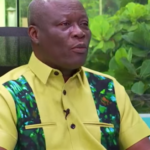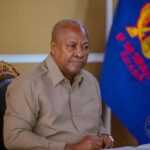



A move to scrap the Office of the Special Prosecutor (OSP) has hit Parliament as Majority Leader Mahama Ayariga and Majority Chief Whip Rockson-Nelson Dafeamekpor have laid a Private Members’ Bill seeking a complete repeal of the Office of the Special Prosecutor Act, 2017 (Act 959).
The Office of the Special Prosecutor (Repeal) Bill, 2025, dated 8 December 2025, outlines Parliament’s intent to return full prosecutorial authority over corruption cases to the Attorney-General, in line with Article 88 of the Constitution.
The memorandum attached to the Bill argues that the OSP’s operations over the past eight years have revealed deep structural and constitutional challenges that undermine its effectiveness.
More Read

According to the memorandum, the OSP’s creation in 2017 introduced duplication in prosecutorial functions between the Special Prosecutor and the Attorney-General, resulting in institutional friction, jurisdictional overlap, and avoidable delays in criminal proceedings.
The lawmakers argue that the dual-prosecutor model has produced inefficiencies rather than strengthened the national anti-corruption framework.
The Bill further cites high operational costs of running the OSP, which it says have yielded limited demonstrable impact relative to the office’s budgetary allocations. It also points to fragmentation in national prosecutorial policy, as well as difficulties in maintaining long-term institutional capacity due to parallel administrative systems.
Parliament, the sponsors note, has reached a policy conclusion that anti-corruption prosecutions can be more constitutionally and effectively handled by a strengthened Attorney-General’s Office. Under the proposed arrangement, the Attorney-General and Ministry of Justice would operate a specialised anti-corruption division, eliminating the need for a separate statutory body.
If passed, the Bill would consolidate all anti-corruption prosecutions under the Attorney-General, a move its sponsors say will enhance efficiency, accountability and coordination across the justice sector. The memorandum highlights several expected benefits, including reduced administrative overheads, improved budgetary control under a single vote head, better deployment of skilled prosecutors and investigators and greater value for money.
Transitional costs associated with integrating OSP operations into the Attorney-General’s Office are expected to be absorbed within existing budgetary allocations.
The Bill emphasises that the repeal aligns with constitutional provisions that vest prosecutorial power solely in the Attorney-General, and affirms Parliament’s authority to restructure statutory bodies in the public interest.
Clauses 1 to 4 of the Bill address repeal and transitional arrangements, with Clause 1 formally repealing Act 959 while preserving any existing regulations, instruments or lawful actions undertaken by the OSP.
The introduction of the Bill is expected to ignite significant national debate over the future of Ghana’s anti-corruption architecture in the coming weeks.
Meanwhile, President John Dramani Mahama has pushed back against calls to scrap the OSP, describing such demands as premature and urging the public to allow the institution more time to deliver on its mandate.
Source: CNR