

The Ghana Integrity initiative is rolling out the Second Phase of its Land and Corruption in Africa Project – LCA II, which seeks to ensure that corrupt practices in Land administration and land deals are addressed to ultimately contribute to improved livelihood of men and women in Ghana and Africa in general.
The project, which spans 2022-2025, builds on the knowledge, networks and leanings acquired from the LCA 1 project (2015-2019).
The Second phase comes with a component that explores alternative whistle-blowing mechanisms beyond legislation while providing a platform for land sector CSOs to dialogue and strategize for a greater positive impact.
More Read

In Phase II of the Project, GII would be looking to tackle the lack of accessible and understandable information on rights to land, non-transparent and corrupt practices in land governance and land transaction procedures.
It would also seek to address the inadequate knowledge of the legal and policy regime in the land sector and the lack of well-established complaints and grievance redress mechanisms in the land sector.
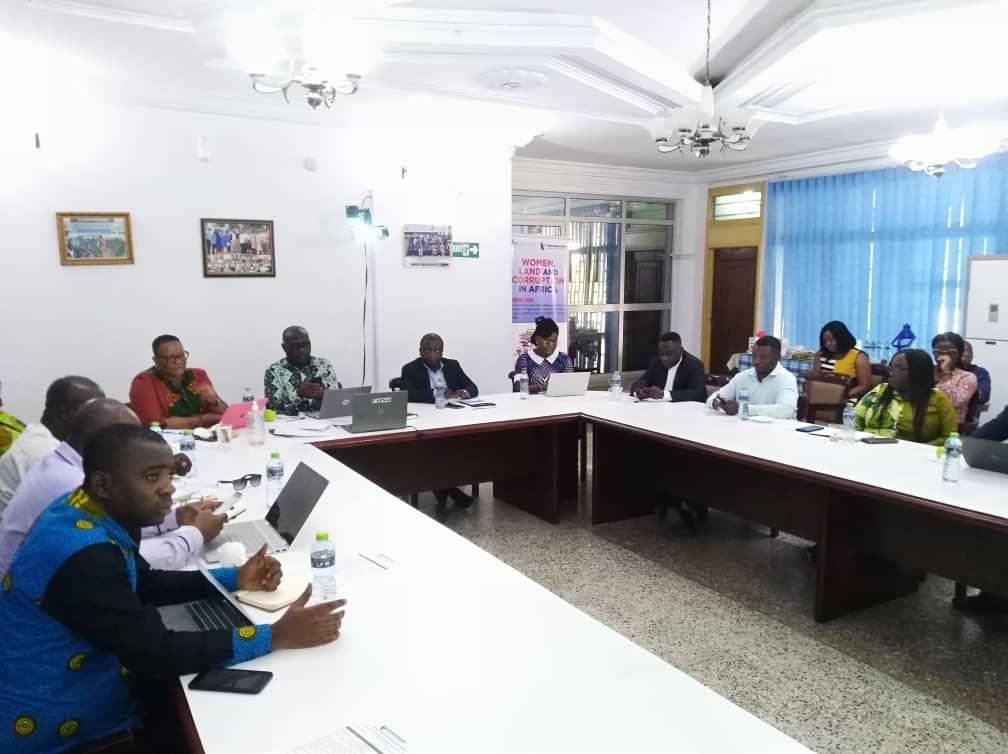
Addressing Civil Society Organizations (CSOs) and Government agencies working in the land sector in Accra on Thursday, February 16, Mrs. Linda Ofori-Kwafo, Executive Director, of GII emphasized the need to strategise in order to increase citizens’ awareness and trust in exposing corruption in the land sector.
That, she said, would result in a greater beneficial influence in the promotion of good land governance in Ghana.
She posited that a critical first step in battling land corruption is implementing excellent land governance at the policy, legal, institutional, and administrative levels. Thus, she believes that excellent land governance may be achieved if land administration and management are made more transparent, efficient, and participatory.
She added that one of the best ways to identify and stop corruption and other types of misconduct is by whistleblowing. Whistleblower revelations have revealed misconduct and fraud, saving millions of dollars in taxpayer money.
She acknowledged that even though it has been recognised as a crucial action or weapon for reporting corrupt practices at both the organizational and national levels, whistleblowing is nevertheless hindered by historical and cultural issues all over the world, which makes these difficulties even more tedious. She called on all stakeholders to support the project to ensure that its objectives of minimizing land sector corruption among other things are achieved.
Explaining the rationale behind Ghana Whistleblower Act. Programmes Manager of Ghana Integrity Initiative (GII), Mary Awelana Addah, stated that as a crucial anti-corruption weapon, the Ghanaian Parliament passed the Whistleblower Act (Act 720) in 2006. She said the Act’s goal is to strengthen the country’s capacity to combat corruption and other illegal activities that harm our growth.
She explained to participants that the law is based on the notion that if everyday people have the freedom to report corrupt and other illegal actions of others without fear of retaliation, millions of cedis will be saved annually, respect for morality and integrity will rise, the standard of public service will rise, and Ghana will experience rapid development.
She observed that since the whistle-blowing Act was passed in October 2006, its implementation has been fraught with controversy, mostly because individual whistle-blowers and the organizations responsible for handling or ostensibly responsible for handling the information provided by the whistle-blowers lack understanding.
Reports has it that, the majority of Ghanaians who whistled had endured traumatic events.
She maintained that it is crucial to highlight the significant contribution Civil Society Organizations (CSOs) provide to the fight against corruption through research, advocacy, and public education that makes the complicated subject of corruption understandable to the average person.
She added that CSOs serve as the initial point of contact for the public for information at the local and district levels. The public, on the other hand, needs to be thoroughly informed about the processes and procedures for raising a red flag as well as how to conduct themselves from the time of filing a complaint through any investigations and the outcome.
On his part, Mr Okai Michael Henchard, Project Coordinator at GII said the dialogue was part of the project activity meant to provide a forum to deliberate, form partnerships, and strategize for a greater positive impact in the promotion of land rights and the fight against land corruption in Ghana.
By: Mohammed Suleman/ Publicagendagh.com