
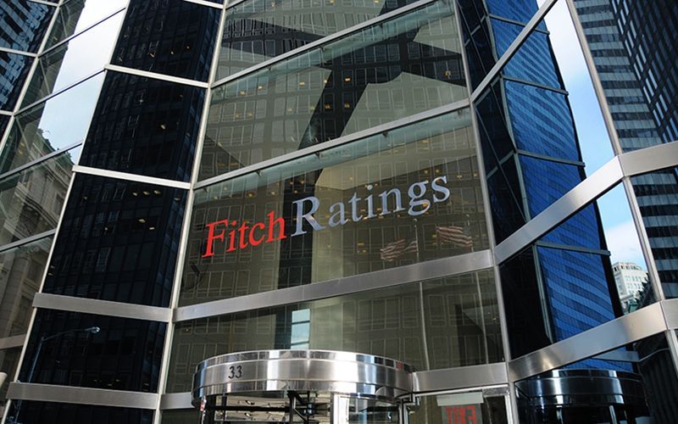
Rating agency, Fitch, has downgraded Ghana’s Long-Term Foreign-Currency (LTFC) Issuer Default Rating (IDR) to ‘CCC’ from ‘B-‘.
The downgrade, it said, reflects the deterioration of Ghana’s public finances, which has contributed to a prolonged lack of access to Eurobond markets, in turn leading to a significant decline in external liquidity.
“In the absence of new external financing sources, international reserves will fall close to two months of current external payments (debits in the current account) by end-2022”, it explained.
More Read
The government has requested support from the International Monetary Fund, which is likely to lead to additional financing from the Fund and other multilateral lenders.
However, Fitch said “the government’s high-interest costs and structurally low revenue as a percentage of Gross Domestic Product have increased the likelihood that IMF support would necessitate some form of debt treatment, although this is not our main scenario. The high-interest burden on local-currency debt also means that the inclusion of a domestic debt treatment cannot be ruled out”.
Ghana could secure deal in six months’ time
Again, Fitch believes that a deal with the IMF is likely within the next six months.
“We estimate that a programme could disburse as much as $3 billion and unlock budget support from other multilateral lenders. However, the timing of such a deal is uncertain and would be dependent on the government’s ability to present a credible fiscal reform plan in line with increasing government revenue and improving debt affordability metrics”.
The most recent IMF debt sustainability analysis, conducted in 2021, found Ghana at a high risk of debt distress and vulnerable to shocks from market access and high debt servicing costs.
On tight external debt servicing schedule, Fitch estimates that Ghana faces $2.75 billion of external debt servicing in 2022, including amortisation and interest, and $2.8 billion in 2023.
“Access to external financing will remain tight, as Ghana is likely to remain locked out of Eurobond markets, which had come to be a regular source of external financing for the government”, it stressed.
“In 2022, we expect that the government will meet its external debt obligations, in part, through a combination of a $750 million term loan from the African Export-Import Bank (BBB), $250 million in syndicated loans from international commercial banks, and up to $200 million from the government’s sinking fund. The 2022 mid-year policy review indicates that the government expects to source the rest from the IMF and other multilateral lenders. In the absence of an approved programme by the end of the year, the government would have to draw more heavily on its international reserves, which were USD7.6 billion, including oil funds and encumbered assets, as of June 2022”, it pointed out.
Uncertain pace of fiscal consolidation
Fitch said the government’s high interest costs and low revenue will continue to be impediments to fiscal consolidation efforts.
The 2022 Budget’s medium-term fiscal framework had envisaged narrowing the deficit to below the existing deficit ceiling of 5% of GDP by 2024. The expected consolidation was based on the expiry of pandemic-related expenditure items and a significant increase in domestic revenue, driven by new taxes, including a levy on electronic transactions.
The rating agency said delays in implementing the new revenue measures have resulted in lower revenue and a larger nominal deficit in half-year 2022 relative to budget forecasts.
However, the 2022 mid-year fiscal policy review presented in July contains an updated fiscal deficit forecast of 6.6% of GDP compared with the original deficit forecast of 7.4%, owing to an upward revision in nominal GDP.
“We forecast the 2022 fiscal deficit at 8.1% of GDP; this is inclusive of energy-sector clean-up costs not contained in the government’s figure. The possibility of new revenue measures could lead to a further shrinkage of deficit in 2023, but the government’s slim majority in parliament could frustrate attempts to raise tax rates or implement new taxes”, Fitch mentioned.
Domestic debt costs high
Government interest costs reached 47.5% of revenue in 2021, considerably above the current ‘B’ median of 10.7%.
“We expect interest costs to remain at or above 45% through 2024”, Fitch said.
Interest costs largely reflect high yields on domestic debt. Yields have climbed higher in 2022, following inflation spikes and monetary tightening by the Bank of Ghana (BoG).
Yields on the 91-day treasury bill reached 26% in July 2022, up from 12.6% in July 2021. Moreover, Fitch said, the government has reported under-subscribed yields, necessitating the tapping of existing medium-term issuance.
“The government has increased its outstanding advances with the BoG, providing some additional domestic financing and could conduct another private debt placement with the central bank as it did in 2020, but such a measure would necessitate parliamentary approval”, it concluded.
Source: Joy Business