

The Institute of Economic Affairs (IEA) has called on government to abolish tax incentives and review royalty rates under Ghana’s mining and minerals regime to ensure the country secures optimal value from its natural resources.
According to the policy think tank, Ghana’s existing fiscal and legal framework for the extractive sector remains outdated and overly generous to multinational mining companies — a development that has constrained the country’s ability to maximise revenue from resource exploitation.
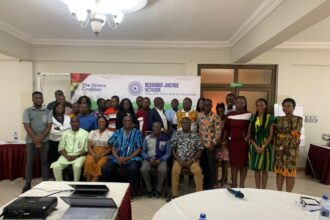
Presenting findings at the IEA’s seminar series on natural resource governance, Senior Research Fellow, Dr Eric Oduro Osae, stressed that the Minerals and Mining Act, 2006 (Act 703), requires urgent reforms to align with current realities and national technical capacity.
More Read

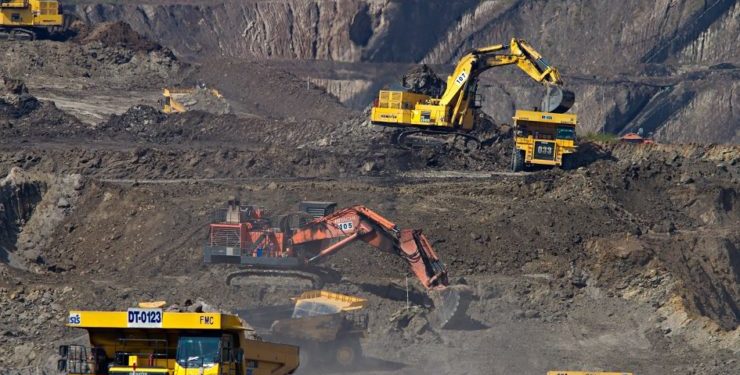
He noted that despite over a century of mining and substantial mineral endowment, Ghana continues to record limited returns relative to the scale of mineral extraction.
“The existing incentives — including tax holidays, royalty caps and stability agreements — have skewed benefits in favour of foreign mining firms, leading to significant revenue losses and weak local participation,” Dr Osae said.
Data from the IEA’s review showed that of the US$7.1 billion total mineral revenues recorded in 2024, only GH¢17.68 billion was paid to the state in taxes, royalties, and dividends — far below potential receipts considering the scale of fiscal concessions and capital outflows.
The Institute observed that many of these incentives are entrenched in legislation framed under outdated assumptions of limited local expertise, which no longer reflect Ghana’s current technical and human resource capacity.
“All these benefits, if quantified, will show that we are giving out too much to the mining sector,” Dr Osae emphasised.
To address the imbalance, the IEA is recommending a comprehensive review of the extractive industry’s fiscal framework — including abolishing tax waivers for mining firms, revising royalty rates to reflect actual resource value, enforcing stronger local ownership structures, and ensuring dispute resolutions are anchored in Ghanaian courts.
“If you match these benefits against what we give to the mining firms, you realise that it creates a huge gap. How do we close this gap? We need to review ownership structures to encourage local participation. I also propose that we abolish tax incentives and review the royalty rate. The 5% cap may not be helping, but if you don’t cap it, what is the alternative? The alternative is to work with the mining companies to increase production so that royalties can grow. We must improve transparency and accountability in how mining revenues are mobilised and used,” he explained.
Former Chief Justice, Sophia Akuffo, who also addressed the seminar, backed calls for a national dialogue on natural resources to build consensus on a sustainable model for resource management and value retention.
“Natural resources continue to anchor the economy, but their benefits remain skewed and will remain so if we don’t change the current regime. Outdated legal frameworks, overly generous fiscal incentives, and weak local participation have all contributed to the country’s limited share of its own wealth,” she stated.
Source: Norvanreport