


Ghana has recorded progress in reducing multidimensional poverty over the last year, with over 360,000 people escaping deprivation between mid and late 2025 alone.
However, profound and persistent inequalities between rural and urban areas, as well as staggering regional disparities, threaten to stall broader national gains, according to a major new government report released today.
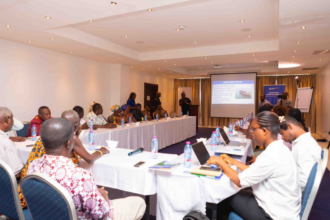
The Quarterly Multidimensional Poverty Report for 2024 to 2025 Q3, presented by Government Statistician Dr. Alhassan Iddrisu today in Accra, revealed that the national poverty headcount fell from 24.9 per cent in the last quarter of 2024 to 21.9 per cent by the third quarter of 2025. This translates to a decline from 8.2 million to “a little over 7 million people” classified as multidimensionally poor.
More Read

“Encouragingly over 360,000 people moved out of multidimensional poverty between Q2 and Q3 of 2025 alone, confirming a sustained decline in poverty over the period,” the report states.
Despite this positive trend, the data paints a picture of a nation developing at two distinct speeds. The rural-urban gap remains a chasm, with rural poverty incidence at 31.9 per cent in Q3 2025, more than double the urban rate of 14.2 per cent—a gap exceeding 17 percentage points.
Regional inequalities are even more extreme. “North East and Savannah Regions recorded the highest poverty incidence, exceeding 50 per cent in both Q2 and Q3 2025, while Greater Accra and Western Regions remained below 20 per cent,” the report finds. In raw numbers, the highly populated Ashanti and Northern regions each have over one million multidimensionally poor citizens.
The report identifies the core drivers of ongoing deprivation. Health and living conditions remain the dominant forces, collectively accounting for over 74 per cent of poverty’s composition. Lack of health insurance is the single largest contributor at 26.5 per cent, followed by nutrition (14.4 per cent) and employment deprivation (12.3 per cent). Alarmingly, the report flags “emerging pressures” outside the health sector, including a near-doubling of overcrowding deprivation and rising school attendance deprivation between Q2 and Q3 2025.
The data powerfully underscores the protective value of education and stable work. Poverty incidence is highest among households whose heads have no formal education (38.5 per cent) and plummets to just 5.7 per cent for those with tertiary education. Similarly, households with an unemployed head face a 35.6 per cent poverty rate, compared to only 5.3 per cent for those headed by a public sector worker.
Vulnerable groups continue to bear a disproportionate burden. Households headed by persons with severe disabilities, particularly hearing difficulties (43.0 per cent), and those in informal unions (33.1 per cent) experience significantly higher poverty. Furthermore, the population facing the crushing “triple burden” of poverty, unemployment, and food insecurity increased marginally to 227,500 people, with the greatest concentrations found not in the poorest regions but in the urban centres of Greater Accra, Ashanti, and Central.
In his presentation, Dr. Iddrisu framed the report as a call for targeted action. “What these findings demand is not general responses, but practical, targeted solutions,” he said.
The report recommends priority actions including expanding National Health Insurance Scheme (NHIS) coverage, accelerating investment in sanitation and safe water, strengthening school retention programmes, and scaling up skills development.
Source: Graphic.com