

Public Agenda NewsPaperPublic Agenda NewsPaper
  • General News
  • Politics
  • Business
  • Health
  • Development Agenda
  • World News
  • Features & Opinions
  • Election watch
  • Editorial
Font ResizerAa
Public Agenda NewsPaperPublic Agenda NewsPaper
Font ResizerAa
  • General News
  • Politics
  • Business
  • Health
  • Development Agenda
  • World News
  • Features & Opinions
  • Election watch
  • Editorial
Search
  • General News
  • Politics
  • Business
  • Health
  • Development Agenda
  • World News
  • Features & Opinions
  • Election watch
  • Editorial
Follow US
Breaking NewsGeneral News

Farmers advised to stop using antibiotics on healthy animals

Latifa Carlos
Last updated: November 13, 2017 1:22 pm
Latifa Carlos
Share
3 Min Read
SHARE

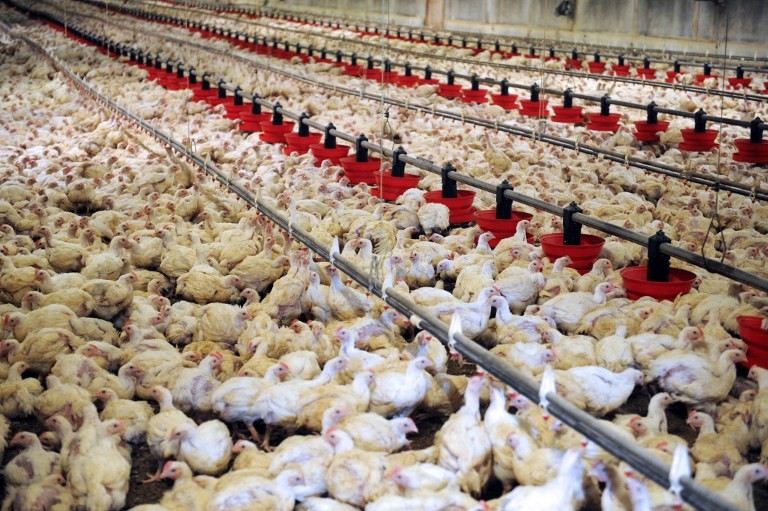
 Farmers and the food industry should stop using antibiotics routinely to promote growth and prevent disease in healthy animals, the United Nations health agency has said.

“A lack of effective antibiotics is as serious a security threat as a sudden and deadly disease outbreak,” said Tedros Adhanom Ghebreyesus, Director-General of the World Health Organization (WHO) in a news release on the new guidelines aimed at helping preserve the effectiveness of antibiotics for humans by reducing their unnecessary use in animals.

“Strong, sustained action across all sectors is vital if we are to turn back the tide of antimicrobial resistance and keep the world safe,” he added.

More Read
Oil prices fall on hopes Strait of Hormuz could reopen
Veteran Nigerian Environmental Journalist Tunde Akingbade Dies at 67
AWSP Welcomes Government Decision to Restore Achimota Forest Reserve
Finance Minister presents mid-year budget review today
ECOWAS reaffirms plans to launch single currency in 2027

In some countries, some 80 per cent of the total consumption of medically important antibiotics is in the animal sector, largely for growth promotion in healthy animals.

Over-use and misuse of antibiotics in animals and humans is contributing to the rising threat of antibiotic resistance. Some types of bacteria that cause serious infections in humans have already developed resistance to most or all of the available treatments, and there are very few promising options in the research pipeline.

WHO strongly recommends an overall reduction in the use of all classes of medically important antibiotics in food-producing animals, including complete restriction of these antibiotics for growth promotion and disease prevention without diagnosis.

Healthy animals should only receive antibiotics to prevent disease if it has been diagnosed in other animals in the same flock, herd, or fish population, according to the updated WHO guidelines on use of medically important antimicrobials in food-producing animals.

Many countries have already taken action to reduce the use of antibiotics in food-producing animals. For example, since 2006, the European Union has banned the use of antibiotics for growth promotion. Consumers are also driving the demand for meat raised without routine use of antibiotics, with some major food chains adopting “antibiotic-free” policies for their meat supplies.

Alternative options to using antibiotics for disease prevention in animals include improving hygiene, better use of vaccination, and changes in animal housing and husbandry practices.


Share This Article
Facebook Whatsapp Whatsapp Email Copy Link Print

Recent Posts

  • Oil prices fall on hopes Strait of Hormuz could reopen
  • Bekwai residents give Chinese quarry firm one-week ultimatum over blasting, environmental concerns
  • Veteran Nigerian Environmental Journalist Tunde Akingbade Dies at 67
  • AWSP Welcomes Government Decision to Restore Achimota Forest Reserve
  • Finance Minister presents mid-year budget review today
  • ECOWAS reaffirms plans to launch single currency in 2027
  • Parliament approves $300m loan for SHS infrastructure expansion
  • Court convicts Wontumi on six illegal mining charges over Samreboi concession
  • Gov’t to build 50,000 houses for teachers – Haruna Iddrisu
  • Honour Ghana, TI-Ghana Partner to Promote Integrity and Values-Based Education
  • ISODEC: Community Water Boards Exchange Best Practices to Strengthen Local Water Management
  • Community Voices Strengthened as ISODEC Successfully Concludes AVID II Project in Mfantseman Municipality
  • UK scraps £45 million girls’ education programme
  • Ghana’s inflation could ease below 5% in July – Databank
  • Mahama declares July 10–11 National General Cleaning Days in flood-affected regions
  • Study Recommends Royalty Share for Landowners in Mining Communities
  • Fuel prices drop for second consecutive time
  • From Trauma to Recovery: Strenthening Support for Victims of Torture

You Might Also Like

Breaking NewsGeneral Newstop stories

Parliament approves $300m loan for SHS infrastructure expansion

July 22, 2026
Breaking NewsGeneral Newstop stories

Court convicts Wontumi on six illegal mining charges over Samreboi concession

July 20, 2026
Breaking NewsDevelopment Agendatop stories

Gov’t to build 50,000 houses for teachers – Haruna Iddrisu

July 20, 2026
Breaking NewsGeneral News

Honour Ghana, TI-Ghana Partner to Promote Integrity and Values-Based Education

July 20, 2026

About Us

Public Agenda is fou­nded and owned by Pu­blic Agenda Communic­ations.

Public Agenda was founded as a public interest Me­dia entity. Its Visi­on is to contribute to building a well-i­nformed society where accurate informati­on dissemination is the cornerstone of a democratic, just and equitable society.

Its mission is to inform, guide and bui­ld responsible citiz­enship and accountab­le decision making and strive for excell­ence in the media in­dustry. Public Agenda Communications is managed by a Board of Directors.

  • Contact us
  • Advertise with us
Welcome Back!

Sign in to your account

Username or Email Address
Password

Lost your password?