

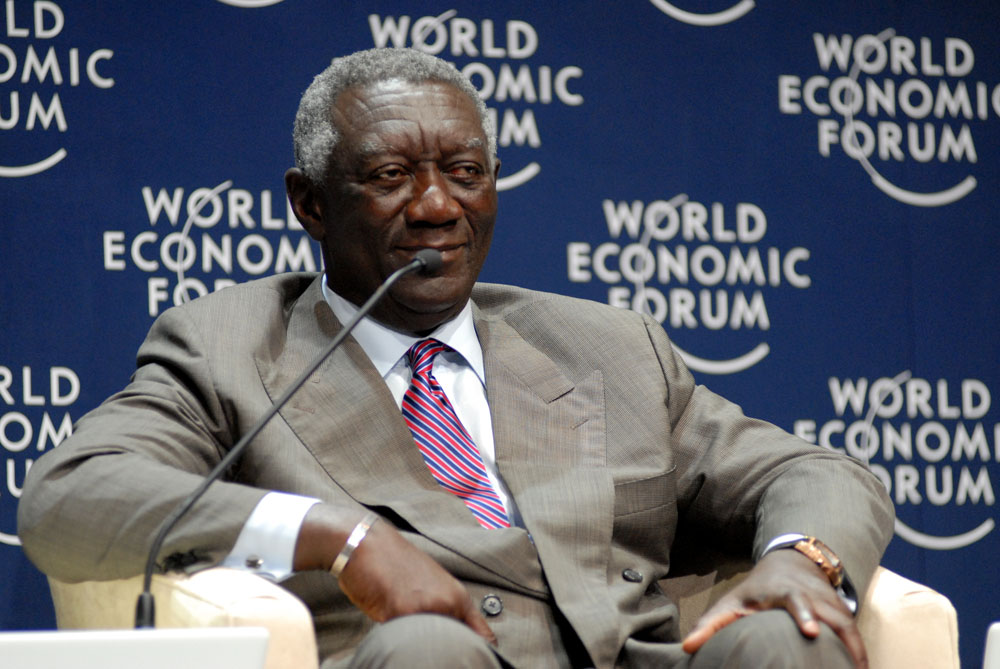
Former President John Agyekum Kufuor has stated that Africa can only avoid a total collapse of its economies from the COVID-19 pandemic if intensive social distancing measures are practised.
He added that Africa will only achieve the necessary behavioural change if people can trust the information they have access to.
“Our governments need to invest in trustworthy information and communication systems. This will not be easy, given the absence of a dynamic public interest media ecosystem which African citizens can turn to for trustworthy information.”

Below is the full piece by the former President
Africa entered this century with great expectations. Its entrepreneurial and political ambitions were growing. The international community was coalescing behind a new agenda of cooperation crystallised in the Sustainable Development Goals and the Paris Climate Agreement.
Unfortunately, with its profound health and economic challenges, the COVID-19 pandemic has created an immense barricade to these ambitions. Fulfilling Africa’s future agenda will require us to change the values our societies place on knowledge and expertise and the way we communicate and interact with one another.
Imperial College UK analysis suggests there could be 40 million deaths worldwide from COVID-19 without mitigation and suppression measures. It predicts that some of the worst consequences of COVID-19 will be felt in lower-income countries. Neither cure nor vaccine currently exists. Protecting both life and livelihood will depend on how societies adapt and change. Akinwumi Adesina, the President of the African Development Bank estimates the virus could cost the continent a GDP loss of between?US$22 billion and US$88 billion.
The ability to avert the total collapse of Africa’s already fragile economies in the coming months will require intensive social distancing measures. However, we will only achieve the necessary behavioural change if people can trust the information they have access to.
Our governments need to invest in trustworthy information and communication systems. This will not be easy, given the absence of a dynamic public interest media ecosystem which African citizens can turn to for trustworthy information.
By 2008, Ghana was home to an increasingly profitable private-sector driven media and communication sector. Liberalising media freedom and the opening up of the economy are among the proudest achievements of my eight-year presidency from 2001 to January 2009.
Elsewhere across much of the continent, with the rise of promising economic development and an emergent independent media and telecommunication ecosystem, many African nations also began to embrace a new era of transparent and accountable governance.
However, of late regressive politics has taken hold of some countries, with ever more grim statistics of journalists being killed or attacked. Independent media have been taken over by governments or factional actors.
Altogether, we have made very little progress as a continent in reforming our state broadcasters into the kind of independent public service broadcasters that have been playing such a central role in informing people about the pandemic in countries, such as the UK.
Across most of Africa, advertising has migrated wholesale from traditional broadcasters to new internet platforms and has undermined the financial viability of independent journalism. By comparison, online digital revenues across Africa are negligible, unlike old-fashioned media in industrialised countries where profitable digital operations are rapidly emerging.
These challenges were already serious; with the current crisis they have become existential. The Reuters Institute for the Study of Journalism estimates that news organisations worldwide could lose more than US$20 billion through the decline in revenues brought about by the COVID-19 crisis. Throughout Africa, there are burgeoning reports from independent media organisations of revenues in precipitous decline.
COVID-19 is, as Dr Ghebreyesus, Director General of the World Health Organization, terms it, an “infodemic,” characterised by misinformation that can cripple the public response. But just as public demand and the need for trustworthy information is skyrocketing, the capacity to supply that information has never been more endangered. Moreover, the role of the media in a crisis like this is not just to inform; but hold governments to account for the effectiveness of their responses.
Well before COVID-19, I was arguing that Africa needs a clear, determined strategy to support public interest media. The pandemic illustrates the need more than ever. Thankfully, work is well under way on two potential solutions.
The first is the International Fund for Public Interest Media, designed to channel international development and other philanthropic resources to independent media in resource-poor settings. An in-depth feasibility study detailing how the fund would work has been developed by BBC Media Action, the BBC’s media support charity with the backing of the Luminate Group.
The second initiative is a new African Public Interest Media Initiative which is developing a scalable, digital business model that incentivises African-generated public interest entertainment content.
The drivers of the two initiatives are helping to coordinate an emergency response to mitigate the immediate impact of the COVID-19 crisis on an already struggling free media sector. I urge Africa’s political leadership to give credible backing to both initiatives in partnership with OECD nations and other philanthropic entities.
Source: Starrfm