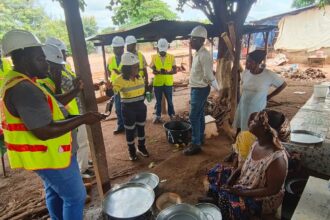


Manager of the Baptist Vocational Training Centre, Reverend Grace Akunor, has revealed that some people are still practising Trokosi, although it was outlawed many years ago.
While blaming the existence of the practice on ineffective enforcement of the law, and failure of communities to accept the empowered women and ladies back, she also attributed it partly on the adamant attitude of the practitioners.
Rev Akunor, has called for its total eradication as it is against human dignity.
More Read
The practice was abolished in 1998 by law, but some people are still practising it in secrecy, while others also do it publicly with impunity with the reason that it is their culture.
The Reverend said the Ghana Baptist Convention (GBC) in 1998 through its missions in the Volta Region found the practice to be inappropriate and played a role in the campaign against it, when it drew the attention of government.
Government responded to the campaign in June 1998, when Parliament passed the law against its abolishment and that she said, led to the release of a number of the slaves at the shrines.
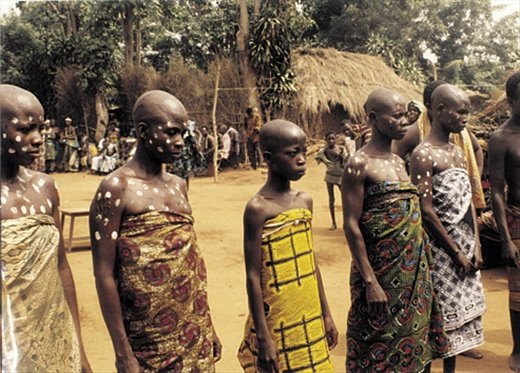
Trokosi is practised in South-Eastern part of Volta and Dangbe area in the Greater Accra Regions, where mostly girls (virgins) are sent to the shrine to atone for the crimes of their family members.
The girls are aged between four and 12, who later become the wives of the fetish priests are subjected to a lot of inhuman treatments.
From the time it was abolished, the victims: both old and young and some descendants were rescued and the old established into businesses while the younger ones were put under training, she said.
She said the Convention set-up Baptist Relief and Development Agency (BREDA) to implement socio-economic programmes of the Convention such as rehabilitation home for the rescued slaves as well as re-integrate them back into the society.
She said that the Convention continued to rescue such victims and it became more difficult as the perpetrators run and abandoned the shines anytime they were around.
“We usually go to those areas, where it is practised, sometimes to follow-up on those integrated into the community, but the practitioners would be alerted as soon as the Convention’s vehicle is spotted, the Reverend Minister recounted.
She stated that it is difficult to get them released because victims were kept in the remote areas, which are unmotorable, making the exercise expensive and unsafe.
Rev Akunor said so far, hundreds of women and young ladies are settled under the Baptist Relief and Development Agency (BREDA) intervention and they are given various skills trainings as well as start-up kits after the training.
She said at the centre, the girls are housed for three years and trained in Kente weaving, batik/tie and dye making, dress making, catering, carpentry, bead designing and hairdressing.
After the training, they write proficiency examinations in National Vocational Training Institute (One and Two).
BREDA also established nine childhood schools in the affected areas for children born as a result of the practice.
Some of the challenges at the centre are finance, lack of enough facilities, saying that one hall served as a classroom, workshop and for other practical work and the lack of transportation resources.
Source: GNA