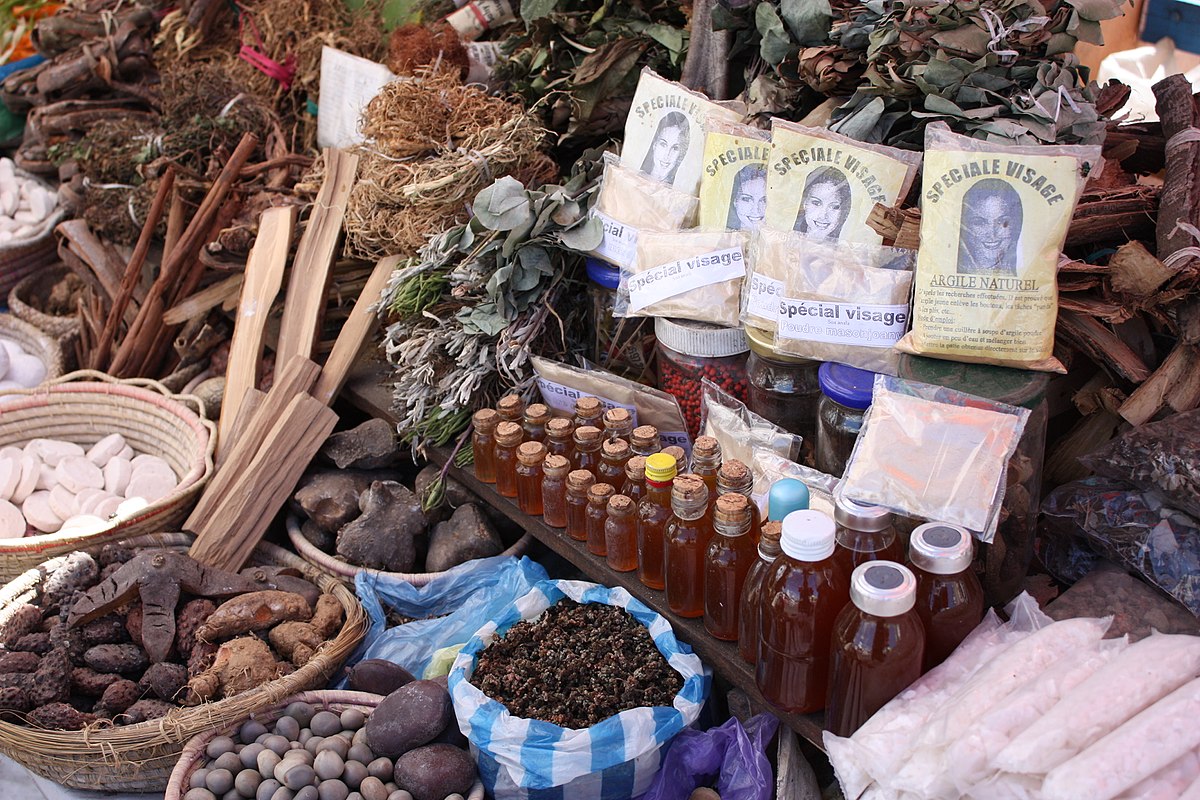
The Food and Drugs Authority (FDA) has been urged to ban the sale of herbal medicines with preparation from certain plants containing pyrrolizidine alkaloid (PA), a dangerous toxin that destroys the liver.
According to a lecturer at the Department of Food Science and Technology at the Ho Technical University (HTU), Dr Emmanuel Letsyo, in spite of the poisonous nature of PA plants, certain herbal medicine producers were using them to prepare products for human consumption.
He named the four common PA plants as chromolaena odorata, commonly known as ‘acheampong’, and crotalaria retusa, which is commonly referred to as Devil bean with no known local names.
More Read

The rest are ageratum conyzoides (known in Twi as ‘guakuro’, in GaDangme as ‘ntumlumlu’ and in Ewe as ‘mina’ or ‘nyigbe’) and heliotropium indicum (known in Ewe as ‘koklototsu’ or ‘agama-ble’, in Twi as ‘akomfem atriko’, in Hausa as ‘kaikashin’ or ‘korama’ and GaDangme as ‘kokodenebaa’).
Plant contaminants
Speaking to journalists after making a presentation at the fouth National Food Hygiene, Safety and Sanitation Conference at the HTU, Dr Letsyo, who researches in areas including plant contaminants in foodstuffs and herbal products, disclosed that a research conducted by a team from Germany showed that some herbal medicines in Ghana contained that toxin.
“We analysed about 60 herbal products from different shops in Ghana. Samples obtained from drug stores, pharmacies and herbal shops were sent to Germany. We realised that some of the herbal products contained some amount of PA and the amount was far higher than the limit set by regulated agencies elsewhere in the world,” he disclosed.
He said they found out that most of the samples contained ageratum conyzoidesand heliotropium indicum which posed a lot of health risks to consumers.
“These two poisonous plants are actively used in the preparation of herbal medicines in the country. If nothing is done about this, it is going to destroy the livers of a lot of people,” he pointed out.
Food safety
He advised the public to be on the lookout for medicines which contained those plants and also called on the FDA to do further research and ban their usage to protect the lives of the people.
The conference was on the theme: “Food-borne illness and sanitation in the era of Sustainable Development Goals (SDGs): The implication for a healthy workforce”.
The regional food safety desk officer of the FDA, Mr Elorm Yao Dordor, in a presentation on Food Safety, Food Hygiene and Food-borne Illnesses, observed that the country had experienced a number of outbreaks as a result of food-borne diseases.
According to him, when food was not handled well, it could lead to serious problems for people, saying the World Health Organisation had identified 250 known food-borne diseases, some of which were common in Ghana.
He called on the government, the food industry, academia and individuals to do more to make food safe to prevent diseases.
The acting Vice-Chancellor of the university, Prof. Emmanuel Kojo Sakyi, said the conference was an important component of the institution, which had come to stay to help think through revolutionary processes that would place the university on top of issues concerning food hygiene and safety in the country.
Source: Daily Graphic