


Stakeholders in the mental health sector have revealed that Ghana’s Mental Health Fund, set up to finance mental healthcare and enhance services nationwide, is currently empty.
This revelation has sparked renewed concern over Ghana’s ability to address the growing burden of mental illness.
“We have a Mental Health Fund that has been set up, but there are no funds in it,” Professor Sammy Ohene, Board Chair of the Mental Health Society of Ghana, lamented during a meeting with mental health stakeholders in Accra.
More Read

The Mental Health Fund, created under the Mental Health Act, 2012 (Act 846), was intended to provide sustainable funding for mental health services, research, infrastructure, and the welfare of patients and staff.
However, more than a decade after its establishment, the Fund according to advocates received no financial support from successive governments.
They also raised concerns about the procurement of psychotropic medications, noting that although funds were allocated for this purpose, no medicines have been purchased for 2025.
Prof. Pinaman Appau, a former Chief Executive Officer of the Mental Health Authority (MHA), confirmed that the Fund remains empty, describing the situation as a major obstacle to implementing critical mental health programmes.
She also emphasized the need for government to allow the Mental Health Authority to procure the medication by itself, adding that, without financial resources, it is impossible to expand community mental health services, provide adequate medication, or rehabilitate patients.
- Dr Appau however acknowledged that though underfunding is a major challenge in the mental health sub-sector, some progress has been made in implementing the Mental Health Act, including the establishment of some regional subcommittees and visiting committees.
The meeting also featured a presentation by the Acting Chief Executive Officer of the MHA, Dr. Eugene Dordoye, who provided an overview of the Authority’s organogram and outlined measures to RESET the Authority’s programmes.
Dr. Yaro ,Badimak Peter, Executive Director of BasicNeeds, discussed mental health services in Ghana, focusing on access, the quality of psychosocial support, and mental health investment in the country.
He indicated that geographical access to mental health services has improved, but the quality of care and financial accessibility remain inadequate.
He added that financial access needs to be improved, especially if universal health coverage is to be realized in Ghana. He emphasized that investment in mental health should be intentional and well-targeted.
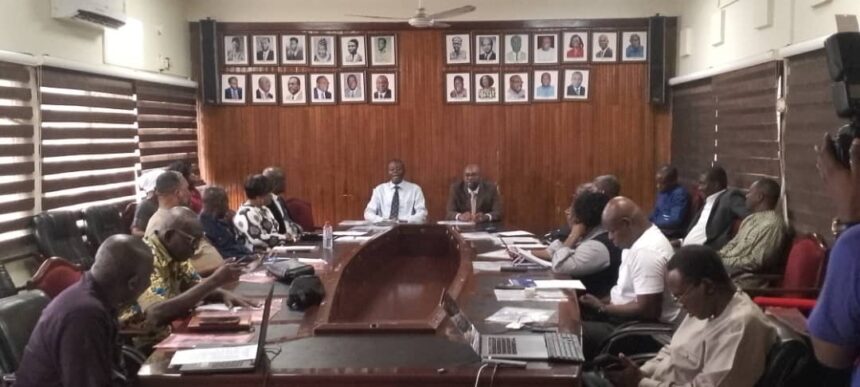
In his remarks, Mr. Humphrey Martey Kofie, Executive Secretary of MEHSOG, explained that the meeting was intended to “familiarize ourselves with the current Board members, engage with them and the management of the MHA, and share our experiences.”
According to Mr. Kofie, the aim was also to provide insights that will guide the Authority’s future decision-making in developing and implementing disability-inclusive policies and programmes that address the rights and needs of persons with disabilities, particularly those with mental health conditions.
Participants at the event stated that the situation highlights the ongoing neglect of mental health within Ghana’s public health system
According to the World Health Organization, one in four Ghanaians will experience a mental or neurological disorder at some point in their lives.
The Meeting was organized by MEHSOG in partnership with the Ghana Federation of Disabilty Organizations(GFD) and the Africa Disability Institute (ADI)