

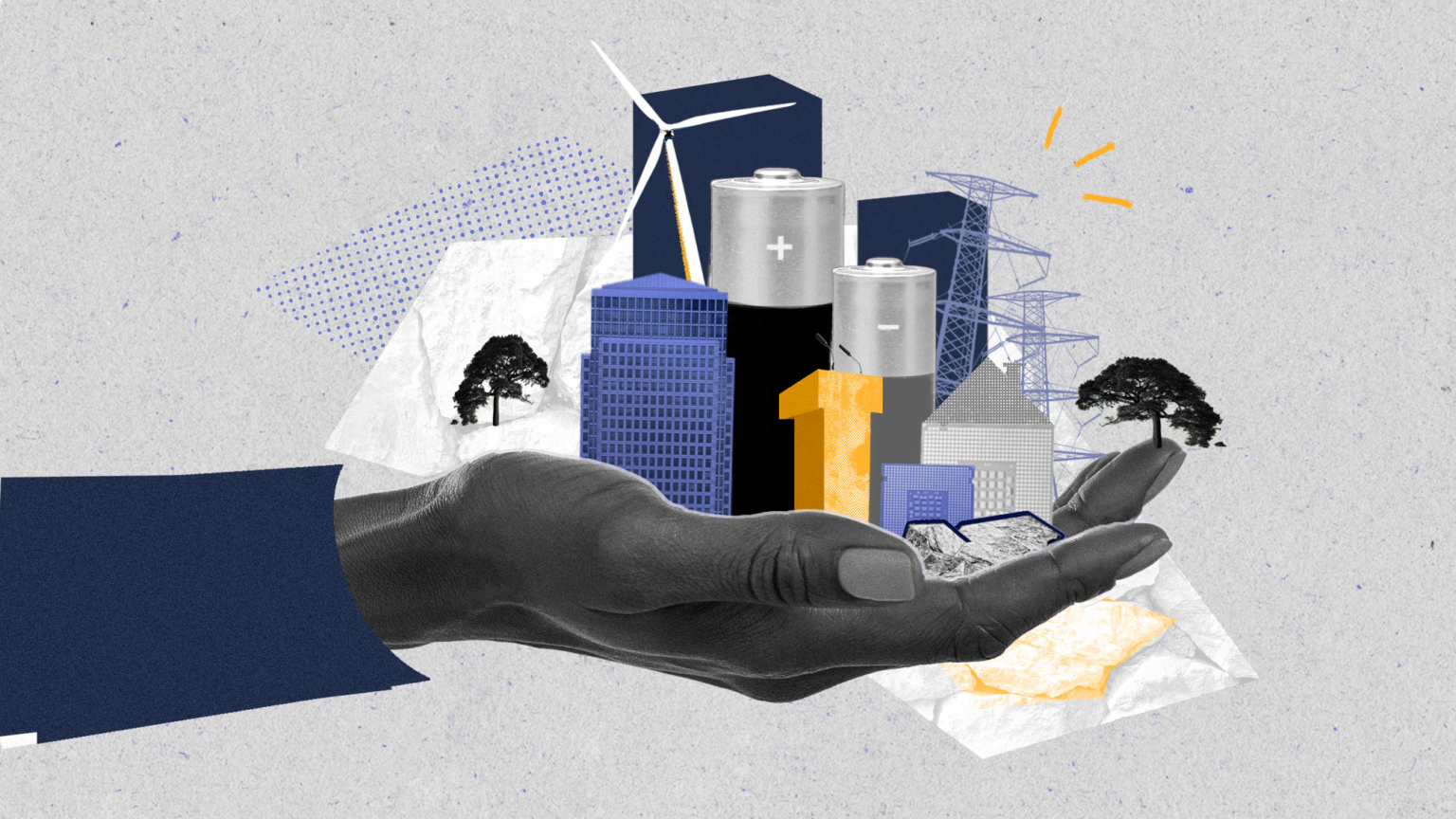
Africa could boost its GDP by at least $24 billion a year and create 2.3 million jobs by introducing manufacturing and trade policies that enable it to extract more value from the booming trade in so-called ‘transition minerals’, according to new economic modelling from Publish What You Pay (PWYP).
Africa is home to more than 40% of minerals like copper, lithium and nickel, used in the production of renewable energy technologies. The Democratic Republic of Congo (DRC) alone holds 60% of the world’s cobalt reserves, a mineral used, among other things, to make lithium-ion batteries. Demand for such materials is expected to rise exponentially as countries transition to low-carbon economies.
However, African countries currently only realise a small proportion of the potential value from these minerals. Most are exported in raw form, with 57% going to China, 8% to the European Union, 8% to Japan, and only 2% to other African countries. The biggest profits are made outside of Africa from the design, manufacturing, marketing and sales of these materials into renewable energy technologies.
More Read

PWYP’s new report urges African countries to work together to introduce industrial policies that encourage more processing and manufacturing on the continent. Governments should:
- Work together to process, refine and manufacture energy transition minerals on the continent, specialising in the parts of the value chain in which they are most competitive.
- Finalise the planned African Continental Free Trade Area (AfCFTA) and ensure it enables African countries to access each others’ transition minerals and clean energy components and technologies at lower prices, helping them to build domestic industries.
- Strengthen transparency and accountability of the mining sector by adopting comprehensive national and regional laws, and ensure mining companies respect the rights of the Indigenous and local communities.
Adam Anthony, Chair of PWYP’s Africa Steering Committee, said:
“There is a huge untapped opportunity for transition minerals not just to enable the clean energy transition globally but to create jobs and grow the sustainable economy in Africa. African leaders should work together to develop a coordinated industrial policy that allows more value to be added in-country, and to strengthen clean energy technology supply chains on the continent.”
PWYP’s modelling finds that the biggest export opportunities are for processed metals including processed copper ($14bn) and processed platinum group metals ($9bn) and products such as copper wiring and (copper-based) coaxial cable ($5bn).
The African Union and other regional blocs could play a pivotal role in promoting intra-regional trade and economic cohesion. By processing minerals and renewable energy products in-country, African nations can enhance clean energy access for their citizens and make more revenue from exports.
Just half of Africans have access to electricity, despite the continent possessing all the minerals needed to build its own energy infrastructure. Dr Ketakandriana Rafitoson, Executive Director of PWYP, said:
“The continental extraction, transformation and use of transition minerals could help reduce energy poverty in Africa; a crucial step towards an energy transition which leaves no one behind. However, this process has to include strong safeguards for human rights, good governance and the environment. We have to refrain from promoting development at all costs, especially if it’s detrimental to communities.”
Dr Marit Kitaw, Interim Director of the African Minerals Development Centre, an agency of the African Union, said:
“This research shows that value addition needs to become the cornerstone of our approach. By transforming our raw materials locally, we can create sustainable industries, drive economic growth, and lead the global transition to a greener, more resilient future. To position Africa as a leader in the global green economy, we need a coordinated approach. This is the vision of the future African Green Minerals Strategy and the Africa Minerals Development Centre.”
Publicagenda.news