


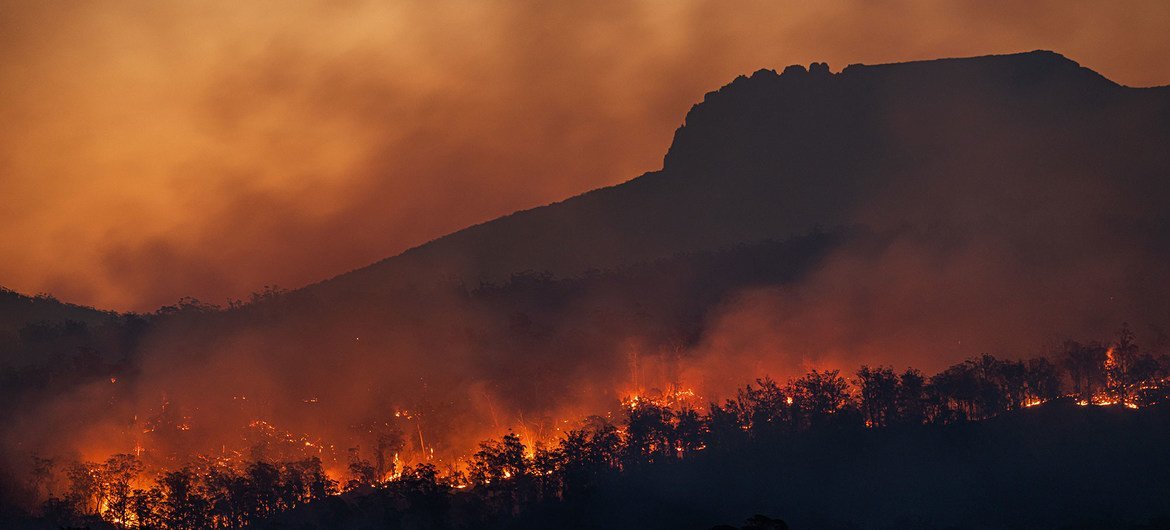
Unchecked climate change, wildfires and air pollution continue to have “a spiralling, negative impact on health, ecosystems and agriculture”, with millions of deaths attributed to dirty air, the UN World Meteorological Organization (WMO) said on Thursday.
“Almost everybody on Earth, basically nine out of 10 people breathe air that is essentially unfit for purpose,” said Lorenzo Labrador, Scientific Officer at WMO. “This means that it is air that exceeds the [UN World Health Organization] WHO guideline limits and contains a high level of pollutants with low and middle-income countries basically being the most affected.”
Heat driver
More Read

That stark finding is just one of many unsettling discoveries featuring in the latest WMO Air Quality and Climate Bulletin. It highlights, for instance, that the first eight months of 2024 have seen no let-up in periods of intense heat and persistent droughts around the world, fuelling the risk of wildfires and air pollution.
“Climate change means that we face this scenario with increasing frequency. Interdisciplinary science and research is key to finding solutions,” the UN agency warned.
The clear link between polluted air and poor health is clear, according to the WHO, which has urged global action to counter “one of the greatest environmental risks to health” and numerous preventable illnesses including stroke, heart disease, lung cancer and acute respiratory diseases, including asthma.
“Ambient air pollution alone mostly coming from vehicles and industry causes more than 4.5 million premature deaths a year,” WMO’s Mr. Labrador told journalists in Geneva.
“This is more than those death by malaria and HIV AIDS combined; so air pollution is the biggest environmental risk of our time. But not only is it a health risk in itself, it also exacerbates climate change.”
Regional trends
A snapshot of regional emissions variations featured in the UN agency report indicated a trend for “lower pollution in Europe and China” than North America and India, where there was an increase in pollution emissions from human and industrial activities.
This is likely the “direct result of a reduction in emissions in those countries over the years, and we have been noticing this tendency since we started publishing the bulletin back in 2021.”
And while it is generally widely understood that polluted air containing microscopic particulates – including sulphates, nitrates, ammonia, soot from human activity and wildfires – is harmful, Mr. Labrador reiterated the UN agency’s 2023 findings that these and other pollutants have a damaging impact on food security, too.
Crop yields down
“Particulate matter can severely affect the productivity of crops – of staple crops – such as maize, rice and wheat,” he said. “Many of this particulate matter pollution that affect crop yields are due to man-made practices, which include the land use practices such as tillage and harvesting. Also, application of fertilizers and stubble-burning at the end the season, of the growing seasons.”
New data-crunching on naturally occurring wildfires around the world last year also indicated that the inferno that spread across Canada in 2023 “was even stronger with respect to emissions” than the 2021 wildfire season in Siberia – although that was “very, very strong”, the WMO officer insisted.
“[The Canada fires] broke records concerning the amount of surface area burned over a 20-year period.”
To coincide with this year’s Clean Air for Blue Skies Day on Saturday 7 September, the UN agency urged governments to protect health, the environment and the economy, given the cost ramifications of the air pollution.
“The first thing that cities have to do is to recognize that the problem exists in the first place,” Mr. Labrador said. “So, those cities and those countries have to acknowledge first that there is an air quality problem and there is sufficient data around the world to basically acknowledge that it is a worldwide problem, particularly in urban areas.”
Source: UN News Centre