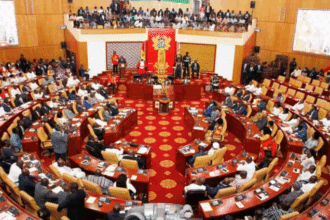


Five senior UN officials have welcomed the decision by The Gambia to uphold its ban on Female Genital Mutilation (FGM), calling it a critical win for women’s and girls’ rights.
Parliamentarians in the West African country voted last Monday to reject a bill that sought to overturn a 2015 law against the harmful practice, which involves cutting or removing some or all of the external female genitalia.
FGM is mostly carried out on infants and young girls. It can inflict severe immediate and long-term physical and psychological damage, including infection, later childbearing complications, and post-traumatic stress disorder.
More Read

Commitment to rights and well-being
“Following the vote today by the National Assembly of The Gambia, we commend the country’s decision to uphold the ban on Female Genital Mutilation (FGM), reaffirming its commitments to human rights, gender equality, and protecting the health and well-being of girls and women,” the UN officials said in a joint statement.
“We remain steadfast in our commitment to support the government, civil society, and communities in The Gambia in the fight against FGM.”
The statement was issued by Catherine Russell, Executive Director of the UN Children’s Fund (UNICEF); Natalia Kanem, Executive Director of the UN Population Fund (UNFPA); Tedros Adhanom Ghebreyesus, Director-General of the World Health Organization (WHO); Sima Bahous, Executive Director of UN Women, and Volker Türk. The UN High Commissioner for Human Rights.
Separately, UN Deputy Secretary-General Amina Mohammed also hailed the decision in a post on social media.
‘Parliament has spoken’: Deputy UN chief
“A monumental achievement by Gambia for their women and girls. Parliament has spoken for their rights by upholding the law banning FGM,” she wrote on X, formerly Twitter.
The UN Secretary-General’s Special Representative on Violence Against Children, Najat Maalla M’jid, also took to the platform to welcome this “key decision”.
Maintaining the FGM ban aligns with The Gambia’s international and regional commitments to prevent harmful practices against girls and women, the statement by the five officials said.
Praise for grassroots efforts
They also commended the tireless efforts of survivors, activists, civil society organizations, and faith-based groups working to stamp out FGM.
“Upholding the ban supports these grassroots initiatives, which are pivotal in ending all forms of violence, including harmful practices, against girls and women and delivering a safer and healthier future for girls and women in The Gambia and elsewhere,” they said.
The fragility of progress towards ending FGM cannot be overstated as assaults on women’s and girls’ rights in countries around the world have put hard-won gains in danger, they stressed.
“In some countries, advancements have stalled or reversed due to pushback against girls’ and women’s rights, instability, and conflict, disrupting services and prevention programmes,” they noted.
While legislative bans are “a crucial foundation for interventions”, the UN officials were adamant that they alone cannot end FGM. They said more than 73 per cent of girls and women aged 15 to 49 in The Gambia have already undergone the practice, many before the age of five.
‘We must not rest’
Recent months have emphasized the need for continued advocacy to advance gender equality, end violence against girls and women, and secure the gains made to accelerate progress to end FGM, the statement continued.
“It also underscores the importance of engaging with communities and grassroots organizations, working with traditional, political, and religious leaders, training health workers, and raising awareness effectively on the harms caused by the practice,” they said.
They stressed that supporting survivors “remains as urgent as ever”, noting that many suffer from long-term physical and psychological harm that can result from the procedure, and need comprehensive medical and psychological care to heal.
Underlining their commitment to support the Government, civil society, and communities in The Gambia, the officials said “together, we must not rest until we ensure that all girls and women can live free from violence and harmful practices and that their rights, bodily integrity, and dignity are upheld.