
Public Agenda NewsPaperPublic Agenda NewsPaper
  • General News
  • Politics
  • Business
  • Health
  • Development Agenda
  • World News
  • Features & Opinions
  • Election watch
  • Editorial
Font ResizerAa
Public Agenda NewsPaperPublic Agenda NewsPaper
Font ResizerAa
  • General News
  • Politics
  • Business
  • Health
  • Development Agenda
  • World News
  • Features & Opinions
  • Election watch
  • Editorial
Search
  • General News
  • Politics
  • Business
  • Health
  • Development Agenda
  • World News
  • Features & Opinions
  • Election watch
  • Editorial
Follow US
Breaking NewsDevelopment Agenda

Climate shocks may plunge 1 million Ghanaians into poverty by 2050 – World Bank report

Suleman
Last updated: November 2, 2022 12:40 pm
Suleman
Share
3 Min Read
SHARE

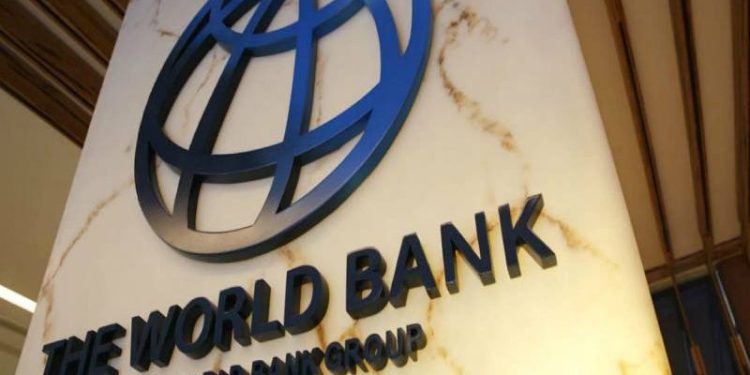
The World Bank Group’s new Country Climate and Development Report (CCDR) for Ghana estimates that at least one million more people could fall into poverty due to climate shocks if urgent climate actions are not taken.

The Report also warned that if pre-emptive measures are not taken, incomes could reduce by up to 40% for poor households by 2050, further worsening the economic plights of the less privileged.

More Read

Ghana reaffirms commitment to women’s economic empowerment at Addis Ababa dialogue
Seven missing fishermen located in Togo’s waters – Western Regional Minister
Deploy more military, police to fight galamsey – Christian Council
Petrol, diesel prices set to fall from Oct. 16 as LPG faces 18.5% hike
IMF raises Ghana’s 2026 growth forecast to 5.7%, exceeding government’s target

Climate change has become salient in impacting economies across the globe, sending countries on a race with the 2015 Paris Climate Change to achieve net-zero emissions and reduce global temperatures to well below 1.5 degrees by 2030.

Pierre Laporte, World Bank Country Director for Ghana, Liberia, and Sierra Leone lauded Ghana’s greenhouse emissions saying: “Ghana’s contribution to global greenhouse gases emissions is small, with emissions on a per capita basis at 24% of the global average. The country can take a more resilient development pathway, avoiding costly lock-ins, leapfrogging to cutting-edge technologies, and starting to mobilize climate finance.”

The report also revealed that “flooding affects around 45,000 Ghanaians every year, and half of Ghana’s coastline is vulnerable to erosion and flooding as a result of sea-level rise.”

It further identified some priority areas to build Climate Resilient and Low Carbon Development pathways that will foster more green, resilient, and inclusive growth in the country.

They are:

  1. Adopting an integrated approach to agriculture and environmental management by fostering integrated landscape management, promoting climate-smart agriculture, and supporting the adaptation of coastal communities;
  2. Building sustainable cities and resilient infrastructure systems through better urban development, enhancements in resilient mobility infrastructure and services, and improved waste management;
  3. Boosting disaster risk preparedness through early warning systems, better national financial preparedness against climate shocks, and adaptive health and social protection systems;
  4. Realizing new opportunities for managing forest resources as an asset for climate resilience, including for carbon sinks focusing on reversing deforestation and promoting cleaner cooking;
  5. Promoting a transition to clean energy by scaling up renewable energy sources and strengthening regional energy markets; and
  6. Modernizing transport systems by, among others, improving public transportation and updating vehicle standards.

In the context of high debt and tight fiscal constraints, the report noted that Ghana will need to carefully prioritize investments starting from no-regret actions that maximize resilience benefits at an affordable cost.

“The country will need to take urgent action to restore macroeconomic stability and debt sustainability and improve the business enabling environment to mobilize funds from various sources, including private and development finance. The report estimates the cost of climate action at around $2 billion per year (in present term value) until 2050, equivalent to 2% to 3% of cumulative GDP over the same period.”

Source:CNR
Share This Article
Facebook Whatsapp Whatsapp Email Copy Link Print

Recent Posts

  • Ghana reaffirms commitment to women’s economic empowerment at Addis Ababa dialogue
  • Seven missing fishermen located in Togo’s waters – Western Regional Minister
  • Deploy more military, police to fight galamsey – Christian Council
  • Petrol, diesel prices set to fall from Oct. 16 as LPG faces 18.5% hike
  • IMF raises Ghana’s 2026 growth forecast to 5.7%, exceeding government’s target
  • CSOs, Fisheries Stakeholders Demand Revocation of Offshore Gold Licences
  • ActionAid ‘deeply alarmed’ by US government’s sanctions on the International Criminal Court
  • Mental Health Alliance Calls for 5% Employment Quota for Persons with Disabilities
  • A call for GoldBod-Type Financing Model for NAFCO
  • ISODEC Forum Calls for New Thinking on Ghana’s Economic Management
  • 24-hour economy markets’ renamed District Economy Markets – Ayariga
  • Ghana’s tuna industry collapsing under high operating costs – NAFAG
  • Cocaine seizures: Parliament reconvenes today for emergency sitting
  • MEHSOG demands update on alleged sexual assault of 14-year-old Bolga Girls student
  • Food prices in Ghana remain largely stable – AGRA report
  • Mahama convenes high-level meeting to strengthen border security and narcotics control
  • Minority demands action on unemployment among graduates with disabilities
  • Mental Health Organisations Seek Improved Social Protection for Vulnerable Women and Girls

You Might Also Like

Breaking NewsGeneral Newstop stories

CSOs, Fisheries Stakeholders Demand Revocation of Offshore Gold Licences

October 13, 2026
Breaking Newstop storiesWorld News

ActionAid ‘deeply alarmed’ by US government’s sanctions on the International Criminal Court

October 10, 2026
Breaking NewsHealthtop stories

Mental Health Alliance Calls for 5% Employment Quota for Persons with Disabilities

October 10, 2026
Breaking NewsBusinesstop stories

A call for GoldBod-Type Financing Model for NAFCO

October 8, 2026

About Us

Public Agenda is fou­nded and owned by Pu­blic Agenda Communic­ations.

Public Agenda was founded as a public interest Me­dia entity. Its Visi­on is to contribute to building a well-i­nformed society where accurate informati­on dissemination is the cornerstone of a democratic, just and equitable society.

Its mission is to inform, guide and bui­ld responsible citiz­enship and accountab­le decision making and strive for excell­ence in the media in­dustry. Public Agenda Communications is managed by a Board of Directors.

  • Contact us
  • Advertise with us
Welcome Back!

Sign in to your account

Username or Email Address
Password

Lost your password?