


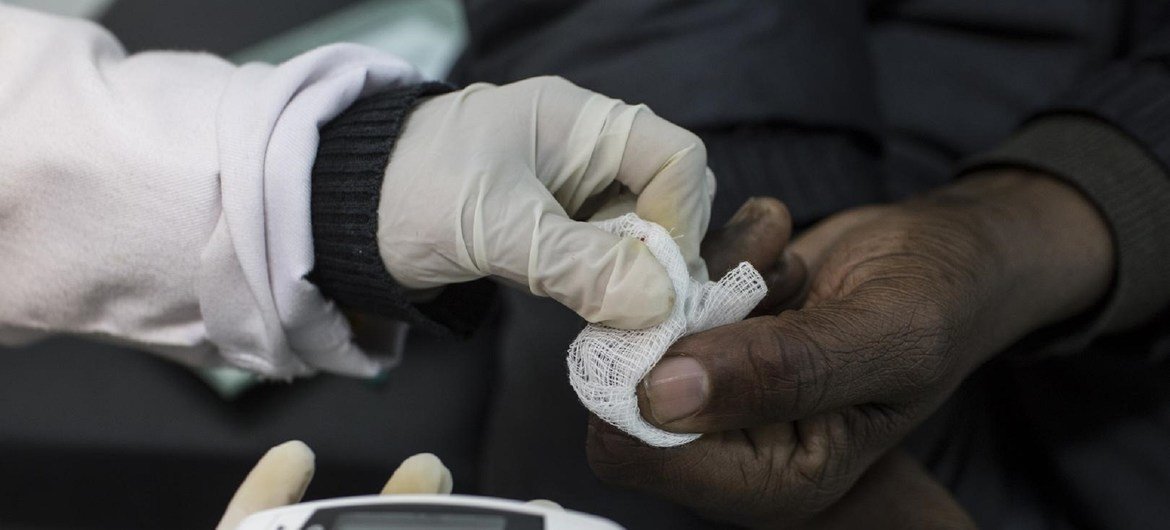
With the burden of cardiovascular disease, mental and neurological disorders, and diabetes rising in the region, African health ministers on Tuesday, endorsed a new strategy to boost access to the diagnosis, treatment, and care of severe non-communicable diseases.
The health ministers, gathering for the seventy-second session of the UN World Health Organization (WHO) Regional Committee for Africa in Lomé, Togo, adopted the strategy, known as PEN-PLUS.
That plan will be implemented as a regional strategy to address severe noncommunicable diseases at first-level referral health facilities. The strategy supports building the capacity of district hospitals and other first-level referral facilities to diagnose and manage severe non-communicable diseases.
More Read

Africa’s hefty chronic disease burden
Severe noncommunicable diseases are chronic conditions that lead to high levels of disability and death among children, adolescents and young adults. In the worst cases, patients live no longer than a year after diagnosis. In Africa, the most prevalent severe noncommunicable diseases include sickle cell disease, type 1 and insulin-dependent type 2 diabetes, rheumatic heart disease, cardiomyopathy, severe hypertension and moderate to severe and persistent asthma.
“Africa is grappling with an increasingly hefty burden of chronic diseases whose severe forms are costing precious lives that could be saved with early diagnosis and care,” said Dr. Matshidiso Moeti, WHO Regional Director for Africa.
She went on to say that the strategy adopted today is pivotal in placing effective care within the reach of patients and “marks a major step in improving the health and wellbeing of millions of people in the region.”
In most parts of Africa, severe noncommunicable diseases are treated at health facilities in large cities. This exacerbates health inequities, as it puts care beyond the reach of most rural, peri-urban and lower-income patients. Moreover, these urban facilities often lack the capacity and resources to effectively manage severe non-communicable diseases.
Standardized treatment packages
The new strategy urges countries to institute standardized programmes to tackle chronic and severe noncommunicable diseases by ensuring that essential medicines, technologies and diagnostics are available and accessible at district hospitals.
According to a 2019 WHO survey, only 36 percent of countries in the African region reported having essential medicines for non-communicable diseases in public hospitals. Governments should ensure that people seeking care in private hospitals can access services for severe non-communicable diseases.
Additionally, the strategy recommends that countries should bolster the protocols for prevention, care and treatment of chronic non-communicable diseases through the training and strengthening the skills and knowledge of health workers.
Noncommunicable diseases account for most out-of-pocket spending by patients in Africa and due to their chronic nature often lead to catastrophic health expenditures. By offering noncommunicable disease care as a package of services available at primary and district health facilities, patients will find their expenses decrease as they spend less money on transportation, lodging in cities and less time in commuting to the health facilities.
The PEN-PLUS strategy builds on existing WHO initiatives for integrated detection, diagnosis, treatment, and care of noncommunicable diseases in primary health care facilities. It has shown promising results in Liberia, Malawi, and Rwanda, with a significant increase in the number of patients accessing treatment for severe noncommunicable diseases and, a concomitant improvement in outcomes for these patients.
Source: UN News Centre