
Public Agenda NewsPaperPublic Agenda NewsPaper
  • General News
  • Politics
  • Business
  • Health
  • Development Agenda
  • World News
  • Features & Opinions
  • Election watch
  • Editorial
Font ResizerAa
Public Agenda NewsPaperPublic Agenda NewsPaper
Font ResizerAa
  • General News
  • Politics
  • Business
  • Health
  • Development Agenda
  • World News
  • Features & Opinions
  • Election watch
  • Editorial
Search
  • General News
  • Politics
  • Business
  • Health
  • Development Agenda
  • World News
  • Features & Opinions
  • Election watch
  • Editorial
Follow US
Breaking NewsFeatures & Opinions

Escaping forced marriage, Burkina Faso girls find refuge in education

Suleman
Last updated: March 15, 2022 12:39 pm
Suleman
Share
5 Min Read
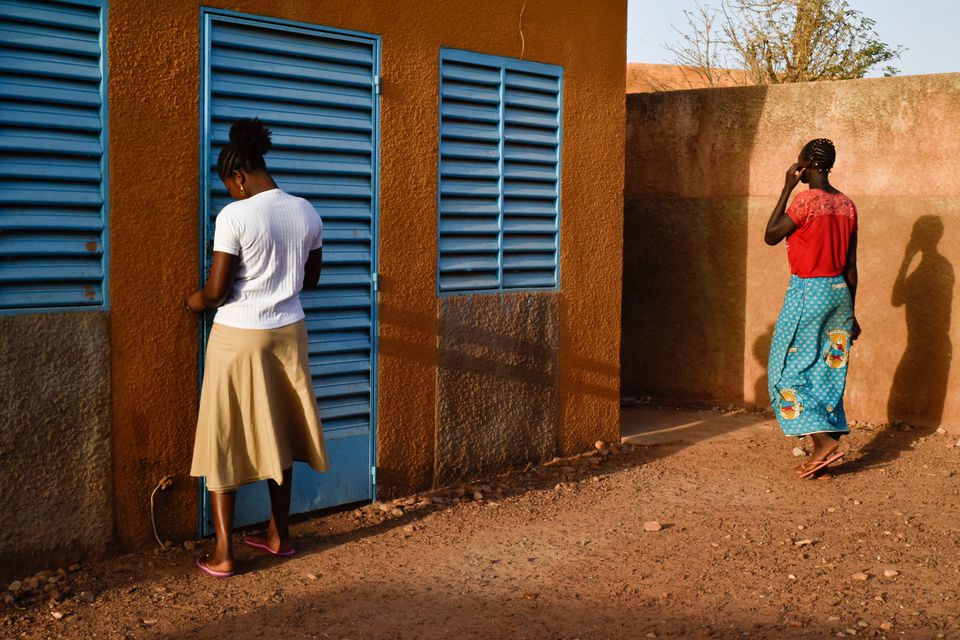
Girls, who escaped forced marriages, prepare to go to their dormitories at the Catholic nuns' shelter
SHARE

The thought of spending her life with a man she had never met was too much for Marie.

She was not even present when her family arranged for her to marry a stranger from a nearby village in northern Burkina Faso, and was never consulted about the union.

Desperate, the 20-year-old slipped out of her family home one-night last month and walked for hours through the bush to the city of Kaya. Her target: a shelter run by nuns where she could carry on her neglected education. She ditched her phone’s SIM card so her family couldn’t reach her.

More Read

Ghana reaffirms commitment to women’s economic empowerment at Addis Ababa dialogue
Seven missing fishermen located in Togo’s waters – Western Regional Minister
Deploy more military, police to fight galamsey – Christian Council
Petrol, diesel prices set to fall from Oct. 16 as LPG faces 18.5% hike
IMF raises Ghana’s 2026 growth forecast to 5.7%, exceeding government’s target

“It was my grandfather who wanted to give me in marriage and my parents said nothing,” said Marie, who did not want to use her real name. “They can’t say anything because they can’t disobey him,” she said, biting her nails.

Forced marriages are illegal in Burkina Faso, but they remain common and often involve girls younger than 18. In a poverty-stricken country facing mounting violence by Islamist militants, marrying off daughters means fewer mouths to feed. A bride price or a dowry can bring in much-needed cash or goods. 

Yet such unions can lead to early pregnancy, interrupted education and abuse, say rights groups. The western Sahel region south of the Sahara Desert is one of the worst-affected parts of the world, the United Nations says.

According to Burkina Faso’s government, there were over 650 cases of forced marriage and 2,200 child marriages between 2019 and 2021, though this is likely a undercount as many arrangements are carried out in secret.

“It was my grandfather who wanted to give me in marriage and my parents said nothing,” said Marie, who did not want to use her real name. “They can’t say anything because they can’t disobey him,” she said, biting her nails.

Forced marriages are illegal in Burkina Faso, but they remain common and often involve girls younger than 18. In a poverty-stricken country facing mounting violence by Islamist militants, marrying off daughters means fewer mouths to feed. A bride price or a dowry can bring in much-needed cash or goods.

Yet such unions can lead to early pregnancy, interrupted education and abuse, say rights groups. The western Sahel region south of the Sahara Desert is one of the worst-affected parts of the world, the United Nations says.

According to Burkina Faso’s government, there were over 650 cases of forced marriage and 2,200 child marriages between 2019 and 2021, though this is likely a undercount as many arrangements are carried out in secret.

BACK TO SCHOOL

Going to school has become increasingly challenging in north and east Burkina Faso, where attacks have forced the government to close hundreds of schools and prompted more families to marry off their daughters.

More than 100 young women have sought refuge with nuns at the Sainte Maria Goretti shelter, where Marie will soon resume her studies.

“Some were raped, others were beaten,” said Sister Veronique, who works at the shelter.

Veronique takes care of girls like Evelyne, 16, whose grandfather was going to force her to marry an older man after an attack on their village caused them to flee.

“I overheard this and escaped to come here,” said Evelyne at Sainte Maria Goretti, before walking to school with a pink backpack.

“I am still a child, and on top of that, I want to study,” said Evelyne, also a pseudonym.

Evelyne’s parents found her at the shelter. But social workers convinced them to let her stay to pursue her education.

Sister Veronique says that many girls find it hard to adjust after leaving home, but that they soon flourish.

“Little by little, with time and the help of goodwill … they resume their taste for life.”

 By: Anne Mimault

 

Share This Article
Facebook Whatsapp Whatsapp Email Copy Link Print

Recent Posts

  • Ghana reaffirms commitment to women’s economic empowerment at Addis Ababa dialogue
  • Seven missing fishermen located in Togo’s waters – Western Regional Minister
  • Deploy more military, police to fight galamsey – Christian Council
  • Petrol, diesel prices set to fall from Oct. 16 as LPG faces 18.5% hike
  • IMF raises Ghana’s 2026 growth forecast to 5.7%, exceeding government’s target
  • CSOs, Fisheries Stakeholders Demand Revocation of Offshore Gold Licences
  • ActionAid ‘deeply alarmed’ by US government’s sanctions on the International Criminal Court
  • Mental Health Alliance Calls for 5% Employment Quota for Persons with Disabilities
  • A call for GoldBod-Type Financing Model for NAFCO
  • ISODEC Forum Calls for New Thinking on Ghana’s Economic Management
  • 24-hour economy markets’ renamed District Economy Markets – Ayariga
  • Ghana’s tuna industry collapsing under high operating costs – NAFAG
  • Cocaine seizures: Parliament reconvenes today for emergency sitting
  • MEHSOG demands update on alleged sexual assault of 14-year-old Bolga Girls student
  • Food prices in Ghana remain largely stable – AGRA report
  • Mahama convenes high-level meeting to strengthen border security and narcotics control
  • Minority demands action on unemployment among graduates with disabilities
  • Mental Health Organisations Seek Improved Social Protection for Vulnerable Women and Girls

You Might Also Like

Breaking NewsGeneral Newstop stories

CSOs, Fisheries Stakeholders Demand Revocation of Offshore Gold Licences

October 13, 2026
Breaking Newstop storiesWorld News

ActionAid ‘deeply alarmed’ by US government’s sanctions on the International Criminal Court

October 10, 2026
Breaking NewsHealthtop stories

Mental Health Alliance Calls for 5% Employment Quota for Persons with Disabilities

October 10, 2026
Breaking NewsBusinesstop stories

A call for GoldBod-Type Financing Model for NAFCO

October 8, 2026

About Us

Public Agenda is fou­nded and owned by Pu­blic Agenda Communic­ations.

Public Agenda was founded as a public interest Me­dia entity. Its Visi­on is to contribute to building a well-i­nformed society where accurate informati­on dissemination is the cornerstone of a democratic, just and equitable society.

Its mission is to inform, guide and bui­ld responsible citiz­enship and accountab­le decision making and strive for excell­ence in the media in­dustry. Public Agenda Communications is managed by a Board of Directors.

  • Contact us
  • Advertise with us
Welcome Back!

Sign in to your account

Username or Email Address
Password

Lost your password?