

The petroleum industry is one of the largest and most important sector of Ghana’s economy measured in terms of value addition, revenues to government, investments and export value.
It is, therefore, essential that the way the industry is organised and the division of roles and responsibilities take all important public interests into account and ensure that value creation from petroleum resources benefits the Ghanaian society as a whole.
It is for this reason that we are gratified that the government yesterday opened a competitive tendering process to auction six out of nine prepared oil blocks in the Tano Basin, offshore Cape Three Points in the Western Region.
More Read

It is the first time the country’s oil blocks will be offered to investors in a competitive tendering process since the repealed PNDCL 84, 1984, which used to regulate oil and gas exploration and production activities in the country, was said to be less transparent and ineffective.
The action, which the industry has welcomed as timely, also fulfilled the country’s plan to increase the production of oil and gas to generate more revenue for development while ensuring greater transparency and value for money in oil resource utilisation.
Out of the nine blocks, six will be allocated between 2018 and 2019, while the remaining three will form the basis for a second round bidding where nationals are expected to feature prominently.
Ghana currently produces 200,000 barrels of oil per day (bpd), led by its flagship Jubilee field which produces about 100,000 bpd.
We were not surprised that the first six blocks saw high expression of interest ahead of the announcement.
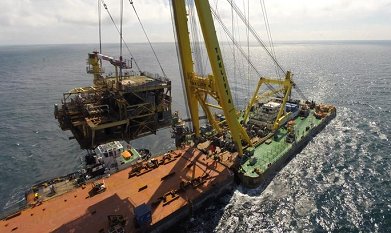
The high interest is attributed to the low risk level of the basin and existing infrastructure such as three independent oil production platforms, pipelines, subsea structures for tie-in of marginal fields and unification of nearby discoveries in the Western Basin.
With the high prospects in oil and gas industry, the new approach is expected to ensure that the country’s oil industry attracts top-notch international oil companies (IOCs) to ensure that the resource is exploited in an efficient, safe, cost-effective, sustainable and mutually beneficial manner.
And rightfully so, global oil majors such as BP, Shell and some independent producers have shown interest in acquiring a stake in oil assets in Ghana.
For instance, drawn to Ghana’s hydrocarbon potential, ExxonMobil Corp recently signed a deal with Ghana to explore for oil in the Deepwater Cape Three Point offshore (DWCTP) oilfield.
Exxon is doing due diligence to find a local partner to explore the block, a condition required to operate a field in Ghana.
Aker Energy AS, controlled by Norwegian billionaire Kjell Inge Roekke, agreed in February, this year to buy Hess Corporation’s Ghana unit in a US$100 million deal, gaining access to a 50 per cent stake in the deepwater Tano Cape Three Points block.
Italy’s Eni which has a stake in two blocks in Ghana wants more blocks in the country.
While we are happy about these positive developments, we are even much keener on the fiscal outcomes of these direct investment which the revenues will be appropriated for in a way that will promote inclusive growth and also improve the well-being of every Ghanaian.
Source: Graphic.com.gh