

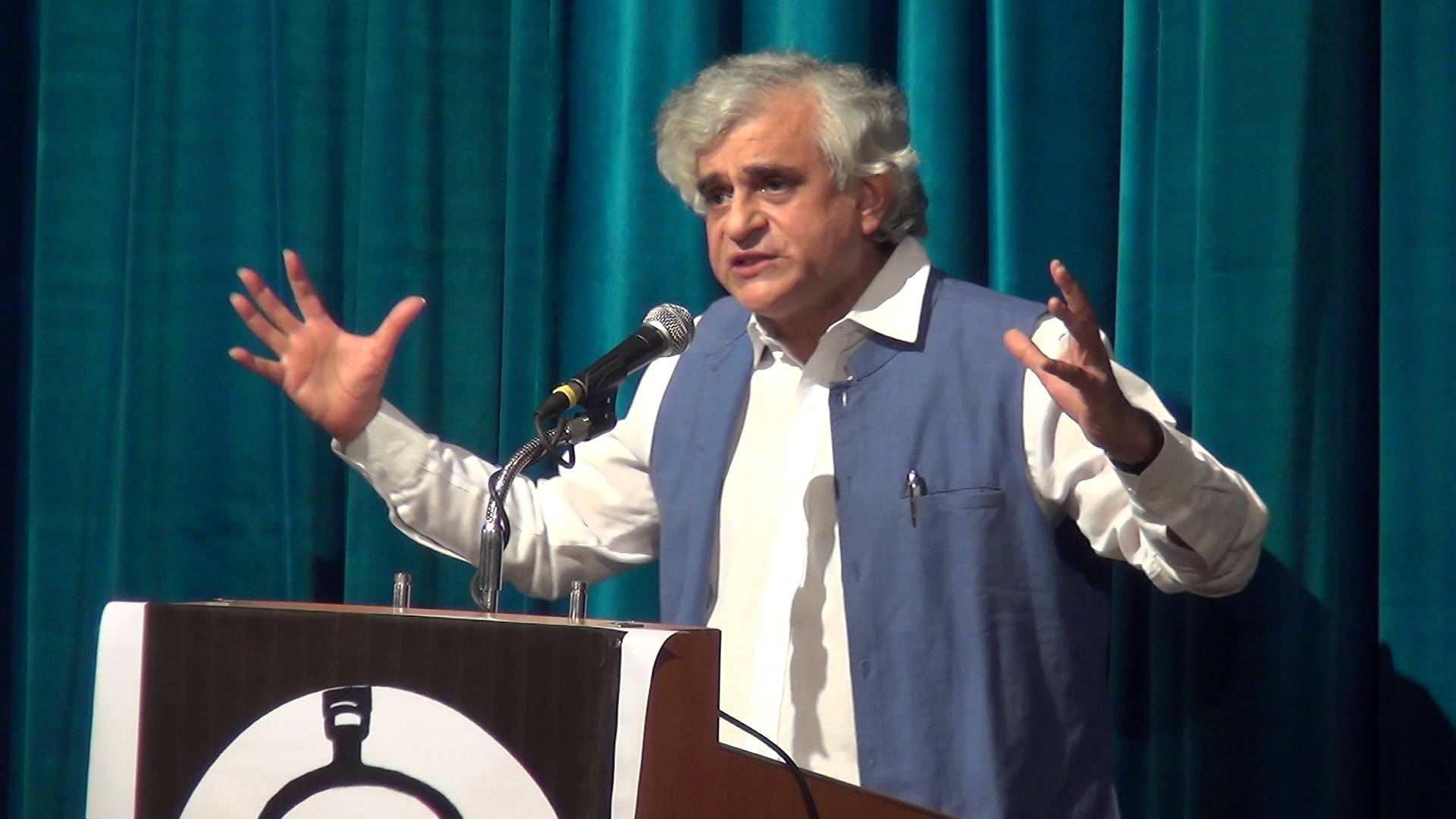
As I sat listening to P. Sainath give his presentation, the things he was talking about hit me with a striking familiarity, as if he was talking about my village in northern Ghana. But Sainath is from India. Indeed, heis a widely known Indian writer and journalist, and author of the worldwide acclaimed, book, Everybody Loves a Gooddrought – about famines in India.
He was talking about rural India– or rather the relationship between rural Indian and the media – its enormous linguistic and cultural diversity, ancient occupations thousands of years old,which no longer exist anywhere in the world, but which can still be pressed into service even in situations when modern technology proves wanting.
“Rural India is simply the most complex part of planet earth”, says Sainath. “Its 833 million population speaks over 700 languages, 225 of which went extinct in the last 50 years”. Not to speak of a myriad of weaving schools, traditional songs and occupations.
More Read
However, none of this churn in the life of rural India is reflected in the media, said Sainath. According to him, “on a five-yearly average, the Indian national daily newspaper, gives 0.67 per cent of its front page to 833 million Indians who constitute 69 per cent of its population”, Sainath said during a recent visit to Helsinki.
In many respects, the similarity with Ghana is quite obvious. The over saturated Ghanaian newspaper market is made up of hundreds of titles stampeding in a tiny pond of advertisers, nearly are all published in Accra. And do not expect to read anything about the rural areas unless it is about the visit of a politician or something sensational.
But it is not only rural life per se that the media have chosen to neglect that raises concern. It is a lack of interest in covering poor people in general.
“Poor people and those who do not create revenue for the media are left uncovered. Poor people do not create profits for large corporations except in terms of them being exploited. They cover the Kardashians, celebrities, the Emmys and Grammys. They are not going to cover a singer from Northern Ghana unless that singer makes them money”, says Sainath.
- Sainath quit his position as the rural editor of the Indian newspaper, The Hindu, in 2014 and, with his colleagues, came up with a pioneering idea – they launched the People’s Archive of Rural India (PARI) to document and archive the life of rural India.
“Journalism ought to be about the everyday life of everyday people”, says Sainath, adding, “What we are doing is offer a corrective to journalism”.
Therefore PARIhas now set about documenting all of that vast array of different kinds of Indian weavings, languages of which there are only a handful of speakers left – in some cases only one speaker – hundreds of thousands of songs, social activismand many more, in audio, audio-visual and in text. All of these are placed online and made available to all people across the globe in multiple languages free of charge.
Sainath describes PARI as “a multimedia digital platform; a journal of the contemporary, an archive of the living past and a textbook of the future”.
The ultimate aim is for the material to be adopted in schools and colleges as digital textbooks. “It is like one generation of school kids is writing the textbook for the next generation of school kids”, he says.
When asked the need for documenting occupations that no longer play a significant role in modern economic development, Sainath quickly shot back: “they are your history, culture, treasure and heritage”.
“The types of weaving that society took two thousand years to evolve, should we just leave that to Benetton?”, he asked.
Cut to Ghana. There are probably no accurate records of how many languages we have and if there are some that have gone extinct because the last speakers have long been buried, we may never know. Many children born two decades ago have probably not seen grinding stones, which, not too long ago used to be crucial technology, especially in many parts of Northern Ghana. They would probably laugh them off as being from the Stone Age.
It may not be long in coming when a generation of Ghanaians who grew up drinking palm wine would find to their anguish that they would only have to wax nostalgic about the sweet sap up there on palm tree because skill required to bring it down has suddenly become rare or disappeared altogether.
Twenty-five years of neoliberal economic policy has aggravated income inequality worldwide and rural communities have been in dramatic retreat all over the world. To Sainath, every community, especially rural communities that are in retreat need to have their own archives.
Indeed, Sainath takes comfort in the fact that four communities in other parts of the world have already begun following the pioneering steps of PARI. A rural community in Nova Scotia in Canada, following PARI, will be launching their first people’s archive in January next year. The famous South African musician, Hugh Masekela has approached PARI to assist him create an archive of township jazz in South Africa.
However, he has a word of caution for communities that are inspired by his model. PARI avoids money from corporations and government.
“Whatever you do avoid corporate funding”, he said. “If you allow corporate sponsorship, it [your rural archive] will be dead”.