Public Agenda NewsPaperPublic Agenda NewsPaper
  • General News
  • Politics
  • Business
  • Health
  • Development Agenda
  • World News
  • Features & Opinions
  • Election watch
  • Editorial
Font ResizerAa
Public Agenda NewsPaperPublic Agenda NewsPaper
Font ResizerAa
  • General News
  • Politics
  • Business
  • Health
  • Development Agenda
  • World News
  • Features & Opinions
  • Election watch
  • Editorial
Search
  • General News
  • Politics
  • Business
  • Health
  • Development Agenda
  • World News
  • Features & Opinions
  • Election watch
  • Editorial
Follow US
Breaking NewsWorld News

Sudan bans female genital mutilation, UNICEF vows to help support new law

Latifa Carlos
Last updated: May 5, 2020 11:11 am
Latifa Carlos
Share
3 Min Read
SHARE

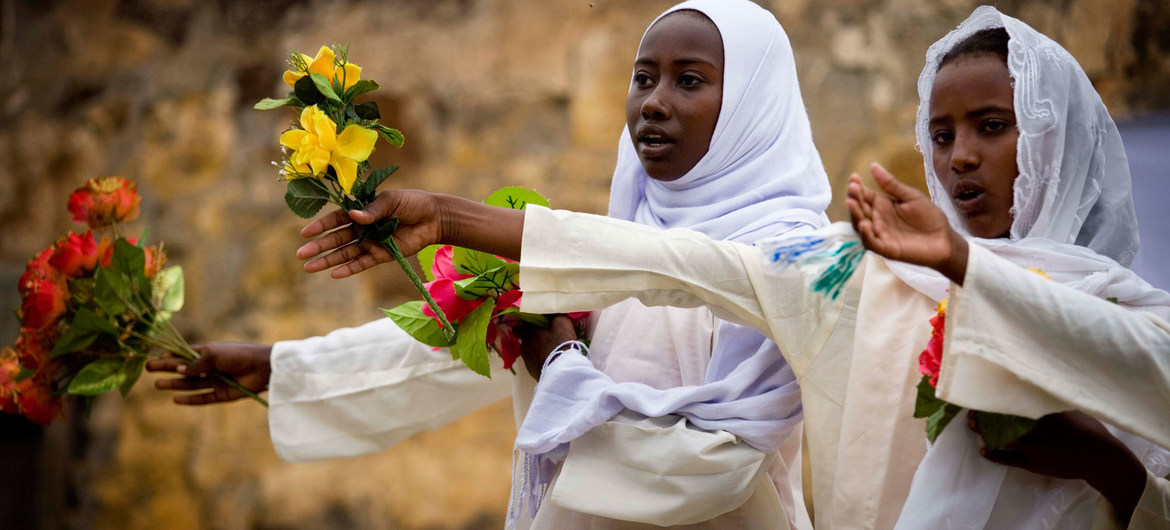
The United Nations Childen’s Fund (UNICEF) welcomed the landmark move by Sudan’s transitional government this week to criminalize female genital mutilation/cutting (FGM/C), with a three-year jail sentence for offenders.

Contents
Rights violation Making it stick

“This practice is not only a violation of every girl child’s rights, it is harmful and has serious consequences for a girl’s physical and mental health,” said Abdullah Fadil, UNICEF Representative in Sudan.

Sometimes called female circumcision, the traditional practice involves the partial or total removal of the external female genitalia for no medical reason.

More Read

Water Justice Network Pushes for Affordable, Inclusive Water Systems
Overall cost pressures in construction are easing – Government Statistician
Ghana can’t industrialise without power, water – Nii Moi Thompson
Ghana walks away from US health agreement over sensitive data concerns
Mali at risk of splintering after jihadi and separatist attacks

“This is why governments and communities alike must take immediate action to put an end to this practice”, he added.

The move comes following years of persistent and forceful advocacy, including by the National Council for Child Welfare, women and child advocates, UN agencies and international, national and community-based organizations.

Estimates show that more than 200 million girls and women alive today have undergone female genital mutilation in the countries where the practice is concentrated, according to the World Health Organization (WHO).

And Sudan is considered to have a very high FGM/C prevalence rate, which UNICEF’s Multiple Indicator Cluster Surveys (MICS) revealed was at 86.6 per cent in 2014.

Rights violation 

FGM/C has no benefits and not only poses immediate health risks, but also long-term complications to women’s physical, mental and sexual health in addition to their well-being.   

A reflection of deep-rooted inequality between the sexes, the practice is internationally recognized as a violation of human rights of girls and women and as an extreme form of gender discrimination. 

Moreover, WHO points out that every year, before they turn 15 years old an estimated three million girls risk being cut without their consent, making the practice also a violation of the rights of children. 

And when the procedure results in death, FGM/C violates rights to health, security and physical integrity, the right to be free from torture and cruel, inhuman or degrading treatment, and the right to life as well.

And as part of the Sustainable Development Goals (SDGs), the global community has set a target to abandon the practice by the year 2030. 

Making it stick

UNICEF maintains that it needs to work very hard with communities to help enforce the new law. 

“The intention is not to criminalize parents”, flagged the UNICEF representative, “we need to exert more effort to raise awareness among the different groups, including midwives, health providers, parents, youth about the amendment and promote acceptance of it”.

UNICEF is committed to eliminating all forms of FGM/C and will continue its focus on building a protective environment for children that safeguards them from abuse and exploitation.

Source: UN News Centre

Share This Article
Facebook Whatsapp Whatsapp Email Copy Link Print

Latest News

Create ‘water markets’ to fix Ghana’s supply challenges — Former GWL MD
April 28, 2026
National Water Justice Campaign Launched to Tackle Inequality in Access
April 21, 2026
ISODEC Urges Collective Action to Secure Safe Water for All Ghanaians
April 21, 2026
Man kills seven of his children, and an eighth child, in Louisiana mass shooting
April 20, 2026
A decade of African politics: democratic gains and new pressures
April 20, 2026
Minister Faults Nana Akufo-Addo Government’s Decentralisation Record
April 20, 2026
Bawumia engages Ken Agyapong ahead of 2028 polls
April 20, 2026

You Might Also Like

Breaking NewsGeneral Newstop stories

Over 100 communities in Volta Region at risk from tidal waves — Anlo MP

April 20, 2026
Breaking NewsGeneral NewsNews paper Headlines

Underperforming ECG districts risk major shake-up — Jinapor

April 15, 2026
Breaking NewsGeneral News

GIS to crack down on street begging, unregistered migrants in Accra

April 15, 2026
Breaking NewsDevelopment AgendaGeneral Newstop stories

Government engages sachet water producers today as price hike suspended

April 8, 2026

About Us

Public Agenda is fou­nded and owned by Pu­blic Agenda Communic­ations.

Public Agenda was founded as a public interest Me­dia entity. Its Visi­on is to contribute to building a well-i­nformed society where accurate informati­on dissemination is the cornerstone of a democratic, just and equitable society.

Its mission is to inform, guide and bui­ld responsible citiz­enship and accountab­le decision making and strive for excell­ence in the media in­dustry. Public Agenda Communications is managed by a Board of Directors.

Welcome Back!

Sign in to your account

Username or Email Address
Password

Lost your password?