
Public Agenda NewsPaperPublic Agenda NewsPaper
  • General News
  • Politics
  • Business
  • Health
  • Development Agenda
  • World News
  • Features & Opinions
  • Election watch
  • Editorial
Font ResizerAa
Public Agenda NewsPaperPublic Agenda NewsPaper
Font ResizerAa
  • General News
  • Politics
  • Business
  • Health
  • Development Agenda
  • World News
  • Features & Opinions
  • Election watch
  • Editorial
Search
  • General News
  • Politics
  • Business
  • Health
  • Development Agenda
  • World News
  • Features & Opinions
  • Election watch
  • Editorial
Follow US
Breaking NewsGeneral News

Strengthen anti-corruption institutions to win fight against canker — CHRAJ Commissioner

Latifa Carlos
Last updated: January 16, 2019 10:38 am
Latifa Carlos
Share
4 Min Read
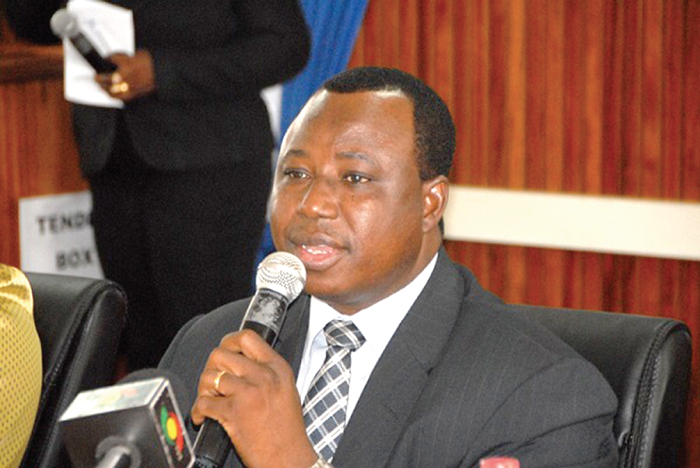
Mr Joseph Whittal
Mr Joseph Whittal
SHARE

The Commissioner of the Commission on Human Rights and Administrative Justice (CHRAJ), Mr Joseph A. Whittal, contends that the country will lose the fight against corruption if its leaders fail to take steps to strengthen statutory anti-corruption institutions.

He also said it was needless to set up more bodies to fight corruption, adding that the legal framework establishing statutory anti-corruption institutions such as the Audit Service, CHRAJ and the Economic and Organised Crime Office (EOCO), were plagued with a myriad of challenges.

Delivering a lecture on strengthening anti-corruption state institutions at the ongoing New Year School and Conference at the University of Ghana yesterday, he said it was not proper for political leaders to make the fight against the canker a rhetoric.

More Read

Raw commodity exports undermining Africa’s growth – Mahama
Ayariga accuses NPP minority of hypocrisy over certificates of urgency
Every cedi lost to corruption is a loss to national development – Deputy Finance Minister
ISODEC Introduces Whistleblower Policy to Strengthen Transparency and Accountability
Minister assures resumption of Kpong Irrigation Scheme amid funding delays

“It is not sloganeering, words and shouts that can fight corruption.

It is resourcing the institutions, addressing the weaknesses in the law establishing the bodies, providing sustainable funding, proper staff recruitment systems, and implementing the National Anti-corruption Action Plan (NACAP), that can help deal with corruption,” he stressed.

Appointments

Mr Whittal said the time had come to amend the laws on the appointment of the heads of state anti-corruption institutions, including the Financial Intelligence Centre (FIC) and EOCO, to wean them off excess control by the President.

“The appointment of the heads of the EOCO and FIC is done by the President, the terms and conditions of their work are in their appointment letter, and the removal process is at the pleasure of the President.

“If you want these bodies to be effective, there is no way that we will give the appointment and removal process to the President who is the appointing authority and expect that they will work truly well,” he said.

In addition, Mr Whittal said the Executive control over the funding of the anti-corruption statutory bodies was a setback to their ability to fight the canker.

Clearance

Mr Whittal said the situation where the state anti-corruption bodies required clearance from the Ministry of Finance to recruit staff was also problematic.

He said about 70 of the staff of CHRAJ had gone on retirement over the last three years but the commission was still struggling to get clearance to replace them.

Not numbers

The former Executive Director of the Ghana Integrity Initiative (GII), Mr Vitus Azeem, for his part, said it was not enough to create more anti-corruption bodies and that what was crucial was for the state to ensure that the existing ones worked well.

Mr Azeem also asked the institutions to be prudent by making judicious use of the resources available to them to be able to deliver on their mandate.

He urged the citizenry to take keen interest in the fight against corruption by reporting suspected cases to the right bodies for action to be taken to curb it.


Source: Graphic.com.gh

Share This Article
Facebook Whatsapp Whatsapp Email Copy Link Print

Latest News

Reproductive mental health underreported among Ghanaian women- Gynaecologist
January 26, 2026
Ghana cedi best-performing currency in Africa for 2025 – IMF
January 26, 2026
Gold surges past $5,000 for first time
January 26, 2026
How Ghana is losing water before it reaches the tap
January 22, 2026
Over 360,000 Ghanaians exited poverty in Q3 2025 – GSS report
January 21, 2026
GH¢107m EXIM loans recovered; dubious deals sent to security agencies – Trade Minister
January 21, 2026
Ga West MCE Calls for Stronger Enforcement of Disability Laws
January 20, 2026

You Might Also Like

Breaking NewsBusinesstop stories

IES defends NPA price floor policy amid debate over fuel pricing

January 19, 2026
Breaking NewsHealthtop stories

WHO Urges Governments to Raise Taxes on Sugary Drinks and Alcohol to Save Lives

January 14, 2026
Breaking NewsDevelopment Agendatop stories

Global employment stable but decent jobs in short supply

January 14, 2026
Breaking NewsGeneral Newstop stories

Supreme Court adjourns Nyindam’s case to January 28

January 13, 2026

About Us

Public Agenda is fou­nded and owned by Pu­blic Agenda Communic­ations.

Public Agenda was founded as a public interest Me­dia entity. Its Visi­on is to contribute to building a well-i­nformed society where accurate informati­on dissemination is the cornerstone of a democratic, just and equitable society.

Its mission is to inform, guide and bui­ld responsible citiz­enship and accountab­le decision making and strive for excell­ence in the media in­dustry. Public Agenda Communications is managed by a Board of Directors.

Welcome Back!

Sign in to your account

Username or Email Address
Password

Lost your password?