Businesses and individuals want the government to scrap the E-levy and review some tax laws, a survey of businesses’ expectations in the 2024 budget statement has revealed.
The businesses also expect a review of the COVID-19 levy, petroleum levy, and the growth and sustainability levy which was recently introduced as part of the government’s conditions to access the IMF bailout.
The businesses are of the view that abolishing some of these taxes or lowering the tax rates may initially reduce tax revenue, but is likely to positively impact consumption and expenditure and thus, ultimately enhancing tax revenue.
More Read

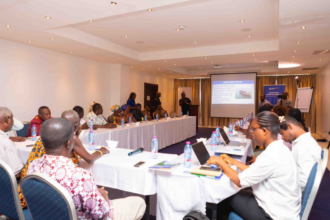
This came to light when auditing and accounting firm, KPMG in collaboration with the United Nations Development Programme (UNDP) conducted a pre-budget survey.
Ghana’s economy has been battling with some challenges in the last two years, a situation which prompted the government to approach the International Monetary Fund for a US$3 billion support programme.
Six months after implementing the fund-supported programme, some macroeconomic stability are beginning to emerge, with inflation declining from a 22-year high of 54.1 per cent in December 2022 to a 12-month low of 38.1 per cent in September 2023.
On the fiscal front, the primary balance on a commitment basis for the first half of the year was a surplus of about GH¢2 billion compared to a target of a deficit of GH¢4 billion.
Gross International Reserves (GIR) also stood at US$2.1 billion equivalent to 1.0-month import cover, compared with US$1.5 billion (0.6 months of import cover) recorded at the end of December 2022, with the cedi also fairly stabilising.
Ahead of the 2024 budget which is expected to be presented to Parliament on November 15, there have been numerous submissions from businesses and individuals on how the government can use the 2024 budget to lessen the economic hardship on Ghanaians, while at the same time consolidating the gains that have so far been made.
Tax regime
Respondents in the KPMG survey who included 133 businesses from all sectors of the economy indicated that the current tax environment was adversely impacting their businesses, with 76 per cent of them identifying the e-levy as the number one tax that needed to be scrapped or reviewed.
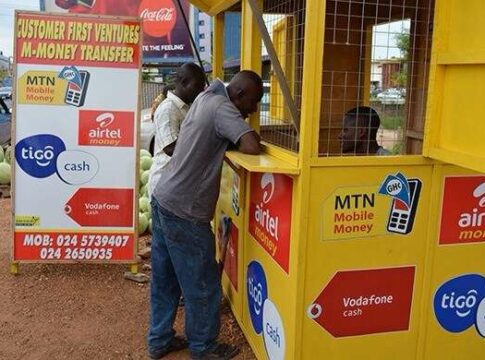
The e-levy which was introduced in May 2022, imposed a 1.5 per cent charge on all electronic and mobile money transactions over ¢100 per day. In January 2023, the government reduced the rate of the tax from 1.5 per cent to 1 per cent.
Ever since its introduction, the e-levy has always come up in the lead-up to every budget reading as businesses and individuals continue to push for its removal.
Also, 68 per cent of the respondents highlighted the COVID-19 levy as another levy which needed a review, with 62 per cent having issues with the petroleum levy. Over 51 per cent also identified the growth and sustainability levy as another area where modifications could potentially alleviate the burdens faced by businesses.
Government on many occasions have said even though the COVID-19 pandemic was no longer with us, the levy was relevant as the country was still dealing with the effects of the pandemic with soaring global supply chain disruptions.
To help lessen the fiscal impact of reviewing some of these taxes, the businesses advised the government to put in much effort in widening the tax net, rationalise its expenditure and review some of its flagship programmes such as the free SHS.
Analysts also observed that government hands were tied as its programme with the IMF was heavily tilted towards revenue mobilisation as a key component in accessing the IMF bailout.
High inflation, high interest rates
Results from the survey also revealed that currency depreciation, high inflation, high-interest rates and the tax environment have had significant negative impacts on business performance in 2023.
The pass-through effect of currency depreciation on inflation, with an inflation rate of 40.1 per cent in August 2023, up from 33.9 per cent last year, has led to a 300 basis points increase in the monetary policy rate to 30 per cent, causing an increase in the average lending rate to 37.8 per cent in August 2023 compared to 28 per cent in August 2022.
These effects have been amplified by severe restrictions in access to credit, difficulties in retaining skilled labour, power supply constraints and supply chain disruptions. Respondents, therefore, recommended fiscal policies that were focused on investment in the productive sectors including agriculture, support to manufacturing and export sectors.
Commenting on the survey, Senior Partner of KPMG Ghana, Anthony Sarpong, said overall, the findings highlighted that the 2024 budget should prioritise policies that promoted inclusive green growth by strengthening local businesses and promoting exports through industrialisation, mechanisation of agriculture to promote food security and infrastructure development.
“We hope the insights from the survey will help the government in their deliberations and provide valuable contributions in the lead-up to the 2024 Budget,” he stated.
Pressure on cedi
In an interview with the media, a Partner at KPMG, Evans Asare, said the US$600 million second tranche of IMF money which was expected to be released later this month would help the country to navigate the Christmas pressure on the cedi.
He said the US$600 million would be timely in supporting the local currency and help businesses to plan.
“Businesses can have that certainty and predictability that the cedi will experience relative stability and won’t depreciate beyond what we have seen in the last few months,” he stated.
Have confidence
Mr Asare urged businesses in the country to be confident as the economy would soon bounce back, noting that growth would soon return to the pre-COVID era.
“Times are challenging but we will get through stronger. We expect growth to be gradually inching up to the pre-COVID era,” he stated.
He said the debt sustainability issues were also being addressed and “once the external creditors come on board, this would be resolved”.
“Public sector and private sector must continue to engage to see how they can get the economy back on track, government in their deliberations and provide valuable contributions in the lead-up to the 2024 Budget,” he stated.
Pressure on cedi
In an interview with the media, a Partner at KPMG, Evans Asare, said the US$600 million second tranche of IMF money which was expected to be released later this month would help the country to navigate the Christmas pressure on the cedi. He said the US$600 million would be timely in supporting the local currency and help businesses to plan.
“Businesses can have that certainty and predictability that the cedi will experience relative stability and won’t depreciate beyond what we have seen in the last few months,” he stated.
Have confidence
Mr Asare urged businesses in the country to be confident as the economy would soon bounce back, noting that growth would soon return to the pre-COVID era.
“Times are challenging but we will get through stronger. We expect growth to be gradually inching up to the pre-COVID era,” he stated.
He said the debt sustainability issues were also being addressed and “once the external creditors come on board, this would be resolved”.
“Public sector and private sector must continue to engage to see how they can get the economy back on track,” he said.
Source: Graphic.com