


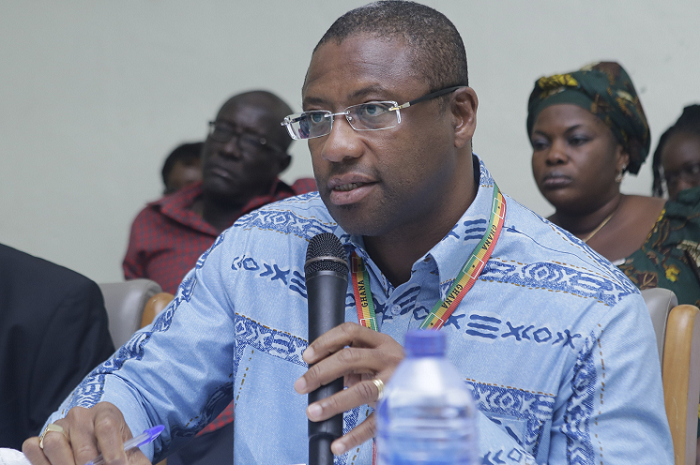
A health expert, Dr Gilbert Buckle, has called for the review of the financing model of the National Health Insurance Scheme (NHIS) in order to raise more revenue critical to sustain the scheme.
He also suggested that the government should open up the health insurance space to allow individuals to subscribe to private health insurance schemes to reduce the huge financial burden on the national insurance scheme.
Dr Buckle said these at a national dialogue on healthcare delivery in Ghana held in Accra.
The dialogue, themed “Ensuring sustainable and equitable access to quality health services: Prospects and challenges,” was organised by STAR Ghana Foundation in collaboration with the Civil Society Organisations (CSOs) Platform on the Sustainable Development Goals (SDGs).
More Read

It attracted representatives from the CSOs, health institutions, Parliament and the public, who brainstormed on measures that could be adopted to improve access to universal healthcare services in Ghana.
Increase VAT on insurance
Dr Buckle, who is an independent health strengthening consultant proposed that the country must increase the revenue basket of national insurance, “but not from the premium being paid, but an increase on the VAT on insurance and also other sources of revenue to improve the scheme.”
He cautioned that “If the VAT on insurance is increased, the government has to be more accountable for how the money is being used.”
Dr Buckle said to increase access to sustained quality health insurance in the country, there was the need for health insurance funds, in the long-term, to be used to finance public health prevention promotion interventions to reduce the “risk profile of its beneficiaries.”
He indicated that it was more prudent for insurance levies to be invested in sanitation education as part of efforts to reduce the number of people who would fall sick and seek medical treatment in health facilities.
According to him, currently corporate bodies that used to provide healthcare to their staff had found it cheaper to pay the insurance levy for all their staff to get the national health insurance, thus “keeping their money.”
Prioritise health needs
The Country Director of SEND Ghana, a non-profit organisation, Mr George Osei-Bimpeh, blamed the challenges facing the national insurance scheme on inadequate financing, wrong utilisation of insurance resources and the poor attitudes of health providers.
He pointed out that Ghana had always been quick to sign on to international protocols such as healthcare, yet had “never taken practical steps to improve healthcare standards.”
“As a country, we have not demonstrated enough commitment in terms of prioritising health as a national need,” he said.
‘Know your health status, rights’
For her part, a Professor at the Centre for Social Policy Studies of the University of Ghana, Dr Antoinette Tsiboe-Darko, said while Ghana had chalked significant improvement in maternal and infant mortality, there was still more room for improvement to achieve the targets of the Sustainable Development Goals (SDGs).
“Today, maternal mortality is 310 per 100,000 live births but the SDG target for goal three is 70 per 100,000 live births and we have not gotten anywhere,” she said.
She, therefore, advocated strong financing, commitment and awareness creation among the people, particularly women, to know their health status and rights, saying that “lack of awareness of health status is threatening the health policies we have.”
Source: Graphic.com.gh