

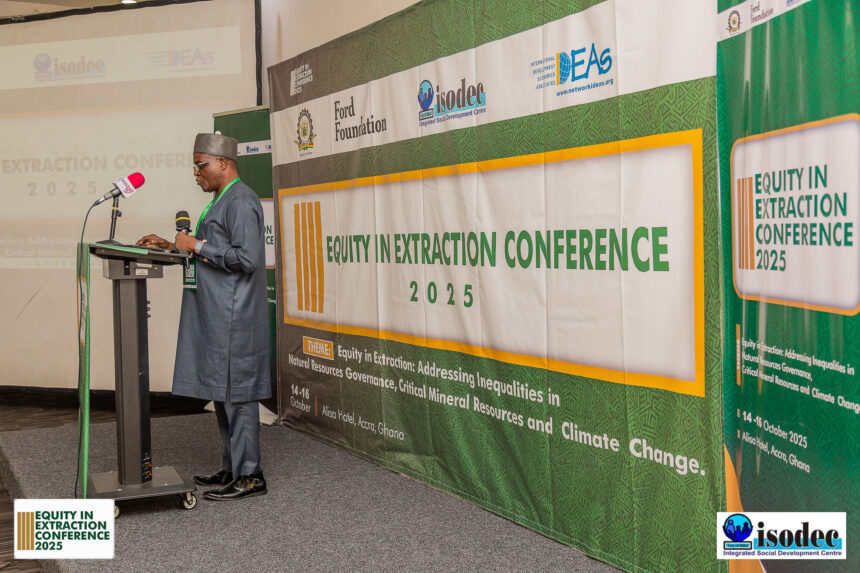
Executive Director of the Integrated Social Development Centre (ISODEC),Mr Sam Danse has raised concerns over the growing link between resource extraction and climate change in West Africa, cautioning that the two forces are reinforcing each other and deepening social and economic inequalities across the region.
According to Mr Danse,the growing global demand for critical minerals for renewable energy, such as lithium, cobalt, and nickel, shall lead to increased extraction, which will eventually lead to the displacement of communities and exacerbate existing inequities.
“In West Africa, resource extraction and climate change reinforce each other, creating a cycle of deepening inequality,” . Resource-rich areas often suffer from environmental degradation and disproportionate exposure to climate shocks, while limited adaptation capacity exacerbates vulnerabilities,”Mr Danse said.
More Read

He emphasized that while these regions generate significant wealth through natural resource exploitation, local populations often see few of the benefits. Instead, they are left with depleted ecosystems, contaminated water sources, and diminished agricultural productivity, all of which are worsened by the impacts of climate change.
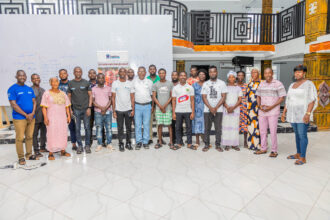
Mr Danse was speaking at the just ended High-Level West Africa Conference on Equity in Extraction Conference 2025 in Accra , organised by ISODEC in collaboration with National Development Planning Commission (NDPC), International Development Economics Associates (IDEAs) and supported by Ford Foundation.
Held on theme, ‘Addressing Inequalities in Natural Resource Governance, Critical Mineral Resources and Climate Change, the three-day conference aimed to create a shared space for frank, evidence-based dialogue and practical collaboration among stakeholders.
The conference also explored the intersections of natural resource governance, critical mineral value chains, and climate resilience: placing at the Centre, the voices of communities, women, youth and indigenous groups who are often the rightful owners of these resources, but often unheard, and denied a fair share of the benefits.
The meeting brought together participants from both within and outside Ghana, including representatives from academia, civil society organizations, government agencies, the private sector, trade unions, and the media, among others.
Mr Danse noted that the global transition to low-carbon economies is driving unprecedented demand for critical minerals: from lithium, cobalt and nickel to manganese and rare earth.
He added “West Africa holds a wealth of these resources, and with that privilege comes profound responsibility. How we govern extraction today will determine whether our nations and communities reap sustainable, equitable benefits or remain burdened by environmental harm, social displacement and deepened inequality.”
In an address, the Director-General of the National Development Planning Commission (NDPC), Dr. Audrey Smock Amoah, emphasized the need for equitable and sustainable management of Africa’s natural resources to promote shared prosperity and social justice.
She noted that equity in extraction is not just an economic goal but a moral and development imperative.
On his part, the Executive Director of IDEAs, Mr Charles Abugre, cautioned against regulatory capture by foreign corporations and urged governments to reclaim ownership and strategic control over resource exploitation.
Relative to the emerging critical minerals sector, Mr Abugre warned that Africa risks repeating the mistakes of the gold and diamond era if it fails to invest in research, technology, and industrial value chains. “We cannot afford to be price takers again in the global green transition,” he stressed, calling for patient, long-term planning to ensure minerals drive inclusive prosperity.
Source: Publicagenda.news