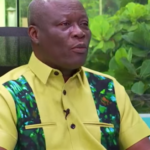


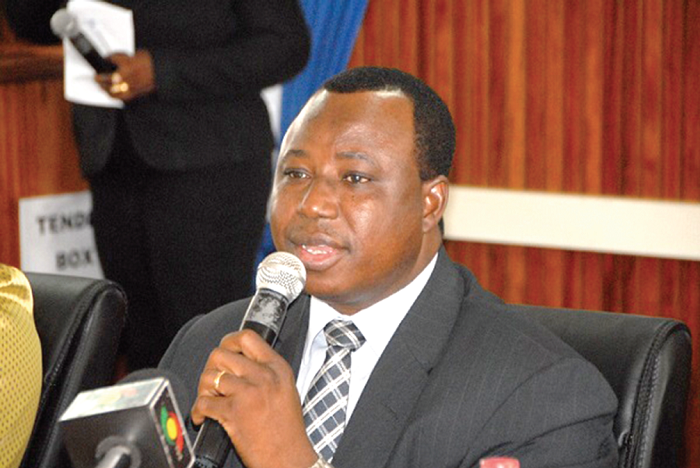
Mr Joseph Whittal, Commissioner, Commission for Human Rights and Administrative Justice (CHRAJ) has urged women to resist all discriminatory practices against them at their workplaces to ensure that they enjoy the same rights as their male counterparts.
“Don’t sit down, fight for it because you won’t get it on a silver platter,” he urged women.
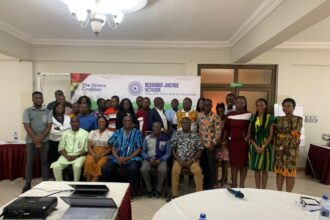
He said this during a national gender dialogue on workplace in Accra, under the theme, “The Labour Laws and Women’s Rights at the Workplace”.
More Read

It was under the auspices of the Gender Centre for Empowering Development (GenCED) and Open Society Initiative for West Africa (OSIWA), both Civil Society Organisations (CSOs).
Mr Whittal mentioned some of the discriminations against women as height, when being recruited into the security agencies, employing women because of their looks or body size, domestic mistreatment and abuse, demanding sexual favours before employment, sexual harassment and others.
He noted that though there were laws that protected women at their workplaces, there was the need to increase advocacy and consultations with target institutions to have such discriminations eroded.
He said they should have sexual harassment policies popularised in all institutions, stating that, only 27 public sector institutions had sexual harassment policies, according to the National Anti-Corruption Action Plan (NACAP) report.
The Commissioner charged them to make more noise on the Affirmative Action Bill, like the Right to the Information Bill to be passed into law.
Mr Whittal called on institutions not to wait till they were dragged to court on such discriminatory practices when they could administratively review their policies to be in line with the constitution.
Miss Esther Tawiah, Executive Director of GenCED said, the sensitisation was important due to the fact that a number of female workers did not know their labour rights, thus, the need to be educated on it.
She said it was imperative that the citizenry, especially women, were empowered to stand up for those rights and not die in silence, even if their institutions does not make them aware.
Miss Tawiah explained that though women formed the majority of the world’s population, they were denied many of their rights and marginalised due to patriarchy, culture and gender stereotypes.
The Executive Director said, the meeting was to train participants on the African Charter on Human and Peoples’ Rights on the Rights of Women in Africa, also known as MAPUTO Protocol one of the policies put in place by African leaders to protect women’s rights.
Mrs Alberta Laryea Gyan of the Trade Union Congress (TUC) advised women to join labour unions to collectively champion their cause, adding that, in case a victim was not a member of any union, they could still report discriminations against them.
Mrs Bernice Walberg, Director in Charge of Welfare and Administration at the Labour Commission, assured women that they were protected by labour laws so they should be bold to report any form of discrimination.
The programme brought together CSOs, workers from both the formal and informal sectors, among other stakeholders.
Source: GNA