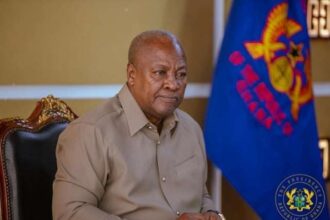



President John Dramani Mahama has attributed the recent poor performance in the West African Senior School Certificate Examination (WASSCE) to long-standing neglect of basic education.
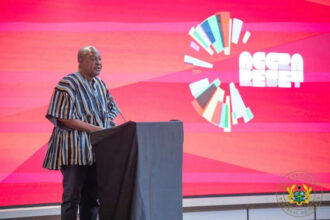
Speaking at the National Launch of STEMBox for Basic Schools on December 4, President Mahama described the WASSCE results as a matter of national concern, stressing that parents, the government, and the wider public all have reason to worry.
“ it has become an issue of great concern to governments, parents, and the public at large,” he stated.
The president revealed that he has directed the education minister to thoroughly analyze the examiners’ report to determine the factors behind the poor results.
More Read

“I was speaking with the minister, and I’ve asked him to do an analysis of the examiner’s report to try and decipher what could have gone so disastrously wrong,” he said.
“It is mind-boggling that with the same teachers, the same factors in play, just from one batch to another, one batch does so disastrously. And so we need to get to the bottom of it.”
President Mahama noted that the poor performance highlights deep-rooted weaknesses in foundational education.
“But it also emphasises the issue of foundational learning. One of the major things that has taken place in the last several years is the neglect of basic education,” he said.
“Inability to send the capitation grants, ensuring that we have quality teachers at a foundational level, at a basic level. Because it is that level that prepares the child for secondary and tertiary education.”
Using a factory analogy, the president warned that weak foundational education inevitably produces poor academic outcomes.
“And once you don’t get that level right, you will just send the child through a conveyor belt like a factory. And when it comes out at the end, it will be picked out by quality control and said that this one did not do well,” he explained.
He stressed that every child must acquire basic literacy and numeracy skills before moving on to secondary education.
“And so our focus must be on foundational learning. And foundational learning means that by the time a child leaves primary school, they should be able to read properly. By the time the child leaves primary school, they should be able to write properly. By the time the child leaves primary school, they should be able to do basic arithmetic,” President Mahama said.
“If we are able to get our children to get these three things right—writing, reading, and arithmetic—then they have the foundation to continue into secondary education.”He expressed concern that some pupils complete basic school without mastering even basic writing skills.
“Otherwise, it will be a factory that is just pushing them through and pushing them through. And at the end of it, you have the situation where a child finishes basic school and sometimes still finds it difficult to write his name,” he lamented.
On examination integrity, the president made it clear that strict supervision will not be relaxed.
“Vigilance is not going to go away. Invigilation is not going to go away,” he said.
“And so we must make sure that the children are well prepared on their own to be able to study and pass the exams that are awaiting for them.”President Mahama added that urgent reforms will be rolled out after the examiners’ report is fully reviewed.
“And so, I’ve asked the minister, and he’s told the director-general of the GES to study the examiner’s report, and let’s see what quick reforms we can carry out in order that our children get a quality education,” he stated.
Source: Myjoyonline