Public Agenda NewsPaperPublic Agenda NewsPaper
  • General News
  • Politics
  • Business
  • Health
  • Development Agenda
  • World News
  • Features & Opinions
  • Election watch
  • Editorial
Font ResizerAa
Public Agenda NewsPaperPublic Agenda NewsPaper
Font ResizerAa
  • General News
  • Politics
  • Business
  • Health
  • Development Agenda
  • World News
  • Features & Opinions
  • Election watch
  • Editorial
Search
  • General News
  • Politics
  • Business
  • Health
  • Development Agenda
  • World News
  • Features & Opinions
  • Election watch
  • Editorial
Follow US
Breaking NewsBusiness

Mining, water supply and transport emerge biggest drivers of Producer Price Inflation

Suleman
Last updated: June 18, 2026 10:03 am
Suleman
Share
2 Min Read
SHARE

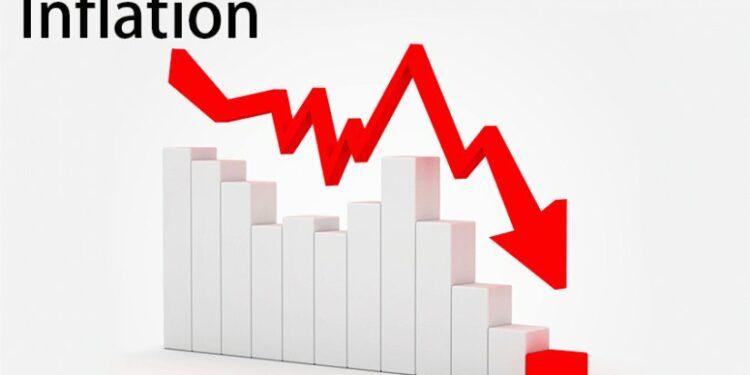
Mining and quarrying, water supply, and transportation were the biggest drivers of producer inflation in May. This comes as Ghana’s producer inflation rate rose sharply to 5.8 percent from 2.7 percent in April.

According to the Ghana Statistical Service, mining and quarrying recorded the highest year-on-year inflation rate of 11 percent, followed by water supply, sewerage and waste management at 10.2 percent, and transportation and storage at 7.7 percent.

Electricity and gas posted inflation of 6.9 percent.

More Read

Veteran Nigerian Environmental Journalist Tunde Akingbade Dies at 67
AWSP Welcomes Government Decision to Restore Achimota Forest Reserve
Finance Minister presents mid-year budget review today
ECOWAS reaffirms plans to launch single currency in 2027
Parliament approves $300m loan for SHS infrastructure expansion

Construction recorded inflation of 4.3 percent, while accommodation and food services registered 2.9 percent. Manufacturing, one of the economy’s largest productive sectors, recorded a modest 0.7 percent increase.

Despite the rise in annual producer inflation, prices at the factory gate fell by 1.4 percent between April and May, indicating a short-term easing in cost pressures.

Looking ahead, the Service is urging businesses to secure key inputs through forward contracts or bulk purchases to cushion against rising production costs.

It is also calling on government to strengthen inflation monitoring, particularly in the mining, transport and manufacturing sectors, to contain potential price pressures along supply chains.

Producer Price Inflation (PPI) is widely regarded as an early indicator of future consumer price movements, as changes in production costs can eventually be passed on to households through higher retail prices.

The latest figures provide important signals for businesses, consumers and policymakers.

Businesses can use the data to plan for input costs, while policymakers may monitor supply chain developments and emerging price trends to manage potential inflationary pressures in the months ahead.

The May data suggests that while annual cost pressures have strengthened, recent monthly declines in producer prices could offer some relief if sustained, helping to moderate future inflation risks.

Source: CNR

Share This Article
Facebook Whatsapp Whatsapp Email Copy Link Print

Recent Posts

  • Bekwai residents give Chinese quarry firm one-week ultimatum over blasting, environmental concerns
  • Veteran Nigerian Environmental Journalist Tunde Akingbade Dies at 67
  • AWSP Welcomes Government Decision to Restore Achimota Forest Reserve
  • Finance Minister presents mid-year budget review today
  • ECOWAS reaffirms plans to launch single currency in 2027
  • Parliament approves $300m loan for SHS infrastructure expansion
  • Court convicts Wontumi on six illegal mining charges over Samreboi concession
  • Gov’t to build 50,000 houses for teachers – Haruna Iddrisu
  • Honour Ghana, TI-Ghana Partner to Promote Integrity and Values-Based Education
  • ISODEC: Community Water Boards Exchange Best Practices to Strengthen Local Water Management
  • Community Voices Strengthened as ISODEC Successfully Concludes AVID II Project in Mfantseman Municipality
  • UK scraps £45 million girls’ education programme
  • Ghana’s inflation could ease below 5% in July – Databank
  • Mahama declares July 10–11 National General Cleaning Days in flood-affected regions
  • Study Recommends Royalty Share for Landowners in Mining Communities
  • Fuel prices drop for second consecutive time
  • From Trauma to Recovery: Strenthening Support for Victims of Torture
  • Drug networks infiltrating schools – NACOC warns

You Might Also Like

Breaking NewsGeneral Newstop stories

Court convicts Wontumi on six illegal mining charges over Samreboi concession

July 20, 2026
Breaking NewsDevelopment Agendatop stories

Gov’t to build 50,000 houses for teachers – Haruna Iddrisu

July 20, 2026
Breaking NewsGeneral News

Honour Ghana, TI-Ghana Partner to Promote Integrity and Values-Based Education

July 20, 2026
Breaking NewsDevelopment Agendatop stories

ISODEC: Community Water Boards Exchange Best Practices to Strengthen Local Water Management

July 15, 2026

About Us

Public Agenda is fou­nded and owned by Pu­blic Agenda Communic­ations.

Public Agenda was founded as a public interest Me­dia entity. Its Visi­on is to contribute to building a well-i­nformed society where accurate informati­on dissemination is the cornerstone of a democratic, just and equitable society.

Its mission is to inform, guide and bui­ld responsible citiz­enship and accountab­le decision making and strive for excell­ence in the media in­dustry. Public Agenda Communications is managed by a Board of Directors.

  • Contact us
  • Advertise with us
Welcome Back!

Sign in to your account

Username or Email Address
Password

Lost your password?