

The Integrated Social Development Centre (ISODEC), one of Ghana’s foremost policy think tanks is calling on the Government through the National Development Planning Commission (NDPC) to consider mainstreaming Energy Transition into Ghana’s decentralized local government structure.
The NDPC is also being asked to incorporate a mandatory thematic area on reducing energy poverty and insist on the submission of annual reports on this by the various MMDAs. NDPC is mandated to issue planning guidelines to all Metropolitan, Municipal, and District Assemblies (MMDAs) under the National Development Planning Commission Act, 1994 (Act 479) and the NDPC (systems) Act, 1994, (Act 480).
While ISODEC further demands of government to pursue policies that promote a reduction in the cost of renewable technologies, it again wants the government to take into account principles governing ‘Just Energy Transition’ and addressing energy poverty.
More Read

These recommendations were contained in a draft Report on Mineral Extraction and Energy Transition in Ghana. The Report was put together by ISODEC in collaboration with the Institute of Energy Securities (IES) and supported by Publish What You Pay (PWYP)
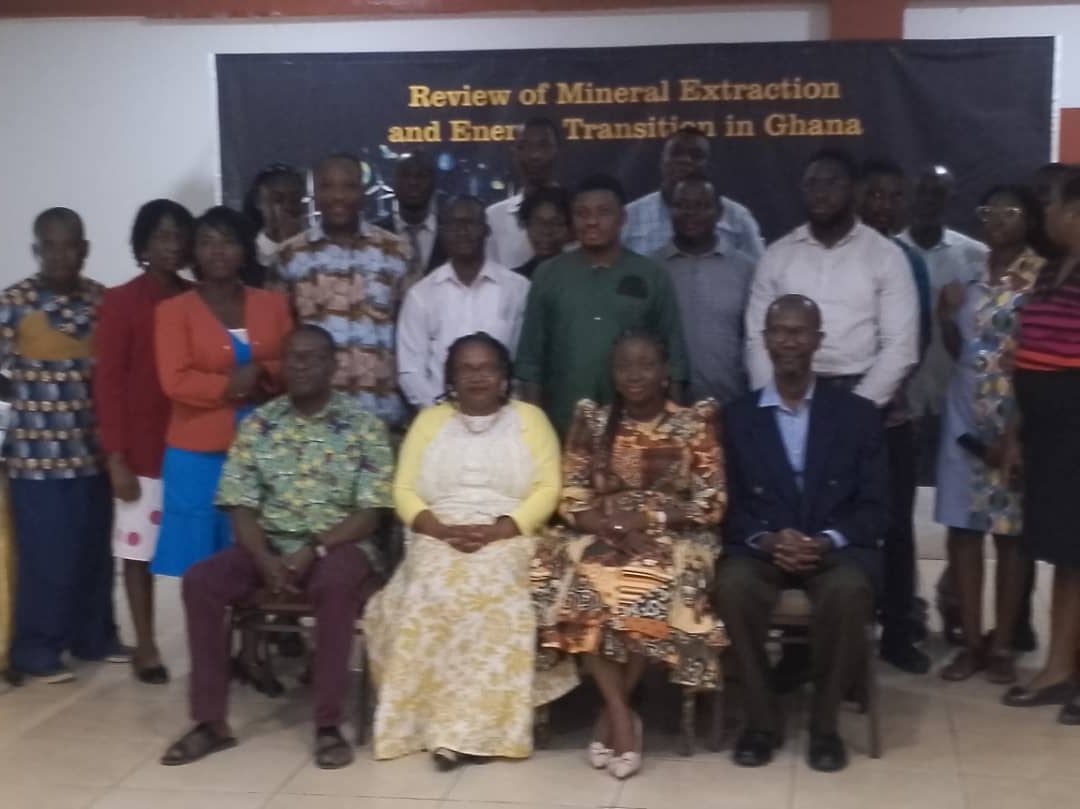
At a validation workshop in Accra to review the report, the Executive Director of ISODEC, Mr Sam Salifu Danse submitted that Ghana is blessed with an abundance of mineral resources, and their extraction has powered various industries and contributed to job creation and revenue generation. However, it is crucial to recognize the environmental and social consequences that accompany this extraction process.
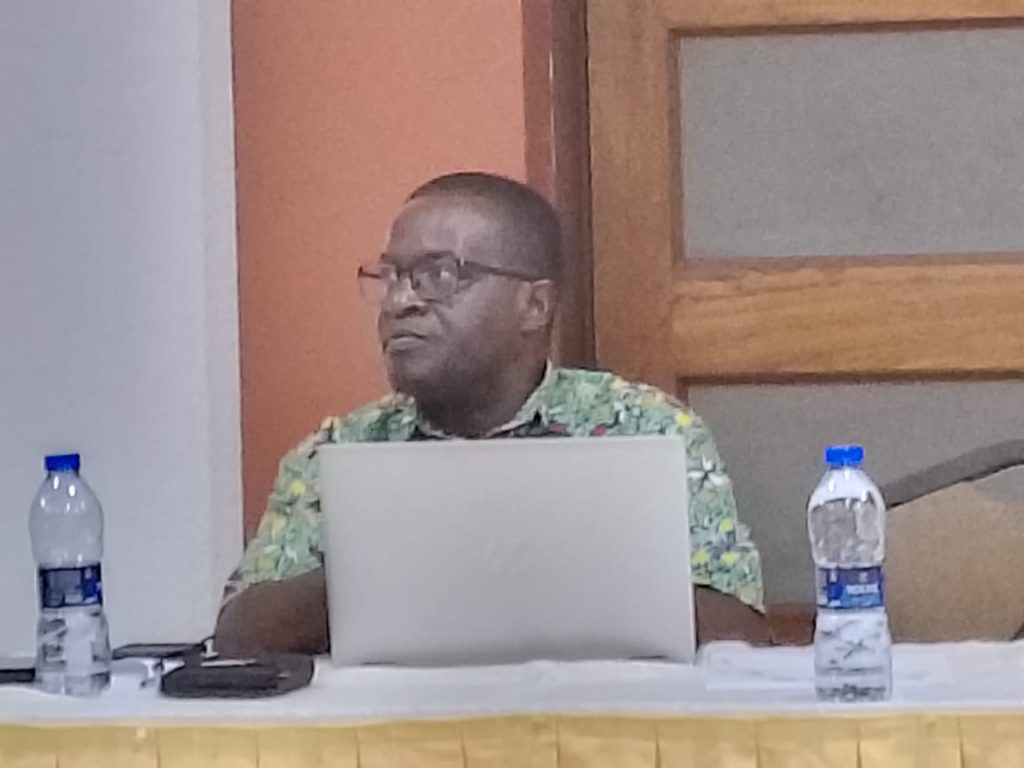
Mr Sam Salifu Danse is the Executive Director of ISODEC
Mr Danse Noted, “As we navigate the global energy transition towards cleaner and more sustainable energy sources, it is imperative that we assess the impact of mineral extraction. “
He told participants at the workshop that the research document aimed to provide a comprehensive analysis of the mining sector in relation to Ghana’s energy transition goals by examining the opportunities and challenges associated with mineral extraction to formulate informed policies and strategies that promote responsible mining practices and support our energy transition objectives.
He indicated that the validation workshop was also meant to provide stallholders with an opportunity to engage in constructive dialogue and exchange ideas, adding that. “ It is through collaboration and shared knowledge that we can develop innovative solutions and identify best practices in the field of mineral extraction.”
The Executive Director observed that civil Society’s perspectives are crucial in shaping an evidence-based and holistic approach to mineral extraction in the context of Ghana’s’ energy transition goals
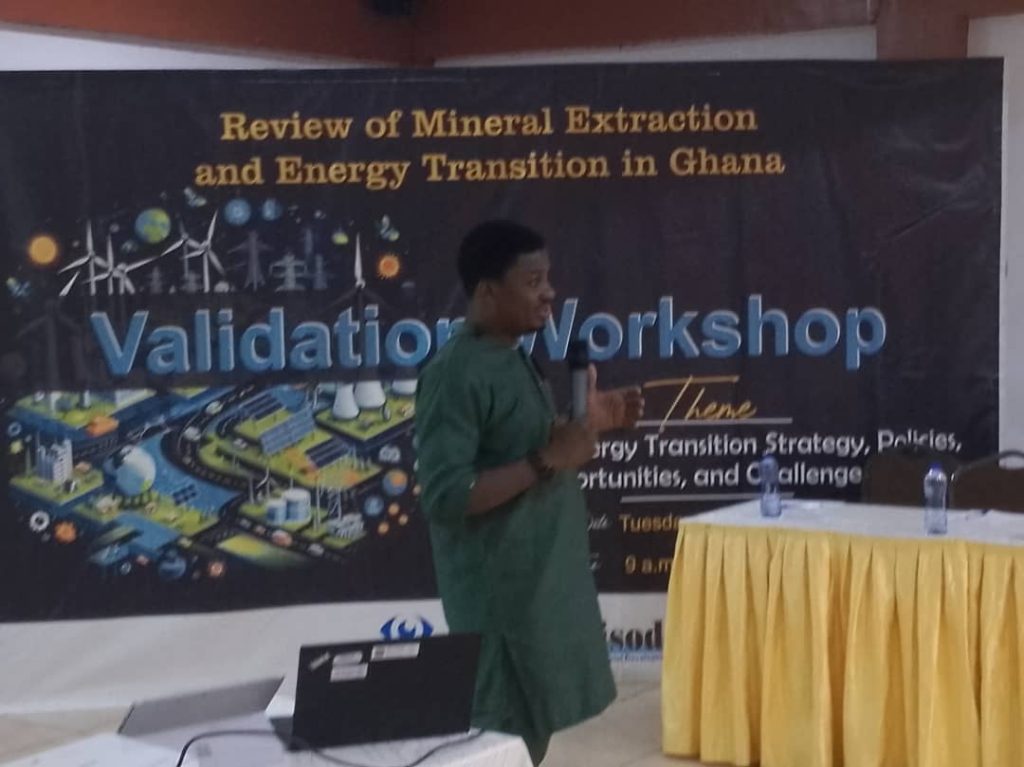
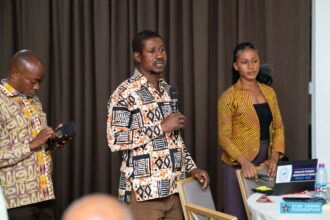
, Mr. Adam Yakubu making a presentation
In a presentation, Mr. Adam Yakubu Policy, Programs, and Projects Coordinator, Institute for Energy Security (IES) pointed out that throughout history, energy transition has continuously happened over the evolution of mankind. The current energy transition— from fossil fuels to low-carbon energy is not the first energy transition the world has experienced. In reality, this is the fourth significant shift to alternative energy sources.
According to him, Ghana as a signatory to the Paris Agreement and the Kenya Climate Charter has made considerable strides to realize its energy transition commitments.
Mr Yakubu emphasized the need for the identification and prioritization of key sectors and technologies for the energy transition.
By: Mohammed Suleman/ Publicagenda.news