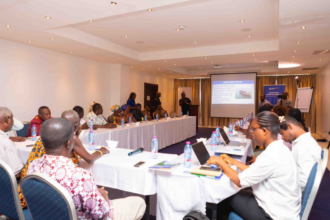
Dr Steve Manteaw, Campaigns Coordinator for the Integrated Social Development Centre (ISODEC), has expressed worry about the inability of stakeholders to validate the findings of the 2010 Socio-economic baseline assessment on the impact of the oil extraction in the Western Region.
The baseline data, was key to determine the extent to which the oil and gas industry had impacted the socio-economic lives of people living in the Western Region in the areas of rent, food, health, fishing, and jobs among others.
Aside compensation in the environmental laws, the Petroleum Revenue Management Act stipulates other such relief packages for communities affected by oil and gas activities and other effects.
More Read

According to him some critical data was captured at the inception of oil production in the country, to inform policy interventions by government in the oil and gas industry, and was not enthused that eight years down the line, little had been done with regards to the findings.
Dr Manteaw told the GNA in an interview that the initial baseline was undertaken by “Publish What You Pay Ghana in 2009” and some work was also done by ISODEC to establish a socio-economic baseline for the Region, adding, “It is said however that findings from the study are yet to be validated to make room for the necessary compensation packages under section 24 of the Petroleum Revenue Management Act to be fully activated by the six coastal district.”
The six coastal districts on whose stretch the oil and gas activities were taking place could demand for more in terms of compensation and social interventions if it could be established by real data and statistics the influx of people due to oil activities and if the exploration has any negative socio-economic impact that must be mitigated.
The Coordinator for ISODEC said his organization had begun engagement with the Petroleum Commission on the need to finalize the data, adding, “Though we pulled together some data, we did not validate it.”
He was however happy that Petroleum Commission in particular was helping to validate and finalize the baseline data for 2010 and related it to some of the socio-economic impact of the oil as well as filling the gap, “it may also lead to recommendation of some policy interventions for the affected communities and districts”.
Dr Manteaw noted that the Western Region had a case for adequate compensation for difficulties suffered as a result of the oil production as data captured revealed, but this must first be validated for a prove of such socio-economic impact.
The Section 24 of the Petroleum Management Act stipulated adequate compensation for adverse impact on communities and areas where adverse effects had been recorded, and it was only through empirical data such as the baseline survey that could determine.
Dr Manteaw said for instance if there were rents increment since 2010 as a result of the oil find, then people could make a case for affordable housing schemes to cater for the housing challenge adding, “ISODEC is ready to engage the government on the legislative instrument and with strong evidence from the study for socio-economic needs to be met”.
He said the law was ready in favour of such social economic effects and must be supported for the people of the Region to benefits holistically.
Source: GNA