Public Agenda NewsPaperPublic Agenda NewsPaper
  • General News
  • Politics
  • Business
  • Health
  • Development Agenda
  • World News
  • Features & Opinions
  • Election watch
  • Editorial
Font ResizerAa
Public Agenda NewsPaperPublic Agenda NewsPaper
Font ResizerAa
  • General News
  • Politics
  • Business
  • Health
  • Development Agenda
  • World News
  • Features & Opinions
  • Election watch
  • Editorial
Search
  • General News
  • Politics
  • Business
  • Health
  • Development Agenda
  • World News
  • Features & Opinions
  • Election watch
  • Editorial
Follow US
Breaking NewsBusinesstop stories

IFS warns of deeper economic woes if Ghana continues domestic budget financing

Suleman
Last updated: August 16, 2024 9:42 am
Suleman
Share
2 Min Read
SHARE

The Institute for Fiscal Studies (IFS) has predicted that Ghana’s economic woes will deepen if it continues to adopt domestic financing of the national budget.

According to IFS, the government’s inability to access the Eurobond market has resulted in stiff competition with the private sector for loans to fund the budget, a development which is likely to lead to a shortage of investible funds for the private sector.

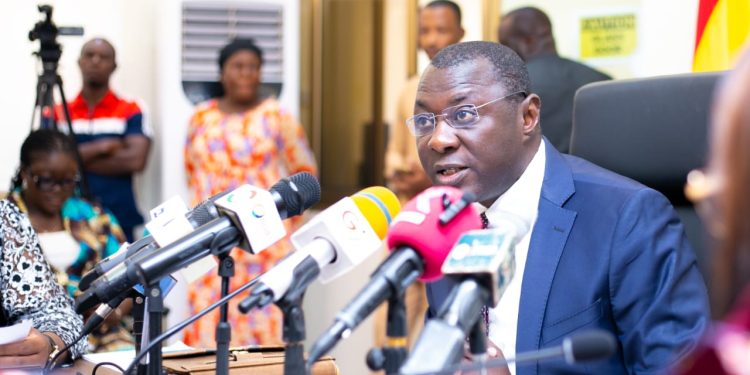
Speaking at a press briefing on a review of Ghana’s present fiscal and macroeconomic performance, the Acting Executive Director for IFS, Dr. Said Boakye, called for resilient measures to drive economic growth.

More Read

Mahama to table UN resolution on slavery as ‘gravest crime against humanity’
Countries agree on historic release of crude reserves to lower oil prices
World Growth to Continue at Steady Pace if Oil Price Shock Short-Lived
MiDA Moves to Transform Volta Corridor into Agro-Industrial Powerhouse
Bitter times for cocoa farmers as chocolate market slumps

“The heightened domestic financing of the national budget that is currently taking place due to the country’s inability to access the Eurobond market owing to the death crisis is a cause for concern. The reason is that by this, the government is more aggressively competing with the domestic private sector for loanable funds,” he noted.

Dr. Boakye added: “This is likely to lead to a shortage of investible funds for the private sector and thus sustain a high interest rate, both of which have the effect of prolonging the current low economic growth and elevated unemployment rates.

“This calls for deliberate measures to tackle negative physical fundamentals like low revenue generation, excessive fiscal rigidities, corruption, and political-induced decisions. ”

Source: CNR
Share This Article
Facebook Whatsapp Whatsapp Email Copy Link Print

Latest News

Kufuor calls for higher pay for public servants to curb corruption
March 10, 2026
Ghana urges Commonwealth of Nations to back UN Slave Trade resolution
March 9, 2026
Middle East tensions could disrupt trade, spike energy prices – IMF
March 9, 2026
NPA scraps fuel and LPG discounts effective March 16
March 4, 2026
Oil prices surge, Asian stocks fall over Iran conflict
March 2, 2026
Ghana has over 5 weeks of fuel stock despite Middle East tensions – NPA
March 2, 2026
Stabilised economy must benefit ordinary Ghanaians – Vanderpuye
February 26, 2026

You Might Also Like

Breaking NewsBusinesstop stories

PURC summons ECG over rapid depletion of prepaid units

February 26, 2026
Breaking NewsBusinesstop stories

‘I’m a cocoa farmer too’ — Mahama speaks on price cuts and farmer pain amid crises

February 17, 2026
Breaking NewsBusinesstop stories

RJN–Ghana Convenes to Strengthen Natural Resource Governance,Validate GESI–ABFA Report

February 17, 2026
Breaking NewsBusinesstop stories

Fuel prices edge up after NPA sets new price floors

February 16, 2026

About Us

Public Agenda is fou­nded and owned by Pu­blic Agenda Communic­ations.

Public Agenda was founded as a public interest Me­dia entity. Its Visi­on is to contribute to building a well-i­nformed society where accurate informati­on dissemination is the cornerstone of a democratic, just and equitable society.

Its mission is to inform, guide and bui­ld responsible citiz­enship and accountab­le decision making and strive for excell­ence in the media in­dustry. Public Agenda Communications is managed by a Board of Directors.

Welcome Back!

Sign in to your account

Username or Email Address
Password

Lost your password?