Gold Prices, the Price Tag of Uncertainty
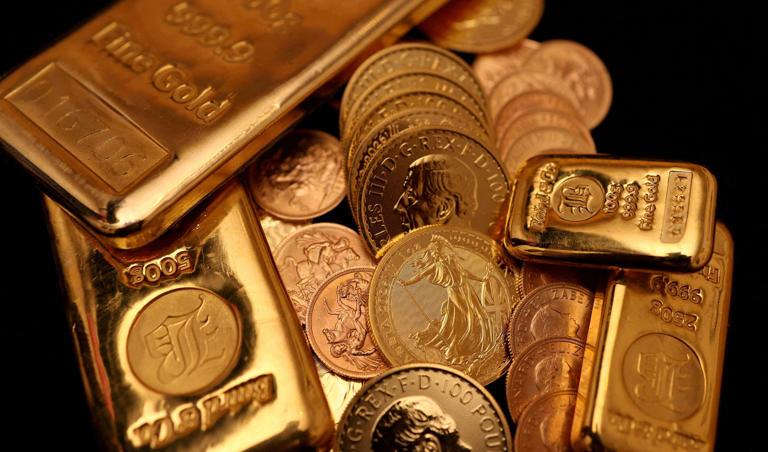
What has driven gold to become so valuable recently? First, analysts attribute the surge to increased global uncertainty due to U.S. President Donald Trump’s aggressive actions, leading funds to flow into safe assets like gold. Trump initially threatened to impose additional tariffs on European allies over the Greenland sovereignty issue before retracting the threat. There were also reports that he pressured Jerome Powell, Chair of the Federal Reserve, to lower interest rates through the Ministry of Justice. Global investors interpret these actions as potentially undermining the stability of the dollar and U.S. Treasury bonds, leading them to choose gold as an alternative asset.
The emergence of new gold-related products, such as gold exchange-traded funds (ETFs) and gold-backed stablecoins, has also contributed to increased demand for gold. These products’ prices are linked to physical gold, and as expectations for rising gold prices grow, the scale of these products has surged. According to CoinMarketCap, the market capitalization of ‘Tether Gold,’ a representative gold-backed stablecoin, increased by 22% from $1.8 billion at the end of last year to $2.2 billion on the 26th. Additionally, the World Gold Council reported that asset management companies operating ETFs held approximately 4,000 tons of gold, of which around 800 tons were net purchased last year. This year, they have already net purchased 56 tons within less than a month, with 36 tons of that purchased in the past week alone.
In South Korea, where the price of gold has entered the era of 1 million Korean won per don (3.75g), capital movement has become evident. Funds are flowing into gold accounts (gold banking) and gold ETFs. According to the banking sector, as of the 23rd of this month, the balance of gold banking at KB Kookmin, Shinhan, and Woori Bank totaled 2.1728 trillion Korean won. This marks an increase of over 1.3 trillion Korean won from 813.7 billion Korean won on January 23 of last year. As volatility in stocks and virtual assets increased, funds with a waiting character have moved into gold accounts.
In the securities market, trillions of won flowed into gold ETFs. Over the past year, approximately 400 billion Korean won has been net inflowed into the eight gold ETFs listed domestically. According to ETF Check, as of the 26th, the ‘ACE KTX Gold Spot’ ranked 7th among ETFs with the highest fund inflows over the past three months, with 1.2304 trillion Korean won inflowed during that period. Demand for physical gold also increased. The sales of gold bars by the five major commercial banks last year amounted to 1.0354 trillion Korean won, expanding to 3.2 times the previous year’s 321.7 billion Korean won.
The rapid surge in gold prices has also changed social landscapes. Instead of gifting a traditional one-don (3.75g) gold ring, more people are seeking thin ultra-thin mini bars weighing 1g and ultra-small gold spoons. There is an assessment that gold is transitioning from a ‘decorative asset’ to an ‘asset to be purchased in portions.’
The market is leaning toward the possibility that the gold rally will continue for the time being. Goldman Sachs recently raised its gold price forecast for the end of 2026 to $5,400 per ounce. This is approximately 10% higher than the previous target of $4,900, reflecting the judgment that strong demand for gold from central banks and the private sector will persist.
Source: msn