

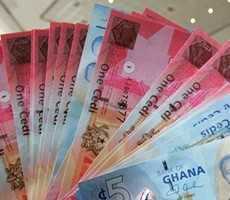
Despite the depreciation of the cedi, foreign currency deposits with banks grew by 18.3 percent in August 2018 compared with 6.4 percent and 6.2 percent growth respectively in June and May 2018.
According to the latest Bank of Ghana’s Summary of Macroeconomic and Financial Data, foreign currency deposits also grew by 15.4 percent in July 2018. The recent growth might be due to consumers changing their cedis into dollars to prevent any loss of investments.
According to the data, currency outside the banking system was still high at 10.9 percent in August 2018. This is against 11.7 and 10.3 percent respectively in June and July 2018.
At the same time, demand deposits, largely current account remained high, growing by 36.0 percent in August 2018. The only time demand deposits have gone very high is May 2018 where it grew by 34.0 percent. This must be good news for the banks since customers are putting their monies in less expensive deposits.
More Read

Growth of Savings and Time deposits also grew very high at 20.4 percent in August 2018. It has reduced consistently from 26.3 percent in January 2018 to 10.5 percent in May 2018. Average yield for demand deposits however stood at a paltry 5.83 percent, higher than February’s 3.33 percent while that of savings deposits was 7.55 percent since January 2018.
The report stated that average lending rate dropped by 50 basis points to 27.0 percent in August 2018. It stood at 27.5 percent in June and July 2018 respectively whilst Ghana Reference Rate is 16.1 percent.
The report further stated that total deposits shot up consistently from GH¢59.1 billion in January 2018 o tGH¢61.8 billion in June 2018 and GH¢64.8 and GH¢67.7 billion respectively.
Total assets of the banking industry hit GH¢104.6 billion in August 2018. It hit a record GH¢100 billion in June 2018 and move to GH¢100.3 billion in January 2018.
Core liquid assets to short term liabilities, a critical component in measuring the stability of a firm stood at 32.9 percent in August 2018. It was 30.5 and 35.3 percent respectively in June and July 2018,. This indicates that the banking industry response to paying cash on time dwindled slightly between July and August 2018.
Growth of loans and advances also went up from GH¢39.7 billion at the end of July 2018 to GH¢40.0 billion in August 2018
The banking sector’s capital adequacy ratio increased from 18.9 percent in July 2018 to 19.1 percent August 2018.
Non-performing loans stood at 21.3 percent in August 2018 from 22.6 percent in June 2018. The banks in Ghana made a provision of about 11.7 percent as bad debts in their books at the end of August 2018, the report reiterated.
Year-on-year growth of bad loans of banks slowdown in the first half of 2018 growing by 9.0 percent compared with 13.9 percent a year ago.
According to Highlights of Universal Banks Income Statement, banks wrote off about GH¢672 million in the first half of this year. In June 2017, the banks wrote off GH¢616.2 million as bad debt and GH¢541.4 million bad debt in June 2016. The total provision made in the income statement included loan losses, depreciation and others.
According to the July 2018 Banking Sector Report, the ratio of banks’ total loans classified as impaired remained high in the first half of this year. However, the NPL ratio fell to 22.6 percent in June 2018 from the last reported position of 23.5 percent in April 2018.
Source: The Finder