The Economic Partnership Agreement (EPAs) between Ghana and the European Union has the potential to destabilize one of government’s flagship initiatives –the One District One Factory (1D1F) programme, according to a trade expert.
Mr Tetteh Hormeku, Head of Programmes at the third World Network- Africa did not hide his admiration for the initiative describing it as very laudable; but expressed reservations on how the programme could thrive on the back of the EPAs of which Ghana is a party to.
“In fact President Akufo- Addo’s One District One Factory which is a very nice idea stands to be undermined drastically if they go and implement that EPA thing,”Mr Hormeku stated.
More Read

He explained that per the agreement, 80 percent of the Ghanaian market would be opened up for European products which could create unfair competition for the local manufacturers.
He emphasized the need to ensure that the market policies are coherent so that local manufacturers are not outcompeted or subjected to unfair competition from subsidized products from Europe which could undermine the 1D1F initiative.
Mr Hormeku noted, “You should have your trade policies in a way that it allows you to give targeted, intelligent smart support. However if you have something like the Economic Partnership Agreement which is telling you that you must open up 80 percent of your trade with the European Union to free import in the country, what is a likely to happen is that those manufacturer in Europe who have got better condition will definitely outcompete our people in our own market and more in our regional market. So therefore the market that you need for the product from your one district one factory, to be completive you are destroying it with your policy.”
He advised that the 1D1F programme has to be supported with good financial policy so that the people would have good affordable credit, adding that if the people have to go and borrow money at 12 percent interest rate or more, there is no way they can compete.
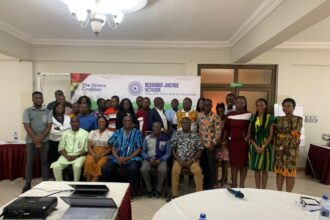
Mr Hormeku made these remarks while speaking to the media last Tuesday on the sidelines of The Africa Trade Network (ATN) consultative seminar on Africa-EU relations after the expiry of the Cotonou Partnership Agreement. The Seminar was hosted in Accra by the Third World Network – Africa with support from Oxfam.
The seminar which brought together participants from West Africa, North Africa, East Africa, Southern Africa and Central Africa, the Caribbean, the Pacific and Europe was meant to among other things, set up a platform and formulate an agenda for Africa-wide civil society advocacy on the post-Cotonou processes focusing on the aid, trade and investment dimensions.
The Cotonou Partnership Agreement was successor to the Lomé Convention, first signed in 1975 and renewed for four successive times until 1999, and which for a quarter of a century defined the trade and economic ties between African(and Caribbean and Pacific, known collectively as ACP) countries and Europe Union.
Mr Hormeku advised governments in the African, Caribbean and Pacific (ACP) countries to use lessons from the Economic Partnership Agreement (EPA) for the post-Cotonou possible framework.
He said the ACP countries would get “the same rotten deal we got from the EPA” if they failed to apply the experiences gained from the EPA.
The Cotonou Partnership Agreement is a framework for cooperation between the European Union and the ACP Group of States and was signed in 2000 and came into force in 2003 for a period of 20 years.
He continued that as part of their advocacy work over the years around EPA, it had emerged that, ACP countries had been heavily short changed in those negotiations, the result of which had been bad for the Ghanaian economy.
The Head of Programmes said the agreement also undermined African’s industrialisation agenda and limited access of African products into the European market due to the strict standards, technical barriers and other trade conditions.
By Mohammed Suleman