The Ghana Employers’ Association revealed in April, 2015 that almost 13,000 people lost their jobs as a result of the power crisis that plunged the nation.
Ghana has been plagued with energy crises over the years affecting various sections of the economy. The adverse effect has been greatly felt and continues to weary all affected stakeholders including citizens.
The Ghana Social Development Outlook (GSDO) 2014 of the Institute of Statistical, Social and Economic Research (ISSER) for example revealed that Ghana is estimated to lose between $320 million and $924 million a year in terms of decline in productivity and economic growth due to the energy crisis now commonly known as ‘’dumsor’’.
More Read
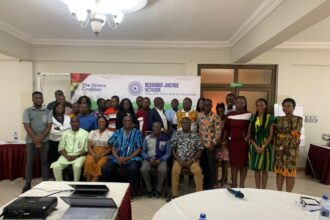
Speaking at a media launch, the National Coordinator for 350 G-ROC, Mr Ezekiel Chibeze, said findings of a cross-sectional survey conducted in 2015 on 75 Small and Medium Scale Enterprises (SMEs) which had access to grid power from Electricity Company of Ghana (ECG) showed that the effects of planned and unplanned power outages for significant portion of operational hours of SMEs resulted in loss of money, low productivity and profit, damaged to plant equipment, increased cost of production, increased expenditure and reduction in labour force.
Photocopying and printing, hair dressing, barbering shop, cold store and dressmaking enterprises were the worst affected since their operations heavily depended on electricity.
Reduced sales due to reduced business income because of the SMEs are unable to meet customer demand.
He said that, Ghana has committed herself to international conventions and treaties notably the Paris Climate Agreement, Kyoto Protocol, Nationally Appropriate Mitigation Actions (NAMAs) among others.
Indeed the investment plan of the Ghana’s Nationally Determined Contributions (GhNDCs) as part of fulfilling the Paris Agreement proposes two major programmes hinging on Renewable Energy, that Scale-up Rooftop Solar Programme (SREP) while safeguarding developmental gains from climate change impacts he emphasised.
The ECOWAS Energy Protocol and Ghana Shared Growth Development Agenda (GSGDA), 2014-2017 also clearly shows defined support towards Renewable Energy.
He noted that, during the NPP’s manifesto reading, the NPP’s vision for the energy sector was to develop a modern, diversified, efficient, and financially sustainable ‘’Energy Economy’’ that will ensure that all Ghanaian homes and industries have access to an adequate, reliable, affordable and environmentally-sustainable supply of energy to meet their needs and to support the accelerated growth and development agenda.
The NPP’s promised to develop solar and wind mini-grids for irrigation and community water supply around the country through Public Private Partnerships (PPPs).
The NPP also promised to ensure local supply of solar panels to meet the requirement of our policy proposals, by establishing a Renewable Energy Industrial Zone where the private sector will be supported to build factories for the production and assembling of the full components of solar power systems he added.
Mr Chibeze recommended that, for the NPP’s promise to work there must be Technical Working Group to develop the framework and mechanism in executing the renewable energy plan and a wide public education and awareness creation to win the support of citizens.
He said, In view of the significant carbon savings and financial gains realized during the free Compact Fluorescent Exchange Programme in 2007, the nationwide distribution of free LED bulbs plan must be pursued.