
Public Agenda NewsPaperPublic Agenda NewsPaper
  • General News
  • Politics
  • Business
  • Health
  • Development Agenda
  • World News
  • Features & Opinions
  • Election watch
  • Editorial
Font ResizerAa
Public Agenda NewsPaperPublic Agenda NewsPaper
Font ResizerAa
  • General News
  • Politics
  • Business
  • Health
  • Development Agenda
  • World News
  • Features & Opinions
  • Election watch
  • Editorial
Search
  • General News
  • Politics
  • Business
  • Health
  • Development Agenda
  • World News
  • Features & Opinions
  • Election watch
  • Editorial
Follow US
Breaking NewsGeneral News

Developing countries must see education as a right – Prof. Kwapong advises

Latifa Carlos
Last updated: July 13, 2018 6:12 pm
Latifa Carlos
Share
4 Min Read
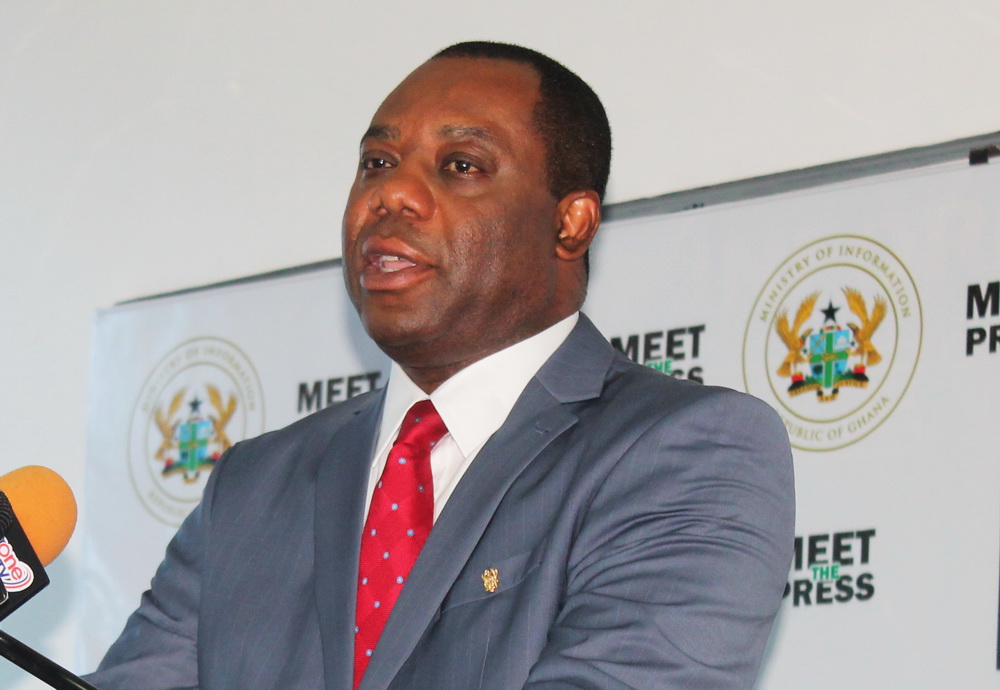
Dr Matthew Opoku-Prempe, Education Ministerh
Dr Matthew Opoku-Prempeh, Education Minister
SHARE

The Ministry of Education has been advised to remove educational barriers and limitations to aid citizens with no level of education.

The proponent, Professor Olivia Kwapong, Head of Department, Adult Education and Human Resource at the University of Ghana said developing countries need to see education as a right and use it to build the capacity of the average citizen.

Mrs. Kwapong made these remarks recently at the workshop on overview of Open and Distance Learning (ODL) which was jointly organised by the Commonwealth of Learning (COL) and the Regional Training and Research Institute for Distance and Open Learning (RETRIDOL).

More Read

Raw commodity exports undermining Africa’s growth – Mahama
Ayariga accuses NPP minority of hypocrisy over certificates of urgency
Every cedi lost to corruption is a loss to national development – Deputy Finance Minister
ISODEC Introduces Whistleblower Policy to Strengthen Transparency and Accountability
Minister assures resumption of Kpong Irrigation Scheme amid funding delays

According to Professor Kwarpong, the brick and mortar educational system has existed for long without meeting the demand of higher education.

The British paradigm which has been trailed by our educational system has shed its modus operandi for e-learning.

”We would like to encourage all the stakeholders, let’s put our resources together and open up just as the international communities is opening up so that the people who need the education the most will get it, build their skills and create jobs for themselves. ”

Open and Distance Learning which was formally known as (Institute of Adult Education and Institute of Continuous and Distant Education) was introduced in the 1950’s with some of our leaders participating including the first Prime Minister of Ghana, Dr. Kwame Nkrumah and since then, its demand has grown with citizens hunger for higher education.

Currently, across four public universities and private institutions, there are 374,000 students involved in the ODL program with only 6,585 in the University of Ghana, and the University of Cape Coast taking the lead.

She pointed out that ODL is not only for people with some type of formal education but also for the farmer, street vendor and waakye seller who wants to be better. That is value addition and human resource development.

”Distance learning takes education to the door step of women who believe in empowering themselves’’ she discovered through research.

If education is the tool for development then developing countries need to rethink and remove roadblocks. Quality education is how you teach and empower those in need.

”I believe in work and study, we are not adding work and study to our student culture and ODL will promote that element. Engaging in the community and the environment will help to build skills and become better rounded persons” Mrs. Kwapong added.

Ghana embarked on the distance education program to have an alternative to the traditional approach and its mission is to widen access to education and provide quality education. Distance learning can be traced back to before independence

In 1970, a correspondence program was launched on behalf of the University of Ghana, when the program reached its peak in 1976 there was a high enrollment of 5,938 students.


By: Sanna Terhrani
Share This Article
Facebook Whatsapp Whatsapp Email Copy Link Print

Latest News

Reproductive mental health underreported among Ghanaian women- Gynaecologist
January 26, 2026
Ghana cedi best-performing currency in Africa for 2025 – IMF
January 26, 2026
Gold surges past $5,000 for first time
January 26, 2026
How Ghana is losing water before it reaches the tap
January 22, 2026
Over 360,000 Ghanaians exited poverty in Q3 2025 – GSS report
January 21, 2026
GH¢107m EXIM loans recovered; dubious deals sent to security agencies – Trade Minister
January 21, 2026
Ga West MCE Calls for Stronger Enforcement of Disability Laws
January 20, 2026

You Might Also Like

Breaking NewsBusinesstop stories

IES defends NPA price floor policy amid debate over fuel pricing

January 19, 2026
Breaking NewsHealthtop stories

WHO Urges Governments to Raise Taxes on Sugary Drinks and Alcohol to Save Lives

January 14, 2026
Breaking NewsDevelopment Agendatop stories

Global employment stable but decent jobs in short supply

January 14, 2026
Breaking NewsGeneral Newstop stories

Supreme Court adjourns Nyindam’s case to January 28

January 13, 2026

About Us

Public Agenda is fou­nded and owned by Pu­blic Agenda Communic­ations.

Public Agenda was founded as a public interest Me­dia entity. Its Visi­on is to contribute to building a well-i­nformed society where accurate informati­on dissemination is the cornerstone of a democratic, just and equitable society.

Its mission is to inform, guide and bui­ld responsible citiz­enship and accountab­le decision making and strive for excell­ence in the media in­dustry. Public Agenda Communications is managed by a Board of Directors.

Welcome Back!

Sign in to your account

Username or Email Address
Password

Lost your password?