

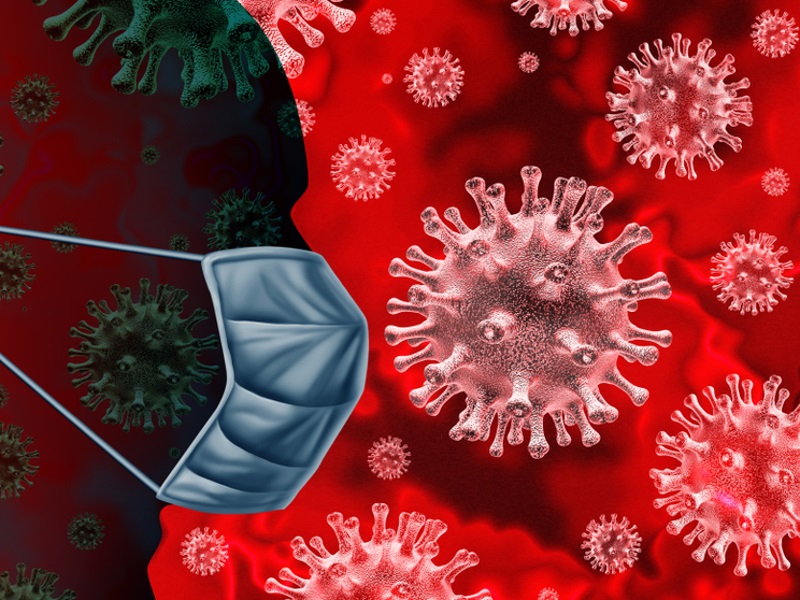
Since COVID-19 broke out in December 2019, it has continued to spread across the globe unabated, with countries at different phases along the curve.
Public health emergencies worldwide, such as the COVID-19 pandemic and its devastating impacts, affect women and men differently, but take a disproportionate toll on women.
Even more so in conflict-affected countries and post-conflict contexts, where the existing gender inequalities and exclusion of women from all decision-making, including on peace and security issues, are severely deepened.
More Read

In these contexts, women are often on the periphery of the community’s solutions, especially peace and political solutions; and have limited access to critical information and decision-making power on social, economic, health, protection and justice outcomes.
Yet, with all these challenges, women remain on the frontline agitating for meaningful and full political participation and in other socio-economic arenas, including in health.
It is therefore very positive that the Secretary-General António Guterres’ call for a global ceasefire to enable COVID-19 responses in fragile and crisis settings has been endorsed by many Member States, regional organizations and civil society groups including women’s organizations.
There is already documented evidence on the rise of violence against women, particularly domestic violence. In his recent message on Gender Based Violence and COVID-19, Mr. Guterres notes that “over the past weeks as economic and social pressures and fear have grown, we have seen a horrifying global surge in domestic violence” and issued a rallying call to end violence against women in their homes.
Women on the frontline
It is well recognized that globally, women predominantly carry the burden of providing primary healthcare. About 70 per cent of global health workers are women and emerging statistics show that health workers are increasingly getting infected by COVID-19.
Women are also employed in the service industries and the informal sector, which are amongst those hardest-hit by the measures to reduce COVID-19 transmission. They are also paid less and are most often the ones doing unpaid care work.
Women’s networks and organizations are key partners in UN peacekeeping. They provide innovative community approaches to resolve conflicts, and wage peace and reconciliation. It is these same networks that are critical vehicles for women’s participation in COVID-19 decision-making, prevention and responses and elevated advocacy for the global ceasefire call. This is particularly critical at the local level, where COVID-19 prevention and response measures are anchored in community engagement, participation and sharing the right information.
UN Under-Secretary-General for Peace Operations Jean-Pierre Lacroix recently emphasized that peacekeepers, both women and men, are playing a key role in providing credible information along with their protection and conflict resolution work, in partnership with national authorities in fragile environments further strained by the pandemic.
As 2020 marks the 20th anniversary of the Security Council Resolution 1325 on Women, Peace and Security, the multiple impacts of the COVID-19 pandemic and the inequalities it lays bare are a stark reminder of how women can lead to turn the tide, as actors and decision-makers at all levels, in the health sector, but also more broadly on peace and political processes in their respective countries.
It is a time to come together and use the momentum created by the endorsement of the global ceasefire call, to protect women, safeguard the gains towards the fulfillment of their rights and lead as protectors of peace.
Ms. Kinyanjui is the Chief of Gender Unit and Senior Gender Adviser, UN Department of Peace Operations
For more information on COVID-19, visit www.un.org/coronavirus