Public Agenda NewsPaperPublic Agenda NewsPaper
  • General News
  • Politics
  • Business
  • Health
  • Development Agenda
  • World News
  • Features & Opinions
  • Election watch
  • Editorial
Font ResizerAa
Public Agenda NewsPaperPublic Agenda NewsPaper
Font ResizerAa
  • General News
  • Politics
  • Business
  • Health
  • Development Agenda
  • World News
  • Features & Opinions
  • Election watch
  • Editorial
Search
  • General News
  • Politics
  • Business
  • Health
  • Development Agenda
  • World News
  • Features & Opinions
  • Election watch
  • Editorial
Follow US
Breaking NewsGeneral News

Cashew Processing in Africa will Reduce Poverty – Experts

Latifa Carlos
Last updated: June 1, 2018 1:10 pm
Latifa Carlos
Share
3 Min Read
SHARE

Experts in the cashew industry in Africa have revealed that the processing of cashew in Africa will help reduce the alarming rate of unemployment on the continent.

Africa which is now the largest producer of cashew nuts, accounting for more than half of the world’s production has a significant challenge regarding processing the nuts.

Currently, processing of cashew nuts remains at less than 10 % a situation expects in the cashew industry describes as unfortunate.

More Read

UK scraps £45 million girls’ education programme
Ghana’s inflation could ease below 5% in July – Databank
Mahama declares July 10–11 National General Cleaning Days in flood-affected regions
Study Recommends Royalty Share for Landowners in Mining Communities
Fuel prices drop for second consecutive time

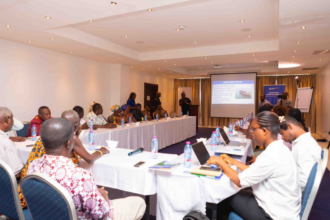
Addressing a gathering at the official opening ceremony of the 6th edition of a Masters Training on Cashew Value Chain Promotion a program, the Managing Director of the African Cashew Alliance (ACA) Mr Ernest Mintah called on all cashew growing countries to help reduce poverty in Africa.

“Without doubt cashew has gradually become the crop of the moment in Africa. Africa is now the largest producer of raw cashew nuts accounting for more than a half of the world’s production, even though processing is still a challenge that remains at less than 10 percent, it has at this level translated into substantial wealth and employment gains for millions of families in Africa”.

“It is estimated that a further increase of 25 percent in value-added cashew products would have a tremendous impact on poverty reduction, generating over US 100 million dollars in household income for rural families. These statistics showing the great potential of the cashew sector is what sparked off the desire to implement such a program as the MTP, to build capacities in the various countries to create change in the dynamics of the industry”.

On his part, the Deputy Minister for Food and Agriculture, Kennedy Osei Nyarko who was a special guest of honour reiterated governments commitment to ensuring the growth of the cashew industry and making cashew a priority crop in the country.

“It is impossible to talk about the development of the agriculture sector without mentioning the cashew value chain. The numerous financial, social and economic benefits of cashew production and processing to the producing countries is becoming more and more evident to the government’s and sector actors of producing countries”.

“In Ghana currently, cashew among the tree crops am told is the country’s leading agricultural non-traditional export bringing in about USD 197 million worth of export revenue in 2016, representing 53 percent of USD 371 million received from the total agricultural non-traditional export sub-sector”.


Source: Citifmonline.com
Share This Article
Facebook Whatsapp Whatsapp Email Copy Link Print

Recent Posts

  • UK scraps £45 million girls’ education programme
  • Ghana’s inflation could ease below 5% in July – Databank
  • Mahama declares July 10–11 National General Cleaning Days in flood-affected regions
  • Study Recommends Royalty Share for Landowners in Mining Communities
  • Fuel prices drop for second consecutive time
  • From Trauma to Recovery: Strenthening Support for Victims of Torture
  • Drug networks infiltrating schools – NACOC warns
  • NDC renames National Headquarters after J. J Rawlings
  • GTMO Condemns Attack on Forestry Commission Checkpoint in Bono East Region
  • World leaders converge in Accra for high-level reparatory justice conference
  • Mining, water supply and transport emerge biggest drivers of Producer Price Inflation
  • “Men’s Mental Health: Breaking the Silence, Saving lives
  • NADeF Micro-Credit beneficiaries seek increased funding amid business growth
  • Gbetsile: Six-year-old girl drowns in septic tank while searching for water
  • Recurring Floods Continue to Threaten Lives and Property in Oyibi Community
  • Africa poised to lead global digital finance evolution — MTN CEO
  • Ghana risks outsourcing economic sovereignty under IMF PCI deal — ISODEC
  • Accountability Labs Engage Birim North Assembly on Development Needs

You Might Also Like

Breaking NewsFeatures & Opinionstop stories

From Trauma to Recovery: Strenthening Support for Victims of Torture

June 27, 2026
Breaking NewsGeneral Newstop stories

Drug networks infiltrating schools – NACOC warns

June 25, 2026
Breaking NewsPoliticstop stories

NDC renames National Headquarters after J. J Rawlings

June 22, 2026
Breaking NewsGeneral Newstop stories

GTMO Condemns Attack on Forestry Commission Checkpoint in Bono East Region

June 19, 2026

About Us

Public Agenda is fou­nded and owned by Pu­blic Agenda Communic­ations.

Public Agenda was founded as a public interest Me­dia entity. Its Visi­on is to contribute to building a well-i­nformed society where accurate informati­on dissemination is the cornerstone of a democratic, just and equitable society.

Its mission is to inform, guide and bui­ld responsible citiz­enship and accountab­le decision making and strive for excell­ence in the media in­dustry. Public Agenda Communications is managed by a Board of Directors.

  • Contact us
  • Advertise with us
Welcome Back!

Sign in to your account

Username or Email Address
Password

Lost your password?