


Dr Selassie Adom, a Psychiatrist at the Pantang Hospital on Tuesday said beating a child as punishment for wrong doing does not correct the behavior.
She said beating a child rather teaches the child to be violent, cautioning caregivers to find alternative ways of correcting unwanted behavior other than beating.
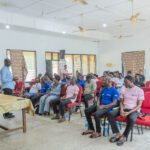
Dr Adom was responding to a question by a participant at Training programme for caregivers of children with disabilities.
More Read

The training of trainers on a training manual for caregivers of children with disability workshop was organized by the Care Reform Initiative/ Residential Homes Management Unit of the Department of Social Welfare.
The Department of Social Welfare with the support of UNICEF has developed a training manual for caregivers of children with disability especially those working in residential facilities.
Dr Adom took participants through the various stages of children’s growth and development, pointing out that children at their various stages of development need opportunities to interact with the world around them as well as learning the rules and boundaries.
Dr Amma Ampomaa Boadu, a Mental Health Advocate, taking participants through the different forms of disabilities in children, said “I don’t believe there is any child that cannot be taught…if you do not have the skills to handle children with disabilities, training them becomes very stressful.”
She said about 15 per cent of the world population lives with a form of disability and said with the right information, children with disability can be able to help themselves and even help society.
Mrs Hannah Awadzi, Executive Director of the Special Mothers Project, an advocacy and awareness creation programme on cerebral palsy issues and issues affecting families raising children with disability, said caregiving was a noble profession and called on the Department of Social Welfare to have a pool of trained caregivers, fit for purpose, where parents can go to for help.
Mr Fred Sakyi Boafo, Deputy Director, Child and Family Welfare Division at the Department of Social Welfare, said the burden of taking care of children with disability has been on government.
“Most private care providers or homes do not accept children with disability in their facilities, We want to close the gap so that a time will come where every care home or residential facility will say I am ready to accept a child with disability.”
Mr Boafo said as it is now, most children with disability deserving residential care are either placed at the Osu children’s home or the Kumasi children’s home. We want private facilities to join in caring for children with disabilities.
Mrs Florence Ayisi Quartey, Director at the Department of Children who represented the Minister of Gender, Children and Social Protection, urged participants to use the knowledge they gained from the training to support parents and children in their care.
Mrs Abena Dufie Akonu Atta, Head, Care Reform Initiative/Residential Homes Management Unit of the Department of Social Welfare, took participants through the training manual.
By Hannah Awadzi