

Professor Eric Yirenkyi Danquah, the Founding Director of the West Africa Centre for Crop Improvement (WACCI), University of Ghana, has urged African governments to stop paying lip service to the development of agriculture.
“We have paid lip services to the development of agriculture, our engine for growth and we are expecting different results doing the same thing over and over,” Prof Danquah stated in his remarks at the opening of a cowpea value chain workshop in Accra.
“Let us all tell governments in Africa that our only hope for emancipation of the women and children and the youth who can take this country to the next level, is investments in our agricultural commodity value chains,” he said.
More Read

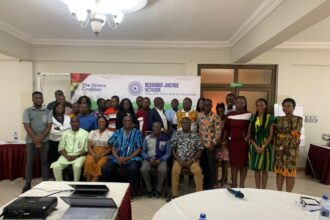
The one-day workshop, which was attended by participants from the West Africa sub-region, was on the theme: ‘Sustainable intensification of cowpea production and value chain development”.
Key stakeholders including; market queens, farmers, extension workers, scientists, representatives of the Ghana Chamber of Agribusiness, representatives of the Federation of Young Farmers and students provided vital information for the strengthening of the cowpea value chain.
Prof Danquah reaffirmed the centre’s commitment to define and strengthen the cowpea value chain for investments.
“Agriculture is at a tipping point. Agribusinesses could turn our country around and make our nation prosperous,” he stated.
He expressed the hope that the workshop would come up with strategies that would ensure that high quality genetically improved cowpea seeds reached farmers to realise their benefits.
He said WACCI originally established with a seed grant of about $11.5 million from the Alliance for a Green Revolution in Africa was now one of the World Bank Africa centres of excellence.
Prof Danquah noted that a team from WACCI had just come back from the launch of the World Bank ACE Impact project in Djibouti City, Djibouti, where they were named as the lead Africa Centre of Excellence in external funds mobilisation.
He said cowpea was one of the most important food grain and legume crops in Ghana; stating that “it is cultivated extensively in the northern savannah zone of the country”.
Prof Danquah said the role the crop plays in ensuring food security and in the improvement of the livelihood of both rural and urban poor in this country could not be underestimated.
He said this was especially true, given the potential of the crop, in meeting the protein requirements of humans; providing feed, forage, hay and silage for livestock; and improving or maintaining the fertility or productivity of soils.
He noted that in his opinion, the workshop was one of the most appropriate and timely initiatives at WACCI, coming at a period when all efforts were being made to address food and nutrition insecurity in Africa.
Mr Seth Paul Havor, Member of National Seed Trade Association of Ghana (NASTAG), said poor quality of foundation seeds leads to a lot of admixtures that require a lot of ‘rouging’ thus reducing their final yields.
He said however, referring to the SDG two that seeks to address food security and nutrition puts cowpea in a crucial position in addressing that goal.
He said, among other opportunities was that the inclusion of cowpea in government’s flagship programme, Planting for Food and Jobs, offers a lot of opportunity for large scale production.
Source: GNA